

Table of Contents
She walked into a vacuum that a 59-year French monopoly left behind, raised $80 million, built a factory in the bush outside Douala, and came out the other side with one of the most consequential beverage mandates on the African continent. Nobody saw her coming.
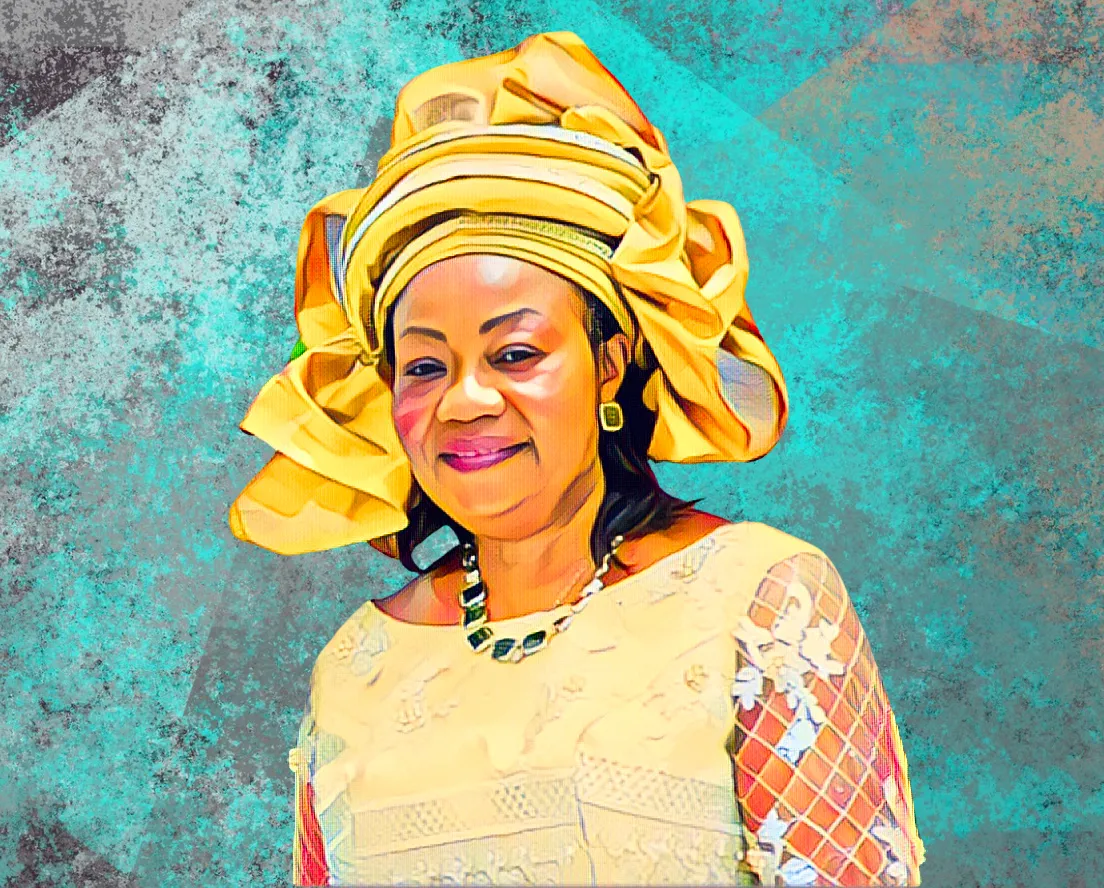
Sit with Jacqueline Dongmo long enough, and you get the sense she has always preferred it that way. The 62-year-old founder of Gracedom Invest gave a single major profile interview in 2022, to Jeune Afrique, speaking in a soft voice from behind a desk in the Bassa industrial zone in Douala. She wore a strict blue suit. Her answers were measured, even cautious, for someone who had just executed one of the biggest corporate deals in Cameroon's recent history. That restraint tells you something about how she operates. Not with noise. With patience, capital, and timing.
Dongmo was born in Cameroon, studied law at a university there, and built the foundation of her business career in the unglamorous but strategically critical world of logistics and distribution. Long before her name began appearing in beverage industry dispatches, she was moving fuel, managing supply chains, and representing international firms in a country where the cost of getting things from one place to another is as real a variable as the cost of making them. Over time, those capabilities coalesced into Gracedom Invest, a conglomerate she built across transport, general trade, import logistics, civil engineering, and beverage importation. By the time the Coca-Cola opportunity arrived, Gracedom was generating annual revenues of about CFA29 billion on an asset base of CFA14 billion, and employed roughly 450 people. This was not a startup. It was a platform.
Her subsidiary, Jacqueline Dongmo Distribution and Services, known in trade circles as JDDS, had spent more than 15 years as a major distributor of Guinness products in Douala before Diageo eventually sold the Guinness Cameroon brewery to Castel in 2022. That relationship gave her a direct view into what it takes to move premium beverage brands through West and Central African trade channels, and it gave her credibility with lenders that a younger, less seasoned operator could not have summoned. She is also the exclusive Cameroonian distributor of Kronenbourg 1664, the French premium lager, adding another branded beverage line to her portfolio.
The Opening Coca-Cola Needed
In May 2022, the soft-drink world in Central Africa received a jolt it had not seen coming. SABC, the Cameroonian subsidiary of French conglomerate Castel, announced it was terminating a 59-year partnership with The Coca-Cola Company, effective July 1 of that year. The split was characterized publicly as mutual, but the subtext was that Castel had launched its own cola brand, World Cola, in direct competition with its licensed partner's products. Atlanta was not amused. Coca-Cola began what would become a continent-wide restructuring of its bottling network, moving deliberately toward locally owned partners who would not become commercial rivals.
That is the opening Dongmo stepped into. Within weeks of the split, her group was announced as Coca-Cola's new production and distribution partner in Cameroon. The mandate was not small. She was tasked with producing Coca-Cola, Coca-Cola Zero, Sprite, Fanta and Schweppes across the country's entire territory, from a new plant being built in Kake, a township about 30 kilometers west of Douala in the Mungo department. The original production plan called for a facility capable of 20,000 bottles per hour and an investment of CFA25 billion. Once the Coca-Cola partnership was formalized, those numbers were revised upward sharply: capacity grew to 80,000 bottles per hour and the capital requirement doubled to CFA50 billion, roughly $80 million at 2022 exchange rates. The upward revision was not hesitation. It was acceleration.
How She Raised the Money
Financing CFA50 billion is not something most operators in Central Africa attempt. Dongmo pulled it off through a combination of equity from shareholders and syndicated banking credit, anchored by two institutions with different but complementary motivations. BGFIBank Cameroon, the local arm of the Gabonese banking group, committed CFA20.5 billion in two tranches: CFA15.5 billion in March 2022 and the remaining CFA5 billion in September. The bank's senior management later confirmed the contribution publicly, describing the project's socio-economic impact as a key rationale. Commercial Bank Cameroon, which declined to disclose its specific contribution, cited professional confidentiality but confirmed it had backed the project and noted it had maintained a banking relationship with Dongmo's group for more than 20 years. That two-decade relationship is worth pausing on. It means that when Dongmo needed to raise money on a compressed timeline for a project with no operational precedent, the banks already knew her credit history, her management style, and her ability to execute. The deal got done faster because of years of quiet, consistent relationship-building that predated the Coca-Cola conversation entirely.
Building the Empire Block by Block
The Kake plant came online in early 2023, a few months behind its original September 2022 schedule. The first bottles shipped. Market targets were set at 7% of Cameroon's carbonated soft drink market in year one, climbing toward 30% within five years. In a market where Coca-Cola had ranked as low as fifth among preferred soft drinks as recently as 2022, those numbers require more than distribution. They require rebuilding brand familiarity and consumer trust after months of absence, rewiring wholesale relationships, restocking cold boxes in thousands of independent retail kiosks, and keeping product available in a country where power outages, road conditions and currency pressures complicate every step of the supply chain.
Dongmo added another contract to the portfolio before the Kake plant had even reached full utilization. In early 2023, her JDDS subsidiary secured the distribution rights for Diageo's premium spirits portfolio in Cameroon, picking up Johnnie Walker, Smirnoff vodka, Baileys, Singleton, J&B and Ballantine's. This was not a cold call. JDDS had distributed Guinness products in Douala for roughly 15 years before Diageo exited Cameroon's beer business. Picking up the spirits contract was the logical continuation of a relationship Dongmo had maintained since the early 2000s, and it extended her reach into the premium end of the liquor market at exactly the moment when her beverages business was scaling at the other end of the portfolio.
What She Is Building
Jacqueline Dongmo is a married mother of six, a Catholic, and, in her public role, a keynote speaker at platforms for women in business including the Pan-African Association of Women. She serves as president of the Women's Peace Initiative. She rarely speaks to the press beyond what is strictly necessary, and her company's communications are sparse by the standards of operators with comparable portfolios. There are no splashy brand campaigns built around her image. The products, not the founder, are meant to be famous.
What she is building looks less like a company and more like a beverage infrastructure for an entire country. The Kake plant was always conceived as more than just a cola factory. Civil works and design anticipated production lines for fruit juices, mineral water and dairy products alongside the soft drinks, giving Gracedom the ability to diversify beyond the Coca-Cola system over time. The civil engineering operations within the Gracedom group give her in-house capacity to continue expanding facilities without being fully dependent on outside contractors. The transport and logistics backbone means distribution costs are partially internalized. Layer in two decades of banking relationships, established partnerships with two of the world's largest beverage conglomerates, and a group leadership team that has been tested by more than one large-scale financing, and the picture that emerges is of someone who has been building toward exactly this kind of moment for a very long time.
In a region where beverage markets are notoriously difficult to crack, Dongmo's formula is not secret. It is discipline applied consistently, over a long enough time horizon to become a structural advantage.