

Table of Contents
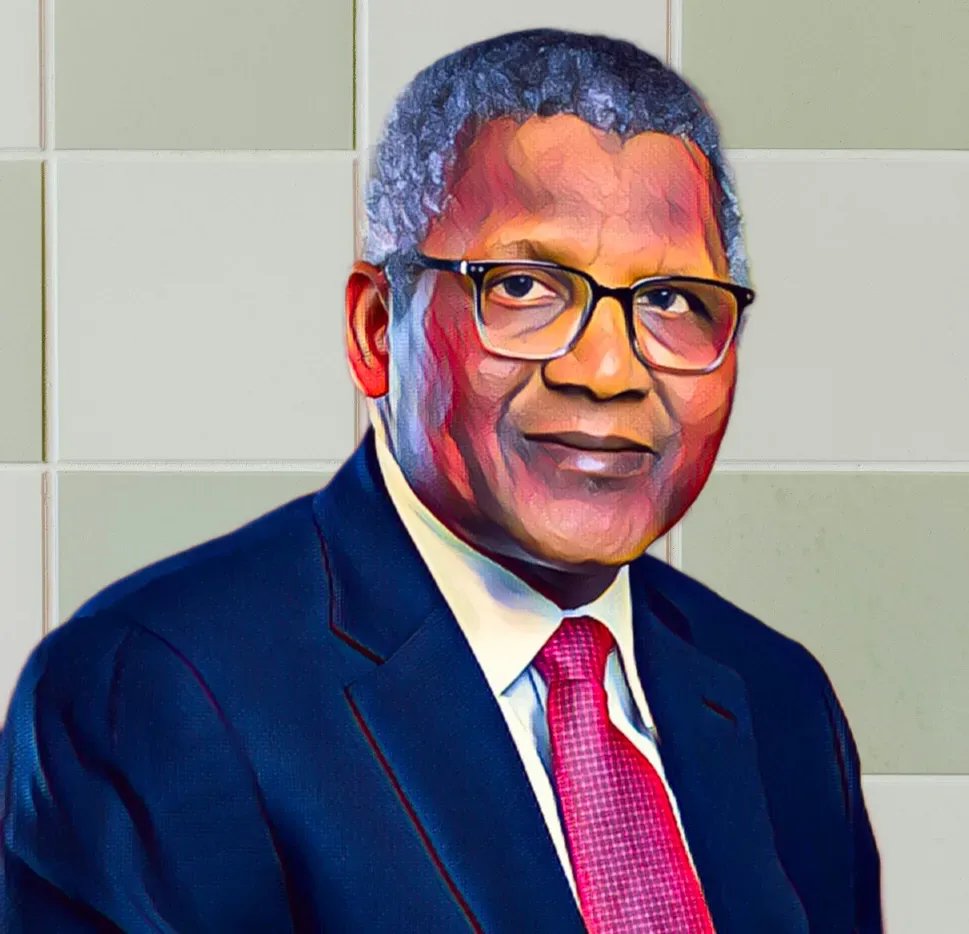
Aliko Dangote says his companies are "very, very innovative." The Economist, which spent time with Africa's richest man at his Lagos office earlier this month, is not so sure.
In a profile published March 17, the British weekly raised a pointed question about the inner workings of Dangote's $28.5 billion empire: for all its industrial scale, how much of the technical brainpower is actually African? The magazine noted that Dangote's companies remain heavily dependent on foreign subcontractors for much of their technical and high-skilled work, spanning construction and ongoing maintenance. Most of the managers running the flagship Dangote Petroleum Refinery and Petrochemicals, the 650,000-barrel-a-day complex outside Lagos that has reshaped Nigeria's energy picture, are Indian nationals. The cement business, which forms the financial backbone of the entire group, has a longstanding operational relationship with Sinoma, a large Chinese company.
Dangote pushed back on the characterization in the interview. He pointed to the refinery's heavy automation and the similarly automated systems inside his cement plants as evidence that his group is, in fact, innovating. "We are very, very innovative," he told The Economist.
That response did not fully land with the magazine. The underlying critique is not just about automation, which can be bought and installed by any company with sufficient capital. It is about whether the technical and managerial capacity to run the facilities is being built inside Nigeria or simply imported from elsewhere alongside the equipment.
The Economist's observation comes in the context of a broader tension running through Dangote's story. He has built the largest privately owned refinery on the continent, the largest fertilizer plant in Africa, and a cement business operating across 16 countries. He frames all of it as proof that Africa can industrialize on African terms. "If we Africans don't lead in the industrialisation of Africa, Africa will never industrialise," he told The Economist in the March 12 interview.
But the same profile notes that his wealth and the conditions that allowed it to grow were shaped significantly by political access rather than competitive markets. A leaked U.S. government cable from 2005 described his fortune as based on family connections and political friendships, and said he held exclusive import rights for cement, sugar and rice at various points. His cement business grew partly behind import bans on the very product he once brought into Nigeria from abroad. Critics quoted in the piece say Dangote's outsize profit margins in cement, which The Economist noted can run at more than twice the rate of rival multinationals even in frontier markets, reflect tax breaks and regulatory protection rather than operational efficiency alone.
Dangote disputes this reading. He argues the margins reflect a genuinely efficient operation and points out that he built things no government or rival was willing to build. On the refinery specifically, he said it received no government incentives and that he paid $100 million for the land on which it sits.
The innovation question is not trivial given what Dangote is now promising. He has told investors and governments across the continent that he plans to expand the refinery's capacity over the next three years to roughly half of Saudi Arabia's combined refining facilities. He has announced a $2.5 billion fertilizer joint venture with Ethiopia, $1 billion in cement and power investments in Zimbabwe, copper processing ambitions in Zambia and cocoa processing plans in Ghana and Ivory Coast. Each of these requires not just capital, which Dangote has, but deep technical execution and the kind of local institutional knowledge that takes years to build.
Whether those ambitions can be delivered at scale, and whether the delivery will be built on genuinely African capabilities or outsourced expertise, is now the central question his empire faces. Dangote's answer, delivered as he was heading out the door toward another meeting, was characteristically direct. "When you come back in three years' time," he said, "what you've seen today, it will be three times that."