

Table of Contents
Nigerian billionaire Aliko Dangote's mega-refinery and industrial empire are redefining what African-led development looks like
For decades, the story of African industrialization has been one of unfulfilled promise — vast natural resources extracted and shipped abroad, only to return as expensive finished products. The continent that supplies the world with crude oil has long imported its own petrol. The land rich in minerals and agricultural potential has remained dependent on foreign manufacturers for basic goods.
But one man is trying to rewrite that narrative.
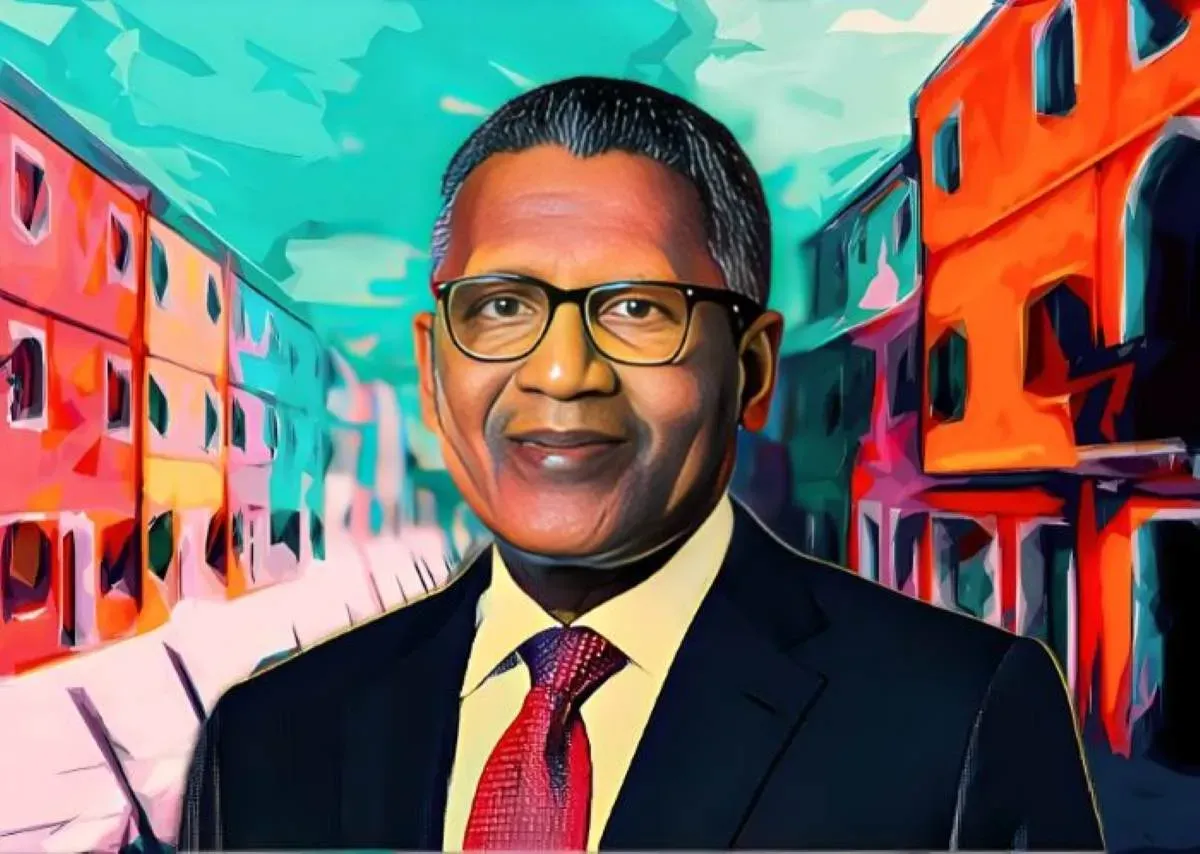
Aliko Dangote, a 68-year-old Nigerian billionaire worth an estimated $28.5 billion, has built what many thought impossible: a world-class refinery complex on the outskirts of Lagos capable of processing 650,000 barrels of oil per day. In doing so, he has positioned himself not just as Africa's richest person, but as arguably its most consequential industrialist — a figure increasingly compared to India's Mukesh Ambani or America's John D. Rockefeller.
In the following interview and profile, The Economist visits Dangote's sprawling industrial empire to explore the man, his ambitions, and his mission to deliver industrial transformation across the continent.
This story was originally published by The Economist in March 2026. It is reproduced here for informational purposes. All rights belong to the original publisher.
Africa’s richest man has ambitious plans for the continent
But the tycoon also has his critics
"It's a crazy situation right now," Aliko Dangote tells The Economist in an interview on March 12th in his office in Lagos, Nigeria's commercial capital. He has returned after a few hours away to find that crude oil prices have surged by 10% because of the latest news from the Gulf. "And I think it will continue for a while," he adds.
African businessmen are often minor players at times of global crises. But the 68-year-old Mr Dangote is no ordinary businessman. In 2023, nearly a decade after it was first proposed, he opened Africa's largest refinery complex on the edge of Lagos, an area nearly half the size of Manhattan. As it can process 650,000 barrels of oil per day, Mr Dangote's phone does not stop ringing with offers from potential buyers. "People are ready to pay anything now," he says, with only some exaggeration.
The refinery is emblematic of Mr Dangote's increasing wealth and power. It is by far the largest scheme owned by the Dangote Group, the conglomerate behind his estimated fortune of $28.5bn, an amount that makes him the only African among the world's 100 richest people, according to Forbes. But Mr Dangote suggests that the refinery symbolises something more: the need for the continent to become more self-reliant. "If we Africans don't lead in the industrialisation of Africa, Africa will never industrialise," he argues. And though no one should confuse the tycoon with an altruist, he may just be right.
From trader to industrialist
Mr Dangote did not start out making things. Like many of his relatives (his great-grandfather was a wealthy merchant of nuts, among other products), he was a trader. From the 1970s onwards he imported soft commodities such as salt and sugar, then sold them in Nigeria. A leaked cable from the American government written in 2005 said that his wealth was "based on his family connections and political friendships" and that at one time or another he held exclusive import rights for cement, sugar and rice.
Around the turn of the century, encouraged by the president of the day, Mr Dangote shifted from importing cement to making it. Dangote Cement became the (concrete) foundation of his fortune. One of three Dangote subsidiaries listed on the Nigerian stock exchange (NGX), it has a market capitalisation of 13.6trn naira ($10bn). Its operating-profit margins can be more than twice as high as those of other cement multinationals, besting even competitors in frontier markets, where margins tend to be higher.
Mr Dangote suggests this is evidence of efficiency. Critics say it shows he has benefited from governments' tax breaks and import bans on the cement he once brought into the country, as well as a deliberate strategy to ramp up capacity so as to scare off potential competitors.
An industrial Xanadu
The refinery complex is, though, on another scale entirely, both for him and for Africa. To build his industrial Xanadu Mr Dangote had to dredge a vast swamp and build a port to bring in the gigantic equipment. On a visit before the interview The Economist toured a maze of pipes and chutes, with the largest distillation tower taller than the clock tower holding Big Ben. The site's nearly 200 fuel tanks are designed to store more than 4bn litres of fuels, a larger volume than France produces of wine every year. "Actually we are building a runway there," says Mr Dangote later. "Nobody believes something like this exists in Africa. We can fly in people to come and have a look," he says.
An indispensable conglomerate
The refinery is a macroeconomic feat as well as an industrial one. Last year the IMF estimated that, if run at full capacity, it would increase Nigeria's non-oil GDP by 1.5% between 2025 and 2026, while increasing official dollar reserves by $5.5bn annually. For decades Nigeria, sub-Saharan Africa's largest crude producer, has imported most of its petrol, which governments subsidised. Mr Dangote's refinery, which can more than cover Nigeria's domestic petrol consumption when running at full tilt, helps reduce demand for dollars and supports the value of the local naira. "Nigeria would have been at a standstill now without the refinery," Mr Dangote says.
He disputes the idea that he is using his usual playbook with the refinery, taking advantage of tax breaks and import bans. Regulators say they are not issuing new import licences for petrol—in a move that would echo what happened with cement—but the Dangote Group says this is not the case in practice. There are vested interests in the status quo, made up of what he calls the oil mafia built around imports.
The refinery's use extends beyond energy. It produces polypropylene for plastics and will soon add a key chemical for detergents. In a warehouse as big as an airport hangar, conveyor belts offload snowy piles of fertiliser onto lorries powered by gas from the refinery, headed for Mr Dangote's purpose-built port. These are some of the 3m tonnes of fertiliser it can produce per year, more than any other plant in Africa. The de facto closure because of Iranian attacks of the Strait of Hormuz, the Gulf channel through which a third of the world's seaborne fertiliser trade passes, only affirms Mr Dangote's importance.
Continental ambitions
What does Mr Dangote have planned for his next trick? He wants to list a portion of the refinery on the NGX (and perhaps in London, too, though a plan to do the same for the cement business never materialised) and over the next three years expand capacity to almost half as much as all of Saudi Arabia's facilities combined. He also wants to use the gas produced at the complex to provide power for manufacturers that could set up nearby.
The Dangote Group has plans beyond Nigeria; it already operates in 16 other African countries. Last year it announced a $2.5bn joint venture with Ethiopia to build a fertiliser plant of similar size to the one in Nigeria. Mr Dangote says he will invest another $1bn in cement and power projects in Zimbabwe. He lists other ideas: potash and phosphate mining, copper processing in Zambia, cocoa processing in Ghana and Ivory Coast, and a petroleum pipeline from Namibia to central Africa.
"We know that if we don't invest, there's nobody that will come and invest in our continent," argues Mr Dangote. Who led investment into East Asia, he asks rhetorically. "It wasn't the Europeans. It was led by themselves as Asians." And the industrialists investing in India? "They're all Indians." Indeed Mr Dangote's refinery and continental ambitions have prompted comparisons to Mukesh Ambani, the richest man in India, whose conglomerate, Reliance, runs the largest refinery in that country. "Watch this space. Aliko Dangote is about to become the Ambani of Africa," argues Amit Jain of Nanyang Technological University in Singapore.
For though Mr Dangote talks of the need for African businessmen to invest in Africa, he implies that most either cannot or will not. "I can't see any African country today building a refinery, and if they tried, I wish them best of luck," he says, reflecting on the huge effort it took him. "Africans generally might not have this kind of capital. Even when they have, they don't want to invest. They are scared about investing. We are not."
The risks of a single champion
Mr Dangote has 650,000 reasons a day why he is best placed to be Africa's industrialist. No other tycoon has the balance-sheet, bolstered by the cement business, to fund such projects. None has his track record. But it may be that Mr Dangote enjoys it that way. And whether it is best for the continent to have a single Ambani or Rockefeller, rather than a panoply of competing tycoons, is less clear.
His companies also remain heavily dependent on foreign subcontractors for much of their technical, high-skilled processes, from construction to maintenance. Most of the refinery's managers are Indians. The cement business has a longstanding relationship with Sinoma, a large Chinese company. Mr Dangote brushes these criticisms away. "We are very, very innovative," he argues, citing the heavily automated refining and cement production.
As he gets up to leave, a flurry of staff emerge seemingly from nowhere. There is another meeting to get to: more deals to be struck. "When you come back in three years' time," Mr Dangote offers as a parting thought, "what you've seen today, it will be three times that."
This article was originally published by The Economist on March 17, 2026: “Africa’s richest man has ambitious plans for the continent.”