


Table of Contents
Oando PLC has signed a production sharing contract for Block KON-13 in Angola's onshore Kwanza Basin, formally entering one of Africa's most prolific oil-producing countries and adding a new chapter to the Nigerian energy group's push to build a genuinely pan-African upstream portfolio.
Angola's National Agency for Petroleum, Gas and Biofuels confirmed the signing and announced the contractor group structure. Oando Energy Resources, the company's upstream subsidiary, holds a 45% participating interest and takes on the operator role. Its partners in the block are Effimax Energy, with 30%, Angola's state oil company Sonangol Exploração e Produção with 15%, and Walcot Ltd with 10%.
Block KON-13 sits in the Kwanza Onshore Basin, a region that geologists have long identified as holding significant untapped potential in both pre-salt and post-salt formations. Angola's petroleum regulator said the block carries estimated prospective resources of between 770 million and 1.1 billion barrels of oil. Two exploration wells have already been drilled on the block to a target depth of 3,000 metres, with oil and gas shows recorded at multiple depth levels, giving Oando a clearer picture of what lies below before any new drilling begins.
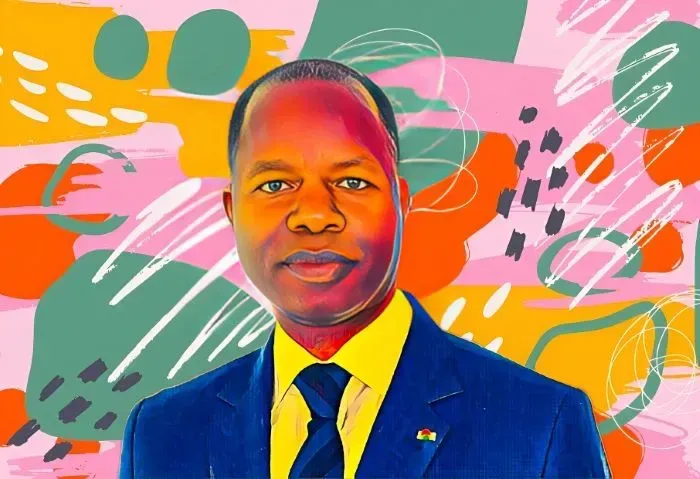
Wale Tinubu, group chief executive of Oando PLC, said the award underscored the company's commitment to expanding its African footprint and contributing to the continent's energy goals.
"I am thrilled by our successful bid and award of Block KON 13 in Angola," Tinubu said. "I am confident in our ability to leverage our expertise to develop and maximise the value of this asset."
Paulino Jerónimo, chairman of the ANPG board, said Oando's arrival in Angola signalled that African companies were increasingly capable of leading complex upstream operations across borders, a point that resonated with the wider narrative around indigenous African operators taking on roles previously dominated by European majors.
The deal formalises Oando's entry into a market it has been targeting for years. Tinubu disclosed as far back as 2014 that the company had signed a joint venture in Angola. The path from that early interest to an actual signed production sharing contract took more than a decade and ran through a series of setbacks, restructurings and missed opportunities before the KON-13 bid finally came through in 2024.
That persistence now sits alongside a series of other significant moves that have transformed Oando's position in African upstream energy over the past two years. In September 2024, the company took over operatorship of four oil mining leases in Nigeria's onshore Niger Delta, which had previously been held by Italian major Eni through its subsidiary Nigerian Agip Oil Company. That transaction, valued at $783 million, was one of the largest transfers of upstream Nigerian assets from an international oil company to an indigenous operator in the country's history.
Oando Energy Resources already holds interests in 14 oil and gas assets across Nigeria and São Tomé and Príncipe, spanning exploration, development and production both onshore and offshore. Its operational footprint includes more than 22,447 square kilometres of acreage, capacity to handle 483,000 barrels of oil per day, a gas processing capacity of 3,663 million standard cubic feet per day, a pipeline network of more than 1,255 kilometres, 14 flow stations and a one-gigawatt power plant.
Angola's onshore Kwanza Basin covers roughly 25,000 square kilometres and is subdivided into 23 blocks. Historically it was a significant production zone, but a shift toward deepwater development in the late 1990s reduced investment in the onshore sector for nearly two decades. Angola's government has been working to revive interest in the basin through new licensing rounds and competitive bid processes, with the KON-13 award to Oando representing one of the more prominent results of that effort.
The block adds to growing activity across Angola's onshore sector from Nigerian-linked operators. Walcot Group separately signed contracts for additional Angolan blocks in April 2025, with its 10% non-operating position in KON-13 part of that wider deal. The concentration of Nigerian capital and operational experience in Angola's onshore sector reflects a broader shift in how energy investment is flowing across the continent, from European majors moving out toward African independents moving in.