

Table of Contents
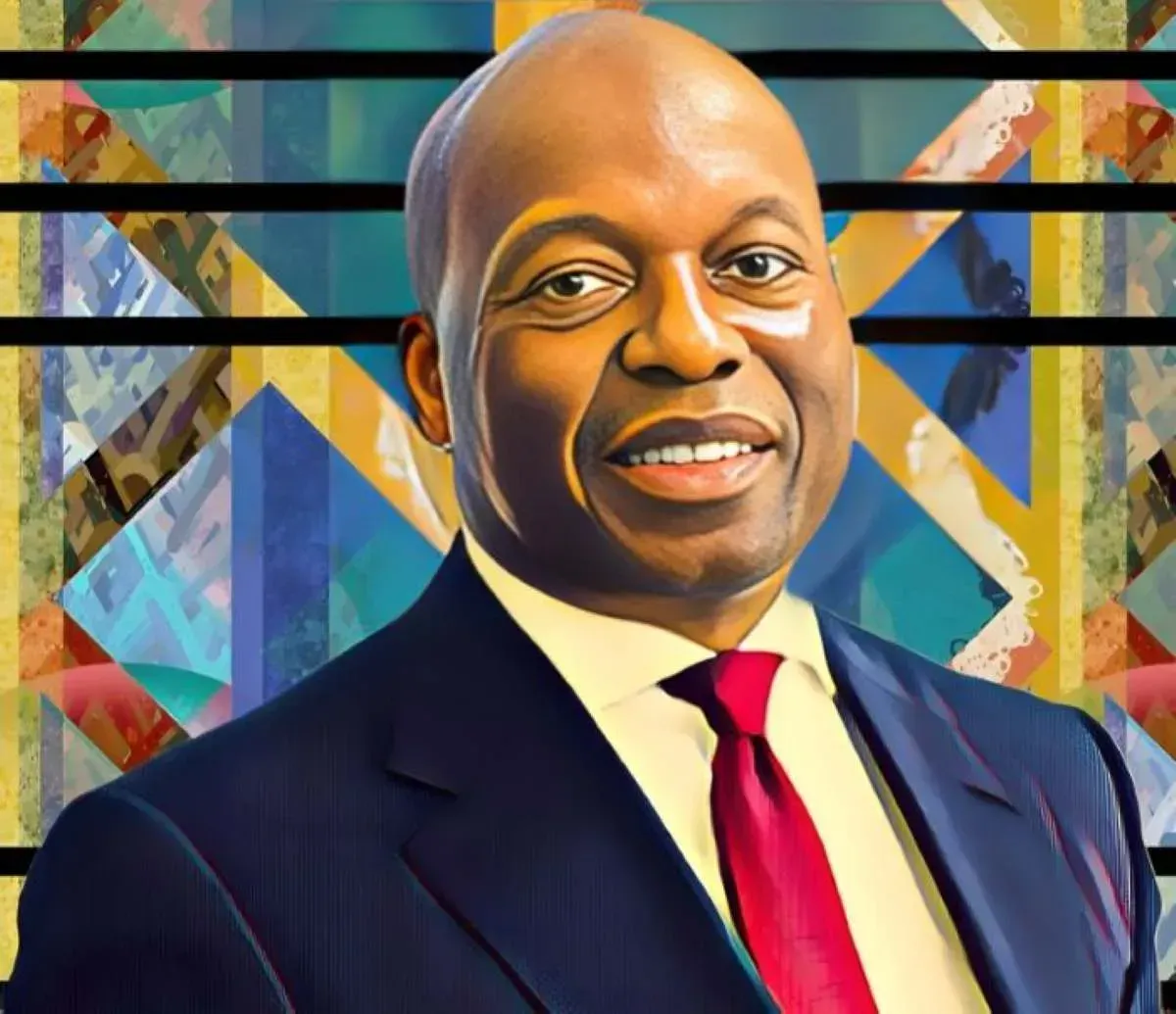
Wale Tinubu, the chief executive of Oando Plc, said the Nigerian energy company is seeking to raise up to $750 million this year to fund a drilling campaign targeting as many as 100 wells, a programme that could triple the company's current output from an already expanded base.
Tinubu made the disclosure to Reuters in London on April 10, saying the global disruption caused by the US-Israel-Iran conflict, which began in late February 2026 and has closed the Strait of Hormuz, has improved investor appetite for West African oil producers and opened funding avenues that were not available before. Oando is moving to capture that window.
"We are pushing very, very hard towards getting the financing that we need to do an extensive drilling campaign," Tinubu said.
The company's production averaged just over 32,000 barrels of oil equivalent per day in fiscal 2025. A 300% increase would push that figure toward approximately 128,000 boepd, ahead of the 100,000 bpd oil target Oando had already set for 2029. Oando's long-range plan also includes 1.5 billion cubic feet of gas per day by that year.
Where the money is coming from
Oando has raised $3 billion to $4 billion over the past decade, the bulk from European banks, and most of that capital went toward acquisitions rather than drilling. Those banks have now effectively exited African hydrocarbons, driven by climate-related investment policies, leaving Oando to pivot to a different set of funders.
The new lender base includes the African Export-Import Bank and the African Finance Corporation, both of which have been consistent partners in Oando's financing history. On the trading house side, Oando works with Vitol, Trafigura, Glencore and Mercuria. Tinubu said Gulf banks are now showing stronger interest in African hydrocarbon projects and more parties are joining their syndications. Private equity and hedge funds are also more active, he said.
In August 2025, Oando's board signed off on a multi-instrument issuance programme of up to $1.5 billion, a broader capital-raising infrastructure that the $750 million drilling programme fits within. More broadly, Tinubu argued that Africa should pool its own capital, including from pension funds and other domestic sources, to finance large-scale energy projects rather than depending on European lenders who are exiting the sector.
The Iran war as a tailwind
The closure of the Strait of Hormuz has redirected crude flows, with Asian buyers seeking alternatives to Gulf oil. Tinubu said there has already been a visible shift in demand for Nigeria's crude, with more cargoes heading to Asia to fill the gap. For Oando, and for Nigerian producers more broadly, this creates both a pricing opportunity and a funding advantage.
"Even if the ceasefire lasts, which hopefully it will, it wouldn't change the fact that consistently, you're going to find disruptions," he said, adding that geopolitical turmoil has "long-reaching strategic implications for global energy security." West Africa's reserves, which sit outside the Middle East's volatility, become more strategically valuable each time another crisis hits.
Oando's position going into the campaign
Tinubu's company is in a structurally different position for this drilling push than it was even two years ago. In August 2024, Oando completed its $783 million acquisition of the Nigerian Agip Oil Company from Eni, one of the largest upstream transactions in recent Nigerian history. That deal doubled Oando's working interest in OMLs 60-63 from 20% to 40% and roughly doubled its 2P reserves to approximately 1 billion barrels of oil equivalent, giving the company a much larger drilling inventory to work from.
The financial results reflect the changed scale. By the first nine months of 2025, Oando had posted a 59% jump in production and a 164% rise in profit after tax, reaching N210 billion. The company's restated 2024 profit came in at N220 billion ($139.2 million), a more than threefold increase on 2023, on revenue of N4.12 trillion ($2.6 billion).
Oando is also expanding geographically. The company recently moved into Angola and Tinubu said it is exploring opportunities in Ghana and Ivory Coast, building toward the continental energy platform it has described as its longer-term ambition.
One complication remains. Oando has flagged repeated delays in filing audited financial statements with the Nigerian Exchange, and Tinubu acknowledged the company is working to streamline its financials to avoid further extensions. Getting the drilling campaign funded while also cleaning up its reporting obligations is the operational challenge running alongside the growth story.
Tinubu took care to note that the reforms already in place are making Nigeria an easier pitch to international capital. He cited the landmark 2021 Petroleum Industry Act overhaul and President Bola Tinubu's subsequent reforms to Nigeria's currency regime and fuel subsidies as factors that have materially improved investor confidence in the country's energy sector. He also pointed to the Dangote refinery's 650,000 barrel-per-day capacity as evidence of how much value sits inside Nigeria's resource base. Oando, which was once one of Nigeria's largest fuel importers, now uses imports only to test pricing or cover refinery maintenance periods.