

Table of Contents
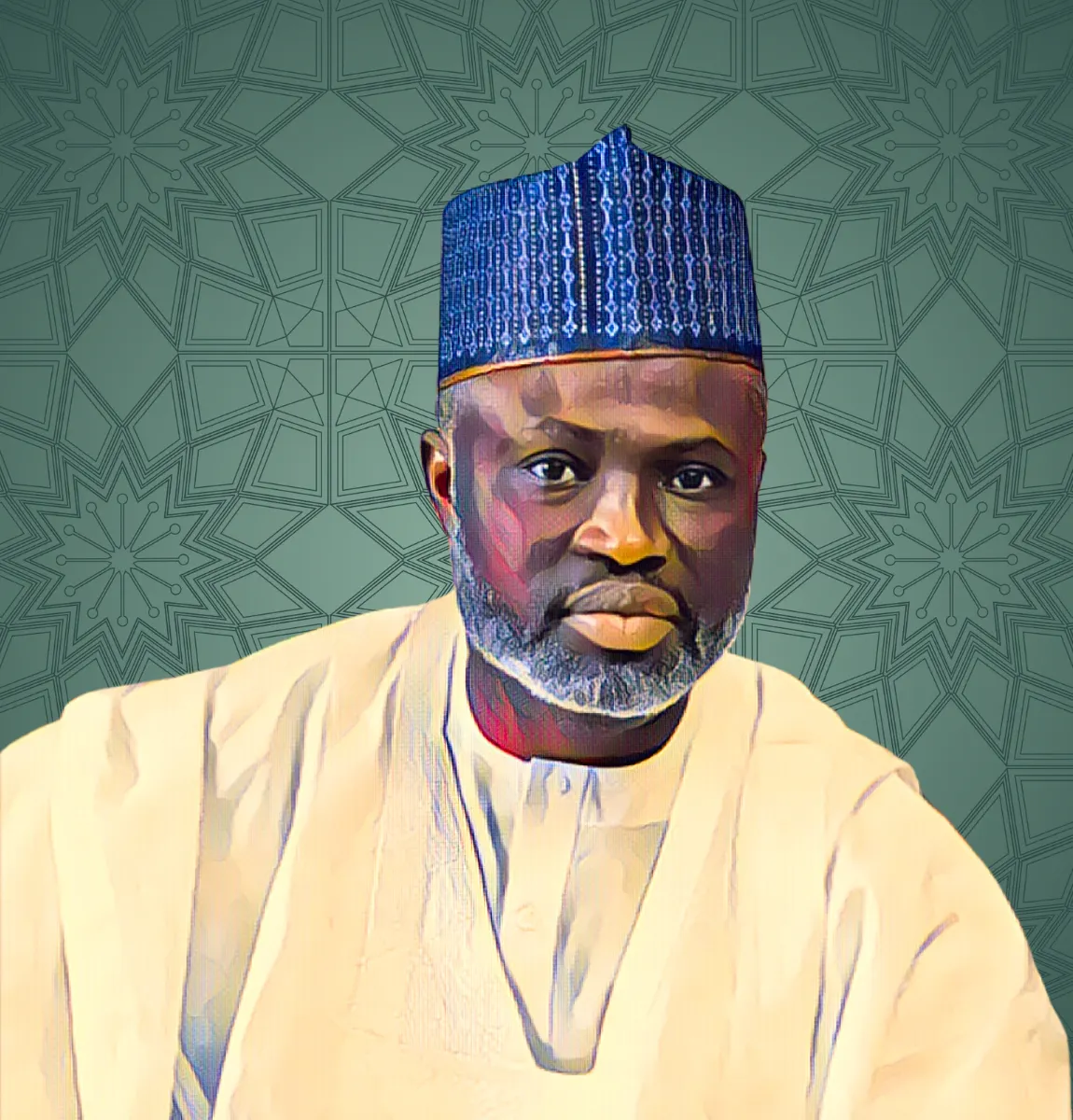
He grew up in Jos, the city that sits on Nigeria's Plateau, where the ground beneath the colonial-era tin fields had been turned over and turned over again by successive waves of extraction. The landscape shaped him early. Abdulfatai Yahaya Seriki Gambari started going into mines as a teenager, still a student, learning what came out of the earth and what it was worth.
That early instinct became a career and, eventually, a company. Kursi Investments Limited, which Seriki Gambari founded in 2005, has grown from a single-focus mining operation into a group of companies operating across 30 of Nigeria's 36 states, producing gold, copper, lead, zinc, silver, tin and rare earth minerals. He is now Nigeria's most internationally visible indigenous mining entrepreneur, a man who speaks at global mining forums in London and Riyadh about what it takes to build in a sector that most Nigerian businesspeople have historically avoided.
The early years
Seriki Gambari was born on October 8, 1975 in Kaduna and raised in Maiduguri and Jos. His family roots are in Ilorin, the capital of Kwara State in North Central Nigeria, where his people are part of the Seriki Gambari family, one of the ancient city's prominent lineages. The family connection to Ilorin gave him identity and standing. The years in Jos gave him something harder to name: proximity to the act of mining itself, to the physical work of pulling wealth from rock.
He studied at Brig Maimalari Secondary School in Maiduguri, then went on to Plateau State Polytechnic, where he earned an HND in Public Administration. He later studied at the University of Port Harcourt and attended Nigeria Mining School in Jos. He holds a Certificate in Accounting and Auditing and a Certificate in Mining and Engineering. The qualifications are practical rather than academic. He built his knowledge the same way he built his company: one layer at a time.
He entered mining as a young man, working in the sector while still completing his education. He has described this period as the foundation on which everything else was built: understanding the geology, the logistics, the economics and the politics of getting minerals from the ground into the hands of buyers. Over 3 decades, that understanding became the competitive edge of Kursi.
The Lead/Zinc years
When Kursi began operations in earnest, the play was not gold. It was lead and zinc, minerals that sit beneath large stretches of north-central Nigeria and had been largely overlooked by the international market. Between 2010 and 2015, Kursi became one of the highest net exporters of lead/zinc in Nigeria. Seriki Gambari is credited by industry observers as one of the pioneers who put Nigeria's lead/zinc mineral potential on the map for international buyers.
The discipline required during those years was considerable. Nigeria's solid minerals sector has historically been neglected, underfunded and plagued by regulatory gaps. The infrastructure that takes ore from mine to port is thin. The formal licensing framework, though improved after the Nigerian Minerals and Mining Act of 2007, remained complicated to navigate. Seriki Gambari built Kursi through that environment, methodically, acquiring strategic mining titles across multiple states.
The lead/zinc success gave him 2 things: access to capital and access to partners. He invested both.
The gold pivot
In 2016, Seriki Gambari made the move that would define the company's next decade. Working with Chinese partners who brought technical expertise and capital, he began exploration for gold and set about establishing what his company's own materials now describe as Nigeria's most productive gold mine.
The timing was not accidental. Global gold prices had been recovering after a slump in the early 2010s, and Nigeria's own gold sector was beginning to attract attention. Zamfara State in the northwest, historically Nigeria's richest gold province, was producing increasing volumes. Exploration was picking up across Osun, Kebbi, Sokoto and Niger states. The federal government, looking to diversify revenue away from oil, was pushing solid minerals development with renewed urgency.
Kursi moved before most. By the time government interest in the gold sector became public policy and industry attention, Kursi's operations were already running. The company now has offices in 22 states and mining operations in 30 of Nigeria's 36 states, an operational footprint that no purely indigenous mining company had previously achieved.
Kursi has also joined the Responsible Jewelry Council (RJC), committing to ethical supply chain standards, traceable gold and compliance with international environmental and social governance norms. That membership matters at a moment when global buyers are scrutinising the provenance of African minerals with greater intensity.
Recognition arrives
In 2023, President Muhammadu Buhari conferred on Seriki Gambari the national honour of Member of the Order of the Federal Republic (MFR), recognising his contributions to national development. He was also named among Nigeria's most inspiring CEOs that year by Guardian Nigeria. In January 2024, he was inducted as an Honorary Fellow of the Nigerian Mining and Geosciences Society (NMGS), in recognition of his work organising field trips, promoting research and advancing scientific knowledge in mineral exploration. He holds fellowships in the Nigerian Society of Engineering in Geology (FNSEG) as well.
He has spoken at Mines and Money London, the flagship global mining investment conference, and at the Future Minerals Forum in Riyadh in January 2025, where he represented Nigerian mining interests before an audience of sovereign wealth funds, international operators and policy makers. He is, in the language of that world, a known name.
The foundation and what it does
Outside of Kursi, Seriki Gambari runs the Yahaya Seriki Foundation, through which he has deployed a N250 million Cash Boost Initiative providing grants to entrepreneurs, small businesses, youth, men and women in Kwara State. Kursi has also drilled and installed solar-powered boreholes in 7 locations serving the communities around its mine sites.
The community work is not incidental. Mining companies that fail to manage the relationship with host communities in Nigeria often face disruptions that shut down operations for weeks at a time. Seriki Gambari has consistently emphasised that community investment is part of how Kursi protects its own business continuity, not just a separate philanthropic exercise.
He holds a United Nations accreditation as a Peace Ambassador, a credential that speaks to his positioning in community relations and conflict resolution, both of which matter in a sector where mining rights frequently intersect with land disputes.
Politics and business
Seriki Gambari has not kept his political ambitions separate from his public profile. He is a chieftain of the All Progressives Congress in Kwara State and was a prominent figure in the "O To Ge" movement, the campaign that ended the political dominance of former Senate President Bukola Saraki in the state in 2019. He declared for the Kwara governorship that year, then became the first candidate to withdraw from the race, channelling his support to AbdulRahman AbdulRasaq, who went on to win and for whose campaign Seriki Gambari served as Director General. In 2022 he announced a senatorial bid for the Kwara Central Senatorial District.
The combination of mining and politics is not unusual in Nigeria's mineral-rich north, where the two have been entangled since the colonial era. What is unusual is the scale at which Seriki Gambari has built in both spheres simultaneously.
What Kursi has become
Kursi is now a group of companies spanning mining, manufacturing, trading and agriculture, with its headquarters in Abuja and operational presence from Kebbi to Ebonyi. The group participates in international exhibitions and serves buyers across Asia, Europe and the Middle East. It was a Diamond Sponsor of Nigeria Mining Week 2024, the sector's annual flagship gathering, and has been a consistent presence at every major industry event since.
Nigeria's solid minerals sector still punches far below its weight, contributing roughly 0.15% of GDP against a government target of 3%. The country has 757,000 ounces of estimated gold reserves alone, worth up to $1.4 billion at current prices. The gap between what is in the ground and what is coming out of it remains vast.
Seriki Gambari has spent 3 decades closing that gap, one licence, one partnership and one mine at a time. He started in the sector when it was invisible to mainstream Nigerian business. He is still there now that it has the attention of presidents, global funds and international buyers. That longevity, in a sector as difficult as this one, is its own kind of credential.
The intelligence satisfies curiosity. The paid briefings satisfy strategy.
Every Monday, Elite subscribers receive an Investor Memo breaking down the deal, the structure and the positioning behind the week's most consequential African wealth story - the kind of analysis that doesn't appear anywhere else.
Twice a month, a Wealth Intelligence brief profiles a single billionaire's holdings, cash flows and expansion pipeline in detail no public source matches.
→ Executive ($25/mo): Daily newsletter + Deep-Dive Reports
→ Elite ($75/mo): Everything above + Investor Memos + Wealth Intelligence + Quarterly Analyst Briefings
Subscribe now