

Table of Contents
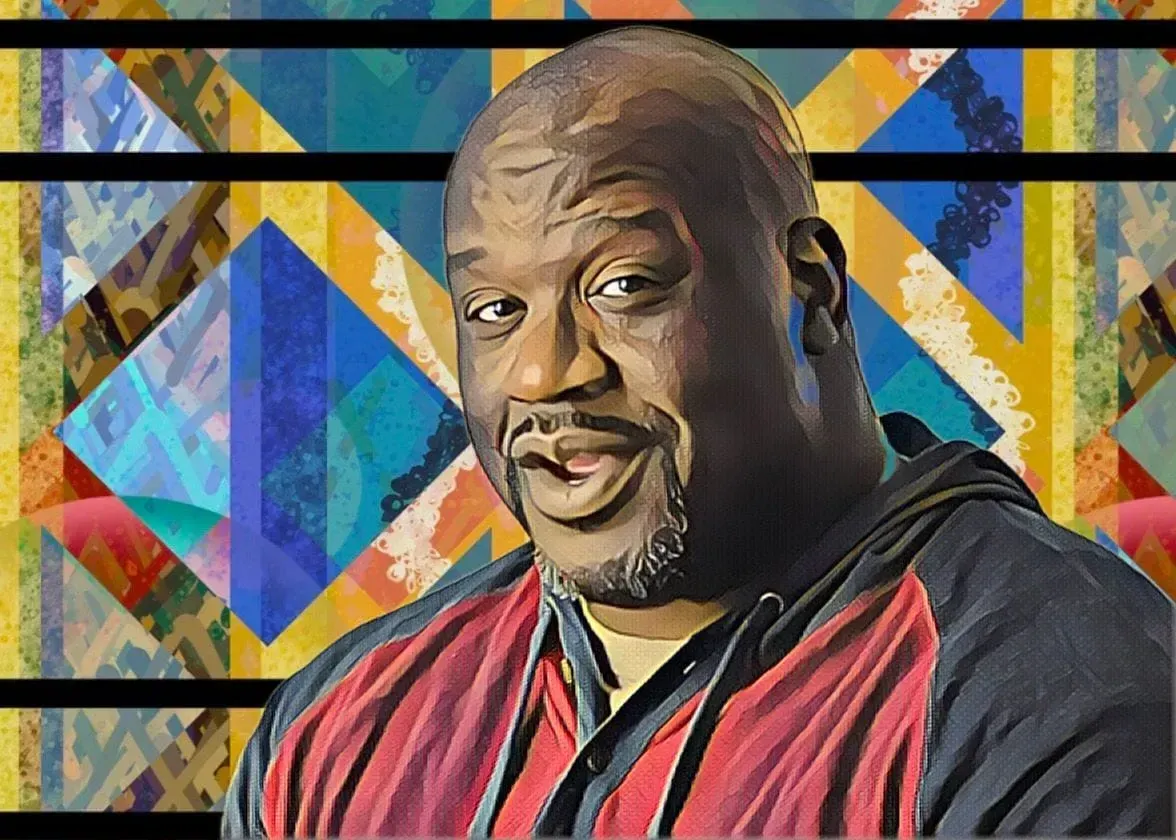
Shaquille O'Neal has never done anything small. Not on the basketball court, not in a room, not in a business deal. So it should surprise nobody that the man who once earned $292 million playing basketball has since built something that earns him $95 million a year in retirement, with a credible path to becoming a billionaire before the end of the decade.
He is not there yet. His net worth sits at approximately $500 million, a figure that most people will never see but that in the context of the club he is trying to join -- Michael Jordan, LeBron James, Magic Johnson, Jay-Z -- puts him exactly at the threshold where the next few years either close the gap or stall him out. The difference between $500 million and $1 billion is not just money. It is compounding, equity appreciation and the maturation of 2 or 3 bets that are currently mid-play.
The biggest of those bets is a chicken sandwich.
Big Chicken: the asset doing the heavy lifting
Big Chicken opened its first location in Las Vegas in October 2018. It was, at the time, easy to dismiss. Celebrity restaurant concepts have a long and mostly depressing track record. Shaq is not the only famous person to put his name on a menu and his money into a kitchen. He is, however, one of the very few who has built something that looks, from the inside, like a real business.
The numbers are not typical for a restaurant brand that is 7 years old. There are 40-plus locations open as of early 2026, with more than 350 in the development pipeline. Its year-over-year unit growth rate is 234%, compared to an industry average of essentially zero. In 3 years of franchising, not a single location has closed. The industry's average 3-year failure rate is 10%.
The brand was co-founded with JRS Hospitality, which provides the operational infrastructure, and Authentic Brands Group, which manages licensing and brand architecture. In March 2025, Craveworthy Brands, a multi-concept restaurant platform that operates 15 brands, came in as a managing partner and investor, taking operational control of training, supply chain, culinary development and customer service at scale. That move addressed the central vulnerability of any franchise system: whether the franchisor can maintain quality as the footprint expands from dozens to hundreds of locations.
O'Neal remains the largest individual stakeholder. CEO Josh Halpern, named to Nation's Restaurant News top 100 most influential executives list, runs the day-to-day. But Shaq's involvement is not the standard celebrity licensing arrangement where someone takes a cheque for lending their name and disappears. His mother Lucille has described Big Chicken as a family business, and O'Neal has embedded his personality in the brand to a degree that makes it difficult to replicate without him.
The menu items are named after his life: the "Big Aristotle," the "Charles Barkley," the "Shaq Attack." Locations are anchored in sports venues where they reach captive audiences: a Big Chicken sits in the UBS Arena outside New York and another is at Climate Pledge Arena in Seattle. The venues strategy serves as both marketing and volume driver, introducing the brand to millions of fans per year before the surrounding franchise locations open.
If Big Chicken reaches 200 open locations on average unit volumes consistent with comparable fast-casual brands, the system-wide revenue would approach $300 million annually. At standard royalty rates, that is approximately $18 million per year flowing back to the brand. But the bigger number is the equity value. Shake Shack went public in 2015 with 62 locations and was valued at $561 million. Big Chicken, with a more aggressive unit count trajectory and a celebrity IP moat, could be worth considerably more when it eventually tests public or private market valuations.
Authentic Brands Group: the quiet billion-dollar stake
Most people who follow O'Neal's business career focus on the restaurants. The more interesting asset might be the one they overlook.
O'Neal is a co-owner of Authentic Brands Group, the brand management company that owns Reebok, Forever 21, Brooks Brothers, Barneys New York, Sports Illustrated, Juicy Couture and more than 50 other intellectual property portfolios. ABG was valued at $20 billion in its 2023 funding round. BlackRock, General Atlantic and Simon Property Group are among its institutional backers.
When ABG acquired Reebok from Adidas for $2.5 billion in 2022, O'Neal was installed as President of Basketball Operations at the brand. He brought Allen Iverson in as Vice President. The arrangement is not purely ceremonial. Shaq signed the first major NIL deal for Reebok with Angel Reese, the LSU Women's Basketball star who became one of the most commercially valuable college athletes in the US after the Supreme Court's 2021 ruling. That deal positioned Reebok in the women's basketball market at a moment when the WNBA and college women's basketball were experiencing a genuine commercial breakthrough.
If Shaq holds even 1% of ABG, that stake is worth $200 million at the 2023 valuation. Various reports suggest his ownership is meaningful, though the exact figure has not been publicly disclosed.
The franchise empire that came before
Big Chicken is the current focus, but O'Neal built the model for franchising as a wealth-creation mechanism years before anyone was paying attention.
At one point he owned 155 Five Guys burger restaurants, representing approximately 10% of the entire chain. Not as an investor. As a franchisee: he found the locations, signed the leases, hired the staff and ran the operations through his management team. He sold the entire portfolio in 2016 for an estimated $80 million to $100 million, ploughing the proceeds into the next play.
He simultaneously owned 40 24-Hour Fitness gyms. He owned 17 Auntie Anne's pretzel locations, which he eventually divested with his characteristically direct assessment of why the product was not resonating: "Black people don't like pretzels that much." He currently owns 9 Papa John's restaurants in Atlanta, which he acquired in 2019 when the brand was in crisis following racial controversy involving its founder. His involvement was credited with stabilising the brand's reputation among Black consumers, a contribution that went beyond franchise economics. He stepped down from the Papa John's board in 2024.
He also owns approximately 150 car washes. This is not glamorous. It is also not supposed to be. Car washes are cash-intensive, largely recession-proof businesses with high margins once established. At 150 locations, the gross revenue could be $30 million to $60 million annually. He owns 1 Krispy Kreme franchise.
The early tech bets
Before most athletes understood that technology startups were a legitimate investment category, O'Neal was writing cheques into early-stage companies. He was an early investor in Google. He put money into Apple. He invested in Ring, the smart doorbell company, before Amazon acquired it for $1 billion in 2018. None of these stakes were disclosed publicly with enough specificity to allow precise valuation, but the pattern reflects the kind of lateral thinking that separates O'Neal from the standard celebrity investor.
More recently, he co-founded SteadyIQ, a financial wellness platform. He is a founding partner in Majority, a media and information services company. He co-owns NRG Esports. He co-founded Astrals, an NFT and blockchain gaming venture. He holds a stake in BeatBox Beverages. He is a founding partner at Jacmel Growth Partners, an investment firm.
The $95 million annual machine
What makes O'Neal's position genuinely unusual among athlete entrepreneurs is that his annual income significantly exceeds what most athletes earn during their entire careers.
The $95 million a year breaks down approximately as follows: roughly $15 million from his television deal as an analyst on NBA studio coverage, now at NBC/Peacock after the TNT contract ended; approximately $60 million from endorsements that include Gold Bond, Icy Hot and The General Insurance; and the remaining $20 million to $25 million from franchise revenues, investment returns and licensing fees. His peak NBA salary was $30 million. He now earns more than 3 times that amount in retirement, every year.
He has stated publicly that his personal investing philosophy borrows from Jeff Bezos: only invest in products and brands you personally use and love. "Once I started doing that strategy, I think I probably quadrupled what I'm worth now," he told CNBC.
How close is $1 billion?
The honest answer is that it depends almost entirely on 2 things: what Big Chicken's equity is worth when it eventually transacts, and what happens to the Authentic Brands Group stake as ABG executes its IPO ambitions or further private rounds.
On current trajectory, the gap between $500 million and $1 billion closes through compounding income, equity appreciation in Big Chicken, and any crystallisation of the ABG stake. His $95 million annual income, if reinvested conservatively, adds meaningfully to his base every year. Big Chicken's 350-location development pipeline, if even half converts to open restaurants by 2028, creates an asset whose value would be measured in hundreds of millions of dollars, not tens.
The basketball greats O'Neal is chasing reached billionaire status through different routes: Jordan through Nike royalties that now generate $150 million a year and a successful sports franchise sale; LeBron through equity stakes in SpringHill, Fenway Sports and Lobos tequila; Magic Johnson through a Starbucks licensing deal, movie theatre ownership and eventually a stake in the LA Dodgers. O'Neal's route is franchising, brand equity and the kind of patient institutional ownership that large companies take seriously.
He is 53 years old, earning $95 million a year, holds equity in a $20 billion brand conglomerate and owns the fastest-growing chicken franchise in the United States. The question about whether he becomes a billionaire is increasingly not whether but when.
The intelligence satisfies curiosity. The paid briefings satisfy strategy.
Every Monday, Elite subscribers receive an Investor Memo breaking down the deal, the structure and the positioning behind the week's most consequential African wealth story - the kind of analysis that doesn't appear anywhere else.
Twice a month, a Wealth Intelligence brief profiles a single billionaire's holdings, cash flows and expansion pipeline in detail no public source matches.
→ Executive ($25/mo): Daily newsletter + Deep-Dive Reports
→ Elite ($75/mo): Everything above + Investor Memos + Wealth Intelligence + Quarterly Analyst Briefings
Subscribe now