

Table of Contents
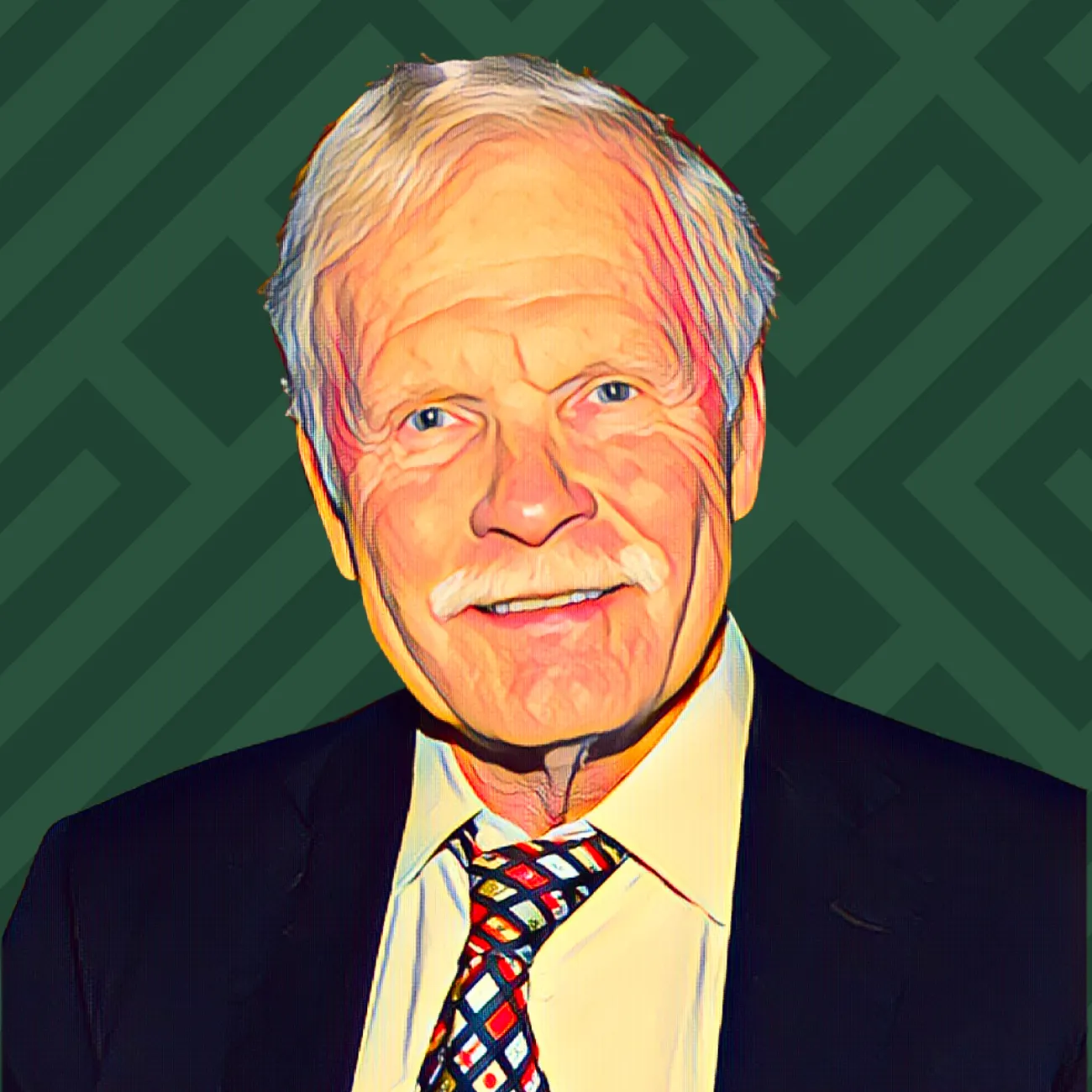
Ted Turner, the Atlanta billionaire who launched CNN on June 1, 1980 and created the first 24-hour television news channel at a time when virtually no one in the broadcast industry believed such a thing could work or survive, died peacefully on Wednesday surrounded by his family, Turner Enterprises announced. He was 87.
Turner had been diagnosed with Lewy body dementia in 2018 and was hospitalised with a mild case of pneumonia in early 2025 before recovering. His death brought to an end a life that combined one of the most audacious entrepreneurial bets in American media history with a philanthropic record that reshaped how billionaires think about giving.
"Ted was an intensely involved and committed leader, intrepid, fearless and always willing to back a hunch and trust his own judgement," CNN Chairman and CEO Mark Thompson said in a statement. "He was and always will be the presiding spirit of CNN. Ted is the giant on whose shoulders we stand."
Turner himself had a simpler description for what he built. He called CNN "the greatest achievement" of his life.
The bet that changed television
Robert Edward Turner III was born on November 19, 1938 in Cincinnati, Ohio and grew up in Savannah, Georgia, the son of a billboard company owner who drank, disciplined harshly and ultimately died by suicide in 1963 when Ted was 24. The elder Turner had overextended himself with a $4 million acquisition and, under the weight of depression and debt, shot himself in the family home.
His 24-year-old son buried his grief and took over the company.
He bought radio stations, then in 1970 acquired a struggling Atlanta television station known as Channel 17. Six years later, he beamed that station's signal to a satellite and created cable television's first superstation, reaching viewers across the country. He bought the Atlanta Braves and the Atlanta Hawks partly for the television rights and partly because he could.
The idea for CNN came from a personal frustration. "I worked until 7 o'clock, and when I got home the news was over," he said. "So I missed television news completely. And I figured there were lots of people like me." He also believed television news, confined to 30-minute evening broadcasts on the major networks, was leaving Americans badly underserved and consequently badly informed.
The experts disagreed loudly. Turner pushed forward anyway. On June 1, 1980, CNN went live. Critics called it "Chicken Noodle News." The 1990 Gulf War, the first conflict broadcast live around the world and only available on CNN, ended the mockery. In 1991, Time magazine named Turner its Man of the Year.
The empire and the sale
By the time Turner sold his networks to Time Warner in 1996, his television portfolio encompassed not just CNN and CNN International but also TNT, Turner Classic Movies, the Cartoon Network and CNN2, now HLN. The sale price was nearly $7.5 billion. He stayed on as vice-chairman of Time Warner and head of its cable networks.
Then came the AOL-Time Warner merger of 2000, described as a play to help a legacy media company navigate the dot-com era, which turned into the biggest failed merger in corporate history. AOL bought Time Warner for $99 billion in stock. The dot-com bubble burst in 2001. The combined company recorded a $99 billion loss. Turner, whose fortune was concentrated in company stock, lost more than $7 billion in 3 years.
He resigned as AOL Time Warner vice-chairman in 2003 and left the board in 2006.
"I lost Jane. I lost my job here. I lost my fortune, most of it. Got a billion or two left," he told CNN's Piers Morgan in 2012. He was speaking of Jane Fonda, the actress he had married in 1991 and divorced after a decade. "You can get by on that if you economize."
Philanthropy on a billion-dollar scale
The money that remained, and there was more than he suggested in that 2012 interview, went into causes rather than accumulation. In 1997, the year after he sold Turner Broadcasting to Time Warner, Turner pledged $1 billion to the United Nations, fulfilling that commitment over the following 18 years through the United Nations Foundation he created. The Nuclear Threat Initiative, which he co-founded to reduce the risk from nuclear, biological and chemical weapons, reflected his conviction that humanity's greatest existential risks deserved the same urgency as entertainment.
He also became one of the most significant private conservationists in American history. He was the second largest private landowner in North America at his peak, holding approximately 2 million acres across 28 properties in the United States and Argentina. He restored grasslands, brought wolves back to some of his Montana ranches and built the world's largest private bison herd, with approximately 51,000 head of bison that were instrumental in recovering a species that had been nearly wiped out by the 19th century. His Ted's Montana Grill restaurant chain, which served bison burgers alongside beef options at more than 40 locations in 16 states, turned conservation into commercial practice.
He created Captain Planet, the animated television character, to teach children about environmental protection. He spent decades arguing, with increasing urgency, that nuclear weapons represented an unacceptable civilisational risk that political leaders were too complacent about addressing.
The man behind the noise
Turner married twice before Jane Fonda and had 5 children from those earlier relationships: Rhett, Laura, Jennie, Teddy and Beau. Jane Fonda, whom he met in 1989 and married in 1991, described him as a man shaped by a painful childhood who had somehow become, against all the odds of that formation, a genuinely good person.
"Given his childhood, he should've become a dictator. He should've become a not nice person. The miracle is that he became what he is," she said. Their 10-year marriage ended when Fonda decided she could no longer sustain his need for constant companionship across 28 properties and the relentless motion of his life.
They remained close friends until his death.
Turner is survived by his 5 children, 14 grandchildren and 2 great-grandchildren.
He leaves behind a channel that has covered every major event of the past 46 years, a conservation legacy measured in millions of acres and tens of thousands of animals returned to the landscape, and a philanthropic record anchored in a billion-dollar bet that the United Nations was worth supporting even when it was fashionable in American politics to dismiss it. He was not a man who did small things. He was not a man who was easy to be around. And he was, by almost any measure, one of the most consequential private individuals of the 20th century.
The intelligence satisfies curiosity. The paid briefings satisfy strategy.
Every Monday, Elite subscribers receive an Investor Memo breaking down the deal, the structure and the positioning behind the week's most consequential African wealth story - the kind of analysis that doesn't appear anywhere else.
Twice a month, a Wealth Intelligence brief profiles a single billionaire's holdings, cash flows and expansion pipeline in detail no public source matches.
→ Executive ($25/mo): Daily newsletter + Deep-Dive Reports
→ Elite ($75/mo): Everything above + Investor Memos + Wealth Intelligence + Quarterly Analyst Briefings
Subscribe now