

Table of Contents
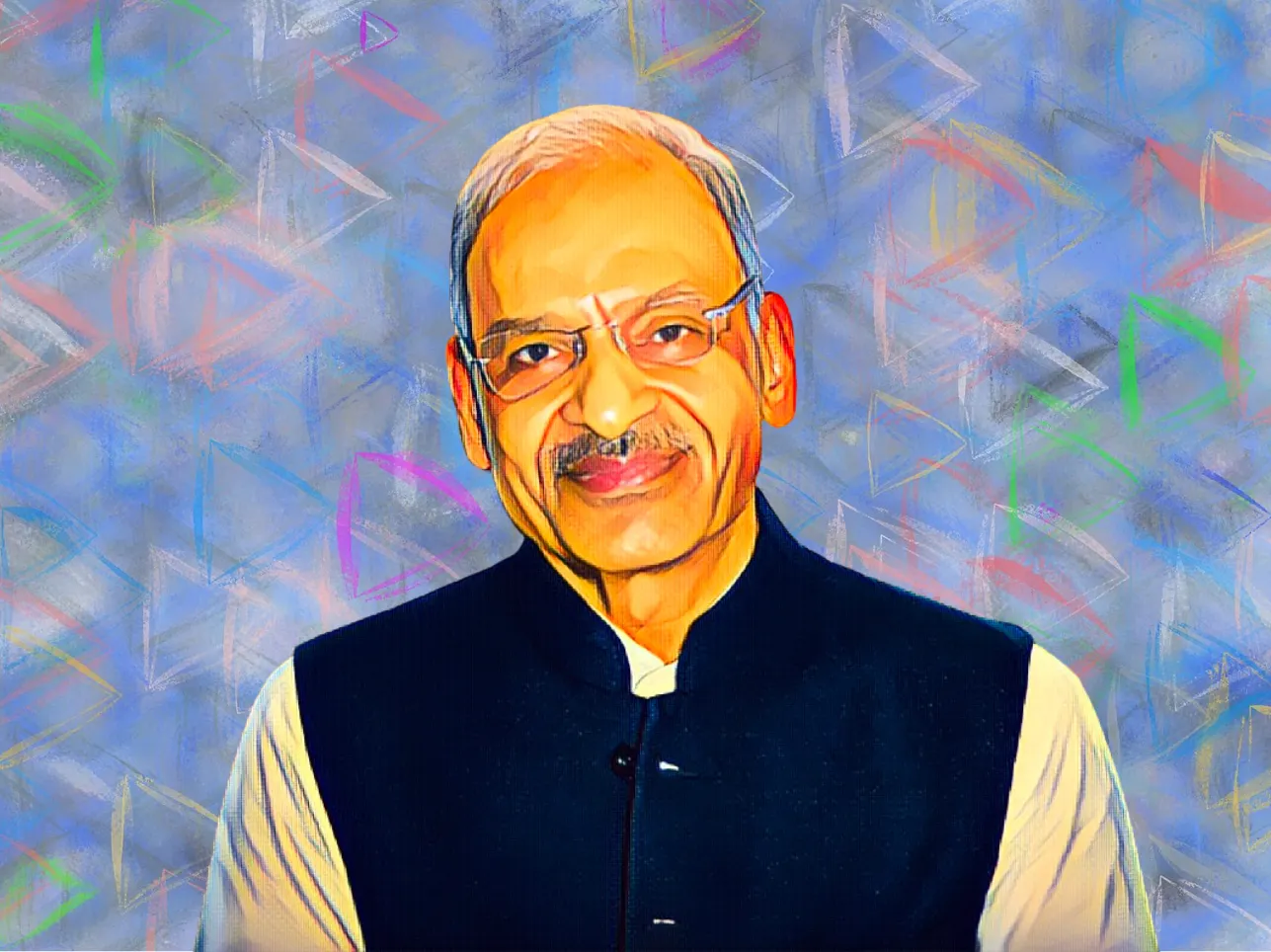
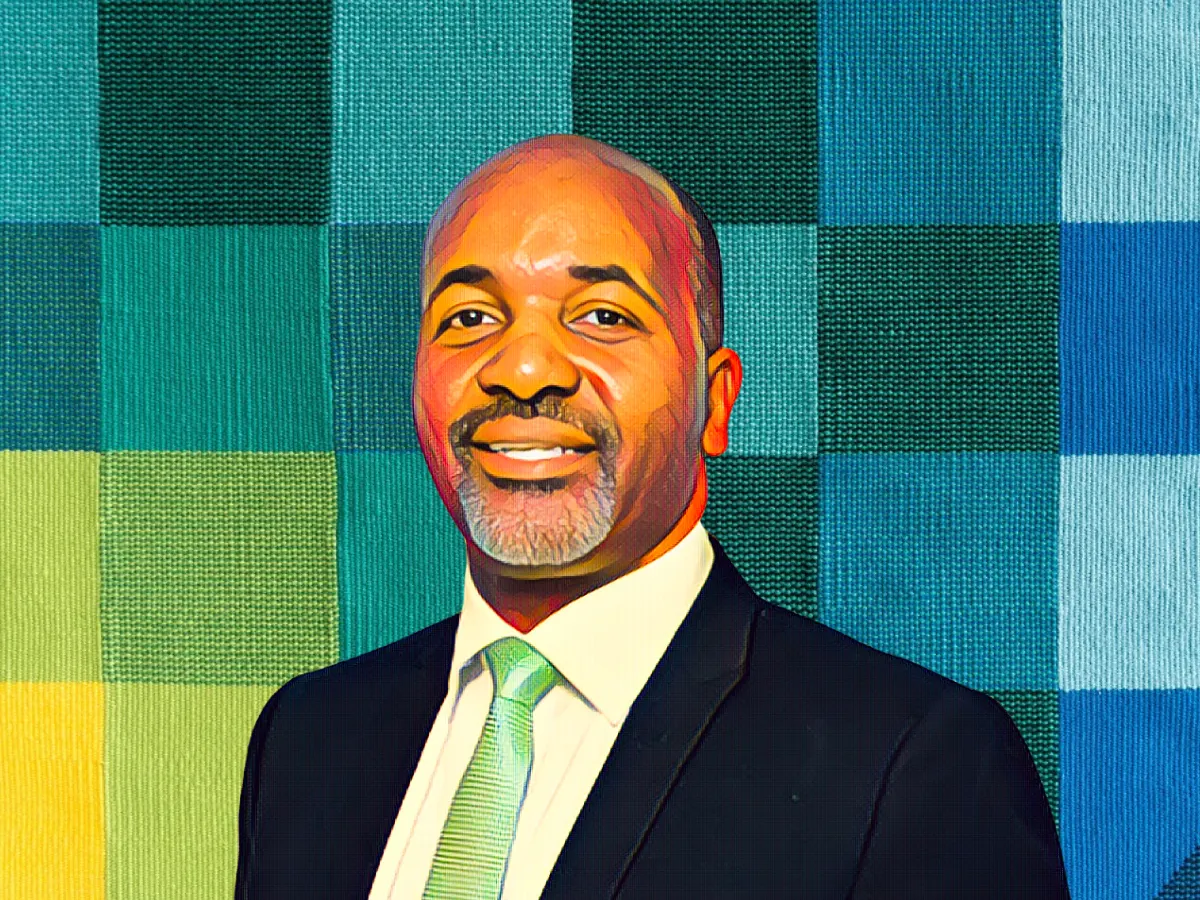
In 1980, a 21-year-old from Mutare stepped off a plane from London, economics degree in hand, and walked straight into his father's commodity trading business. No fanfare. No press release. No grand announcement. That was Shingayi Stanley Mutasa, and that quiet, deliberate entry into business would become the template for everything that followed.
More than four decades later, Shingai Mutasa, as he is universally known, controls one of the most diversified private business empires in Southern Africa. Insurance. Fertiliser. Hotels. Fuel. Broadband. Property. Chemicals. His holding vehicle, Masawara Group, spans Zimbabwe, Botswana, Zambia, Malawi and South Africa, with companies serving millions of consumers. His portfolio includes Joina City, the 23-storey commercial and retail complex that stands as a landmark on Harare's skyline. And his net worth, widely believed by analysts to be understated, has been estimated at over $142 million, making him consistently one of the five wealthiest individuals in Zimbabwe.
He does not give many interviews. He rarely surfaces in the gossip columns. He is, in his own words, driven by four things: name, value, integrity and vision. Those four words have been his consistent answer whenever anyone asks how he got here.
The Mutare boyhood and the London detour
Shingayi Stanley Mutasa was born on November 26, 1958, in the eastern border town of Mutare, in what was then Rhodesia. Mutare sits at the foot of the Bvumba Mountains near the Mozambican border and has historically been one of Zimbabwe's most commercially active secondary cities, shaped by cross-border trade and its proximity to the Beira Corridor.
His family was in business. That fact shaped him early. He watched his father navigate the practical realities of commodity trading in a country experiencing rapid and turbulent political change, and he absorbed lessons about commercial negotiation, supplier relationships and working capital management that no classroom could adequately replicate.
When he left Zimbabwe to study at University College London, part of the University of London, he chose economics. The degree was analytical. The lessons he was building toward were operational. He graduated with a BSc Hons in Economics in 1980 and came home to Zimbabwe at the precise moment the country was gaining independence under Robert Mugabe's ZANU-PF government. The timing was both complicated and rich with opportunity.
Twelve years in the family business
From 1980 to 1992, Mutasa worked alongside his father in the family commodity trading and marketing operation. He has spoken about this period with consistent appreciation. "I started working with my father from 1980 to 1992 and that's when I learnt the power to empower," he said.
Those twelve years were not passive. Commodity trading in Zimbabwe during that period required managing complex relationships with state entities, agricultural marketing boards, international buyers and domestic suppliers, through a series of economic policy shifts, currency controls and structural adjustments that made planning difficult. Mutasa operated inside that environment for over a decade before making his first major external move.
In 1992, he co-founded Venture Finance, an investment vehicle with a specific mandate: acquire a strategic stake in TA Holdings and build it into a continental investment group. TA Holdings was a diversified conglomerate listed on the Zimbabwe Stock Exchange with interests spanning insurance, hospitality, chemicals and other sectors. The idea was not to strip it. It was to transform it.
The TA Holdings acquisition
Getting there took several attempts. Mutasa tried to acquire a controlling position in TA Holdings multiple times through the 1990s before finally succeeding in 1997. The company he eventually acquired was heavily indebted. Others might have seen a liability. He saw a platform.
What he paid, in patience and in capital, ultimately bought him access to a sprawling portfolio that included Zimnat Life Assurance, Zimnat Lion Insurance, the Cresta Group of Hotels, and various agricultural and chemical interests. The price of control was approximately 15.2 million pounds, or $20.5 million at the time, paid to assume a majority position in a business the market had largely written off.
He did not write it off. He began remaking it.
Building Masawara and going to London
In 2010, Mutasa took a significant step. He founded Masawara, a Zimbabwe-focused investment holding company registered in Jersey, and listed it on the Alternative Investment Market of the London Stock Exchange. The AIM listing was both a capital-raising exercise and a reputational statement: a Zimbabwean entrepreneur, operating in one of the most economically challenging markets on the continent, was credible enough to list in London.
Invesco plc, the London-based asset management giant, bought a 29.9 percent stake in Masawara, with both the Invesco Income and Invesco High Income funds, at the time managed by the highly regarded Neil Woodford, taking positions. The AIM listing raised approximately $25 million to fund strategic acquisitions across Zimbabwe.
That capital went to work. Masawara acquired BP and Shell Marketing Services' refined oil marketing assets in Zimbabwe through FMI Zimbabwe, a wholly owned subsidiary, picking up 73 retail fuel sites, six country depots, four town depots and a lubricants plant. The acquisition beat competing bids from South Africa-based Engen Petroleum and KenolKobil, with the indigenisation advantage sitting clearly in Masawara's corner. In the insurance sector, Masawara consolidated control of Zimnat Lion Insurance, Zimnat Life Assurance, Grande Reinsurance and Minerva Risk Advisors, creating one of the most complete insurance platforms in the country. In agro-business, Masawara became the major shareholder in Sable Chemicals, the fertiliser manufacturer, and took a significant stake in Zimbabwe Fertiliser Company. Telecommunications was added through iWayAfrica and Telerix Communications.
Joina City: the building that came from a conversation in New York
The most visible expression of Mutasa's ambition is not an insurance policy or a fuel depot. It is 23 floors of steel, glass and concrete on Jason Moyo Avenue in central Harare.
Joina City did not begin as a development project. It began as a conversation. Mutasa was in New York with the late architect Vernon Mwamuka, and the two men talked about what Harare's skyline could be. The vision Mwamuka described and the ambition Mutasa felt for Zimbabwe crystallized into a commitment. "Joina City was not driven by money, but a vision and passion for the country," he said later.
Construction began in 1998. It did not end quickly. Zimbabwe's hyperinflation crisis, which peaked in 2008 with an annual inflation rate that the Reserve Bank of Zimbabwe eventually stopped measuring because the numbers had become meaningless, turned every cost projection for the project into a historical document within weeks of being written. "We were working with an exchange rate of eight to one against the United States dollar when we started," Mutasa said. "There is no doubt that the exchange rate and inflation have dealt us a heavy blow."
He kept building. Saudi billionaire Prince Alwaleed Bin Talal Alsaud visited the site in 2005 while it was still rising and invested additional funds in the project. Masawara owns a 40 percent stake in Joina City. The building stands at 105 metres with three basement parking floors, two open shopping mall levels and 19 commercial office floors. It is not the tallest structure in Harare, that distinction belongs to the Reserve Bank of Zimbabwe building, but it is the most significant privately developed commercial property in the capital by any reasonable measure. When Zimbabwean dancehall artist Freeman released a hit song simply called Joina City, the building had already crossed from construction project into cultural landmark.
The philosophy of quiet compounding
Mutasa serves on the boards of approximately 15 companies across Zimbabwe, Malawi and South Africa. He has received an Honorary Doctorate in Business Leadership from Africa University, awarded in July 2021. He is married to Karen Mutasa. Their son Mudiwa works in the business.
He has always been careful to distinguish between what he does and how some others in Zimbabwe's wealthy class have operated. In a business environment where political proximity has often been as important as commercial capability, Mutasa's track record is notable for its relative transparency. The progression from commodity broker to Venture Finance to TA Holdings to Masawara to the AIM listing is documentable at each step. Each acquisition has a visible rationale. Each capital raise has a stated purpose.
"Unlike some Zimbabwean entrepreneurs with dubious backgrounds," the Zimbabwe Legends profile of him noted plainly, "Mutasa's business empire is supported by a traceable record of its growth."
His ambitions have always been regional rather than merely national. He sees his market as the SADC zone's 140 million people, not just Zimbabwe's 16 million. Cresta Hotels operates in Botswana and neighbouring markets. Masawara's structure is deliberately built for the pan-African investment case, not the domestic one alone.
In the Financial Gazette, he spoke about the African Continental Free Trade Area before it existed as a formal agreement, arguing that a free trade zone across Africa would be transformative. "If we become deadly serious as a country, we can even go beyond the vision of being an upper-middle class country by 2030," he said.
That is the version of Zimbabwe Shingai Mutasa has always believed in. Whether the country has moved fast enough to meet his timeline is a different argument. What is not in dispute is that, in the absence of the conditions he wished existed, he built anyway. The building on Jason Moyo Avenue is proof of it.
The intelligence satisfies curiosity. The paid briefings satisfy strategy.
Every Monday, Elite subscribers receive an Investor Memo breaking down the deal, the structure and the positioning behind the week's most consequential African wealth story - the kind of analysis that doesn't appear anywhere else.
Twice a month, a Wealth Intelligence brief profiles a single billionaire's holdings, cash flows and expansion pipeline in detail no public source matches.
→ Executive ($25/mo): Daily newsletter + Deep-Dive Reports
→ Elite ($75/mo): Everything above + Investor Memos + Wealth Intelligence + Quarterly Analyst Briefings
Subscribe now