

Table of Contents
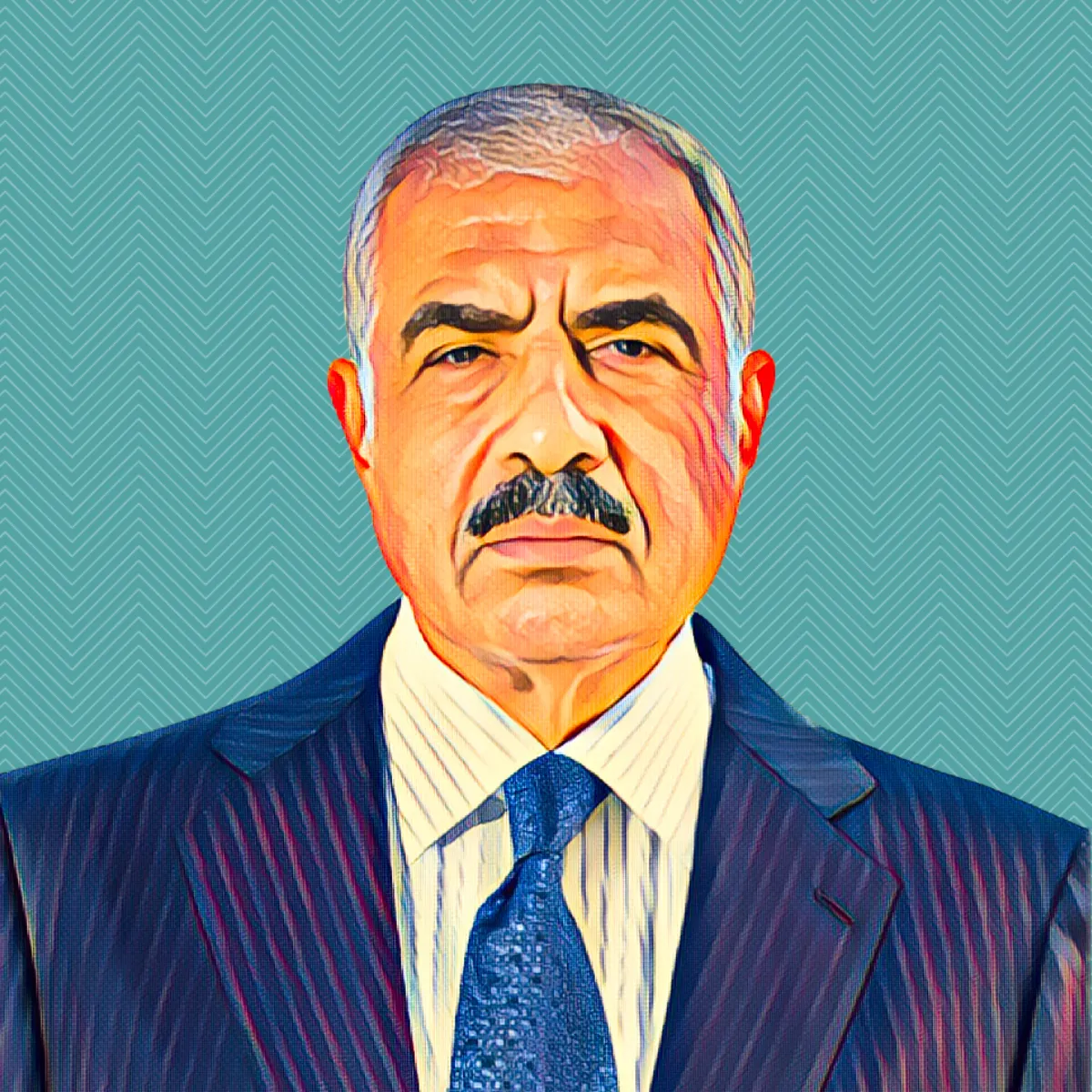
Ahmed Ezz was 19 years old when he walked into his father's steel trading company and decided he was not going to stay a trader. That decision, made in 1978, would eventually produce the largest independent steel manufacturer in the Middle East and North Africa, a legal saga that rivaled anything Egyptian courtrooms had seen in decades, and a comeback story that few people would have bet on.
Today, Ezz controls 66.45 percent of Ezz Steel, a Cairo-listed company that produces approximately 7 million metric tons of steel per year, more than regional rivals Saudi Arabia's Hadeed and the UAE's Emirates Steel. His stake has, at various points, been valued at well over a billion dollars. The company exports across the region and generated $1.6 billion in exports in 2024 alone.
It did not start with a billion-dollar vision. It started with rebars.
Abdel Aziz Ezz founded Ezz Foreign Trade Co. in 1959, building a business around importing and distributing steel in a country that was rebuilding itself block by block. The family traded building materials. They knew the sector, they knew the margins and they knew the people who needed what they had.
When Ahmed joined at 19, he was an engineering student putting in hours that his associates later described as fanatical. He reportedly drove more than 60,000 miles a year expanding sales. He was not coasting on his father's name. He was building on it, relentlessly.
In 1989, the family diversified into ceramics, founding Al Ezz for Ceramics and Porcelain, which introduced the Gemma brand to Egyptian consumers. Five years later, in 1994, Ezz made the move that would define his legacy. He founded Ezz Steel SAE, going beyond distribution into actual manufacturing of steel rebars, the foundational product of construction. Both companies listed on the Egyptian Exchange by 1999, and Ezz simultaneously acquired a controlling stake in the state-owned Alexandria National Iron and Steel company. His footprint was no longer just large. It was dominant.
The 2000s brought Ezz into a different arena. He became an elected member of parliament, rose to chair the budget committee, and served as organizational secretary of Hosni Mubarak's ruling National Democratic Party. His closeness to Gamal Mubarak, the president's son who many expected would eventually inherit power, made Ezz one of the most influential figures in Egyptian public life.
It also made him a target.
When the 2011 revolution swept Mubarak from office, Ezz was arrested within days. The charges were serious: money laundering, squandering public funds and profiteering linked to his acquisition of state assets. In October 2012, a court convicted him and sentenced him to seven years in prison plus a fine of 19.5 billion Egyptian pounds, equivalent to roughly $3 billion at prevailing exchange rates.
Ezz appealed. The legal battle ran for years. On March 9, 2018, the Cairo Criminal Court closed the case against him after a settlement of approximately $96 million. He walked out of the legal system without serving the full sentence and returned to running his business.
The steel market Ezz returned to was different. Egypt's economy had been through devaluation, inflation and the structural disruption that follows political upheaval. His company had continued operating through the turmoil, but competition had intensified and global trade dynamics had shifted.
Ezz did not retreat. In early 2026, he announced a $1.16 billion expansion plan to grow Ezz Steel's production capacity over two years, betting on domestic demand even as export revenue was expected to fall below $1 billion due to tightening trade barriers globally. Speaking at the World Economic Forum, he drew a direct comparison between the protectionism Egypt's steel exporters now face and the same pressures that once reshaped European and American steel markets.
"The pressures we see today are not unique to Egypt," Ezz said. "They are the same pressures that reshaped steel markets in Europe and the United States."
Ezz Steel has invested approximately $120 million in corporate social responsibility, including emissions filters, pollution controls and green infrastructure across its plants, signals of a company that knows its next phase of growth will be scrutinized more carefully than the last.
Ahmed Ezz is 67 years old. He has been arrested, convicted, settled and rebuilt. His company produces more steel than any of his regional competitors and his expansion bet suggests he has not finished yet.
The intelligence satisfies curiosity. The paid briefings satisfy strategy.
Every Monday, Elite subscribers receive an Investor Memo breaking down the deal, the structure and the positioning behind the week's most consequential African wealth story — the kind of analysis that doesn't appear anywhere else.
Twice a month, a Wealth Intelligence brief profiles a single billionaire's holdings, cash flows and expansion pipeline in detail no public source matches.
→ Executive ($25/mo): Daily newsletter + Deep-Dive Reports
→ Elite ($75/mo): Everything above + Investor Memos + Wealth Intelligence + Quarterly Analyst Briefings
Subscribe now