

Table of Contents
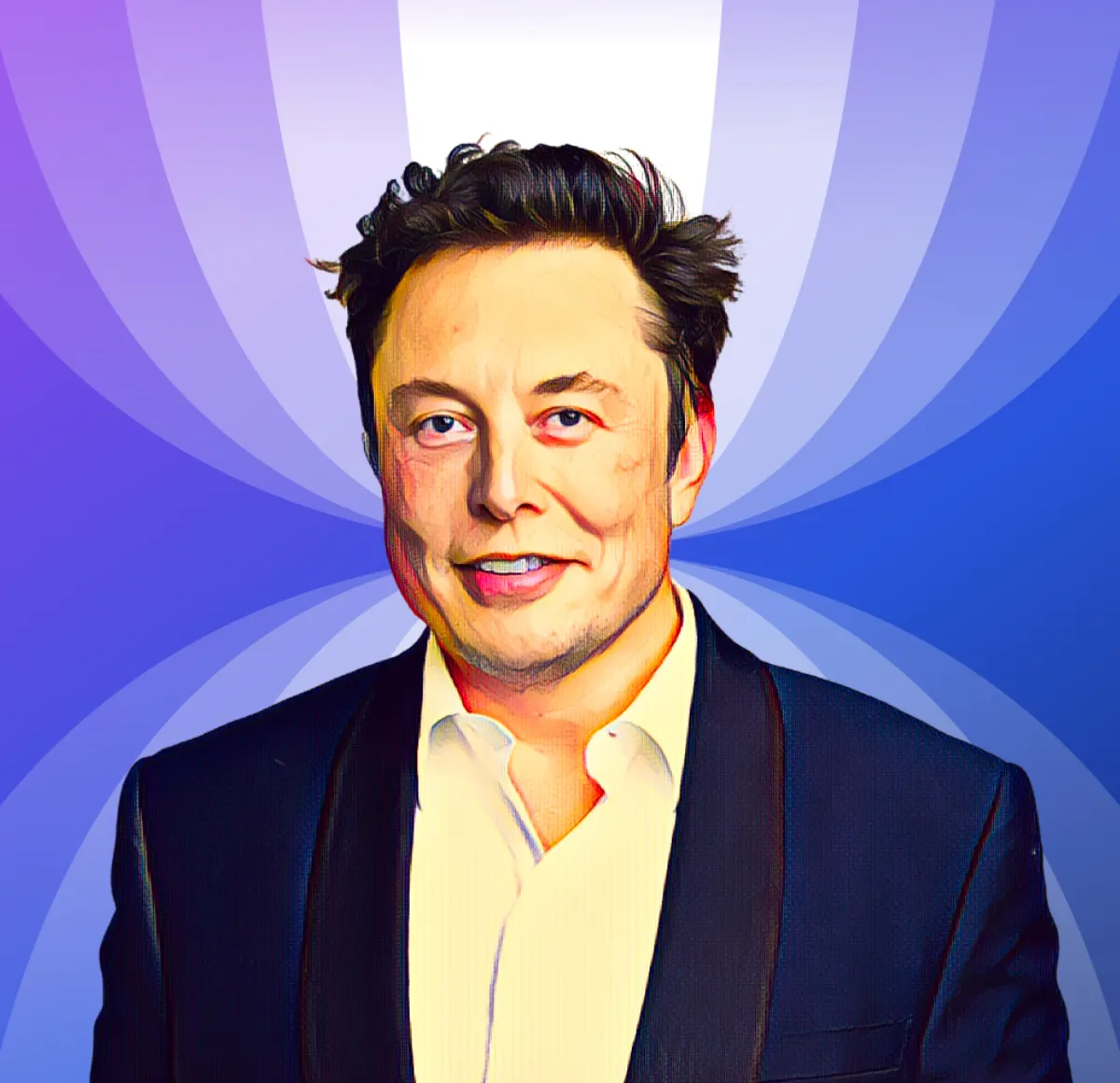
Elon Musk is about to become the world's first trillionaire. The moment arrives June 12, 2026, when SpaceX prices its initial public offering at $135 per share on the Nasdaq at a total valuation of $1.77 trillion, pushing Musk's personal net worth past the one-trillion-dollar threshold that no individual in recorded financial history has ever crossed.
Musk entered June 2026 worth approximately $835 billion, according to Forbes's most recent real-time estimate, already the largest gap between first and second place on any global wealth ranking in history. Larry Page, the second wealthiest person on the planet, sits at $298 billion. On June 12, that gap widens by approximately $165 billion in a single trading session.
The arithmetic is straightforward. SpaceX's updated prospectus, filed with the SEC on June 3, shows that Musk's economic equity stake in the company is worth $866.5 billion at the $135 offering price. His Tesla position adds approximately $350 billion based on the current share price of $418.40. His minority stakes in xAI, Neuralink and The Boring Company, combined with cash and other personal assets, push the total past one trillion. Forbes stated in June that the SpaceX listing would "all but guarantee his net worth rising above $1 trillion." CNBC confirmed his net worth is "poised to sail past $1 trillion" when the IPO prices on Friday.
The company behind the number
SpaceX was founded in 2002 in El Segundo, California, with $100 million of Musk's own money from the PayPal acquisition. Three of the first four Falcon 1 rocket launches failed. In September 2008, the fourth Falcon 1 succeeded, saving the company from bankruptcy. From that near-failure, SpaceX grew into the most consequential private aerospace company in history.
In 2025, SpaceX generated $18.7 billion in revenue. Its Starlink satellite internet service ended the first quarter of 2026 with 10.3 million subscribers, doubling from 5 million a year earlier. Its Falcon 9 rocket is the most proven orbital launch vehicle ever built. Its Starship heavy-lift vehicle is the most powerful rocket in history. Its Dragon capsule has transported NASA astronauts to the International Space Station more than a dozen times.
None of that made SpaceX profitable by conventional accounting standards. The company posted an operating loss of $2.6 billion in 2025 on its $18.7 billion in revenue, and a further loss of $4.3 billion in the first quarter of 2026 alone. The capital requirements of simultaneous rocket development, Starlink deployment and Starship construction have consumed cash faster than the business can generate it.
The $1.77 trillion valuation is not a reflection of current earnings. It is a market judgment about the probability that Musk's long-term vision materialises. That vision includes global satellite internet coverage serving hundreds of millions of subscribers, a reusable heavy-lift vehicle capable of launching payloads 10 times larger than any competitor's, and eventual human colonisation of Mars. Whether any of that vision is achievable is a matter of genuine scientific and commercial debate. What is not in debate, as of June 12, is what the market is willing to pay for the option on it.
Jay Ritter, an emeritus professor at the University of Florida who has studied IPOs for decades, noted the contrast with Saudi Aramco's record 2019 listing: "SpaceX, in contrast, has trailing annual revenue of less than $20 billion and is not profitable. So, one company's valuation was and is based on its demonstrated profitability, while the other company's valuation is based on potential." He added a note of caution that has circulated widely in the investment community: "With SpaceX, there is a risk that cash flows will be used to send hundreds of thousands of people to Mars, at a loss."
The share structure and what it means
SpaceX's IPO is structured around a dual-class share arrangement that grants certain shares ten votes apiece. After the offering, Musk retains more than 82 percent of the company's total voting power regardless of how many shares trade publicly. Retail investors, institutional funds and sovereign wealth vehicles that participate in the offering acquire economic exposure to SpaceX's revenue and growth, but they acquire virtually no governance influence over how the company is run.
That structure makes the wealth Musk is accumulating unusually durable. He controls the company whose equity represents the majority of his net worth. A hostile takeover is structurally impossible. A forced sale is structurally impossible. No shareholder meeting can redirect SpaceX's strategy or its capital allocation. The $866.5 billion in SpaceX equity that the prospectus attributes to him is his, subject only to the lockup restrictions that apply in the months immediately following the IPO.
Goldman Sachs, Morgan Stanley, Bank of America, Citigroup and JPMorgan are serving as lead underwriters for the offering. JPMorgan chief executive Jamie Dimon is personally hosting a live event for 2,500 of the bank's wealthiest clients across 90 locations in 26 states to present the SpaceX investment case alongside SpaceX president Gwynne Shotwell and chief financial officer Bret Johnsen. The book has filled. The deal is priced.
The other billionaires June 12 is creating
Musk is not the only person whose wealth changes materially on listing day. The SpaceX S-1 filing identifies several executives whose equity positions cross the billion-dollar threshold at the $135 offering price.
Gwynne Shotwell, SpaceX's president and chief operating officer since 2002, is becoming a billionaire. Her 2025 total compensation reached $85.8 million, anchored by an option grant valued at nearly $83 million. Her total equity position in SpaceX crosses the billion-dollar mark at listing.
Bret Johnsen, SpaceX's chief financial officer since 2011, holds 9.58 million Class A shares. CNBC has valued that position at $1.2 billion at the offering price. He becomes a billionaire on day one of trading.
Beyond the executive suite, SpaceX's broad equity compensation programme has created what is likely the largest single cohort of newly minted millionaires from a single IPO in American corporate history. The company employs approximately 14,000 people, many of whom have held equity through multiple funding rounds at valuations far below the current offering price.
The scale of one trillion
The GDP of Saudi Arabia in 2025 was approximately $1.1 trillion. The combined market capitalisation of Goldman Sachs, Morgan Stanley and JPMorgan is approximately $900 billion. The annual budget of the United States Department of Defence is approximately $900 billion. Musk's post-IPO net worth will be approximately 29 percent of Apple's total market capitalisation, the most valuable publicly traded company on the planet.
The trillion is real. It is also largely illiquid. Musk's SpaceX shares are subject to lockup restrictions following the IPO. His Tesla position is large enough that any material sale moves the market. The wealth exists on paper and in the equity structures of companies he controls. Converting it to cash at scale is a different and considerably more complicated undertaking than the IPO that created it.
What the SpaceX listing confirms, at a scale no previous wealth event in history has approached, is the commercial value of building and owning the machine rather than working for it. Musk has owned SpaceX for 24 years. He funded it personally when it was failing. He kept funding it when the smart money thought it was finished. On June 12, the Nasdaq will give that decision its first public valuation.
The number is one trillion dollars. The world has never seen it next to a single person's name before. It will see it on Friday.
The intelligence satisfies curiosity. The paid briefings satisfy strategy.
Every Monday, Elite subscribers receive an Investor Memo breaking down the deal, the structure and the positioning behind the week's most consequential African wealth story - the kind of analysis that doesn't appear anywhere else.
Twice a month, a Wealth Intelligence brief profiles a single billionaire's holdings, cash flows and expansion pipeline in detail no public source matches.
→ Executive ($25/mo): Daily newsletter + Deep-Dive Reports
→ Elite ($75/mo): Everything above + Investor Memos + Wealth Intelligence + Quarterly Analyst Briefings
Subscribe now