

Table of Contents
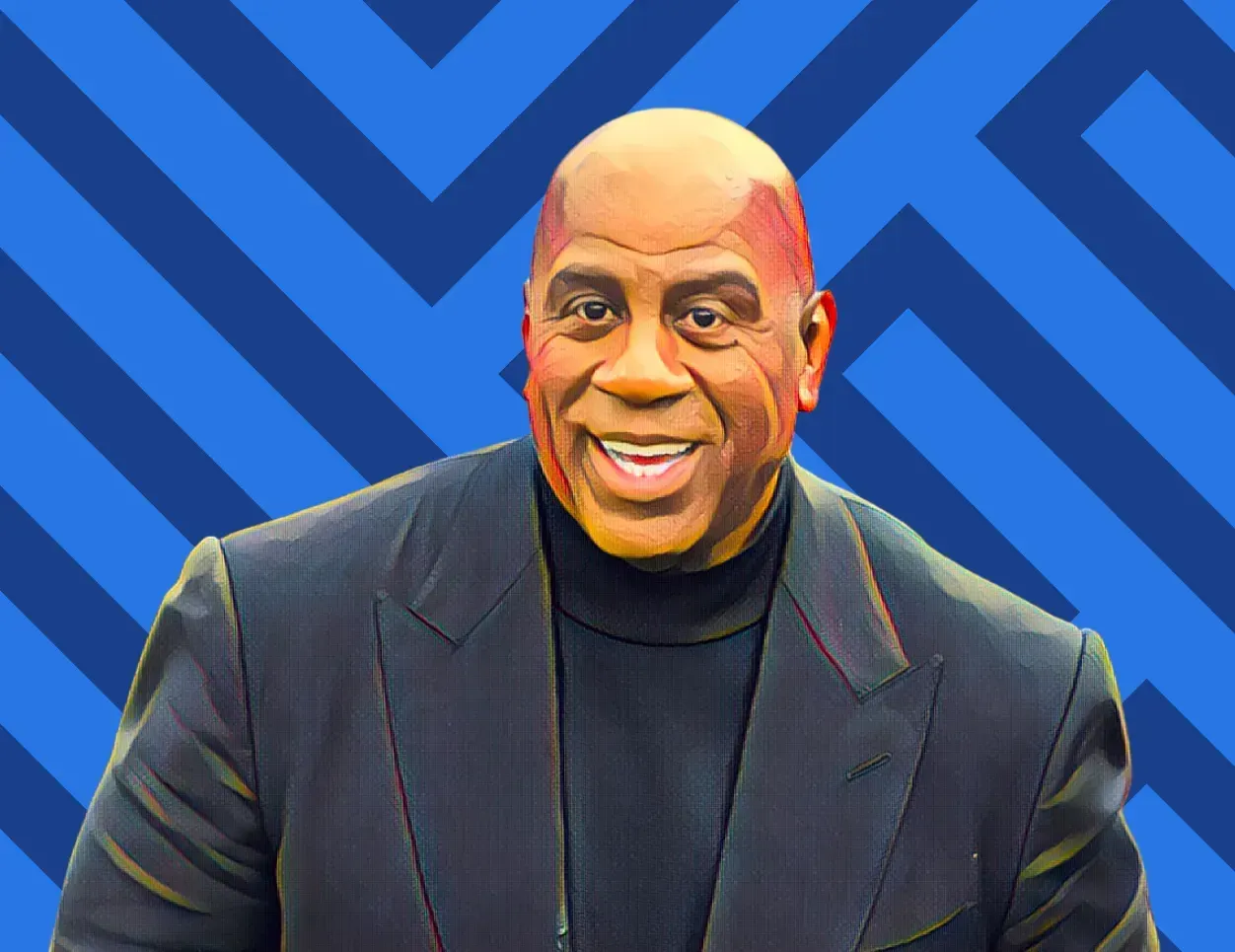
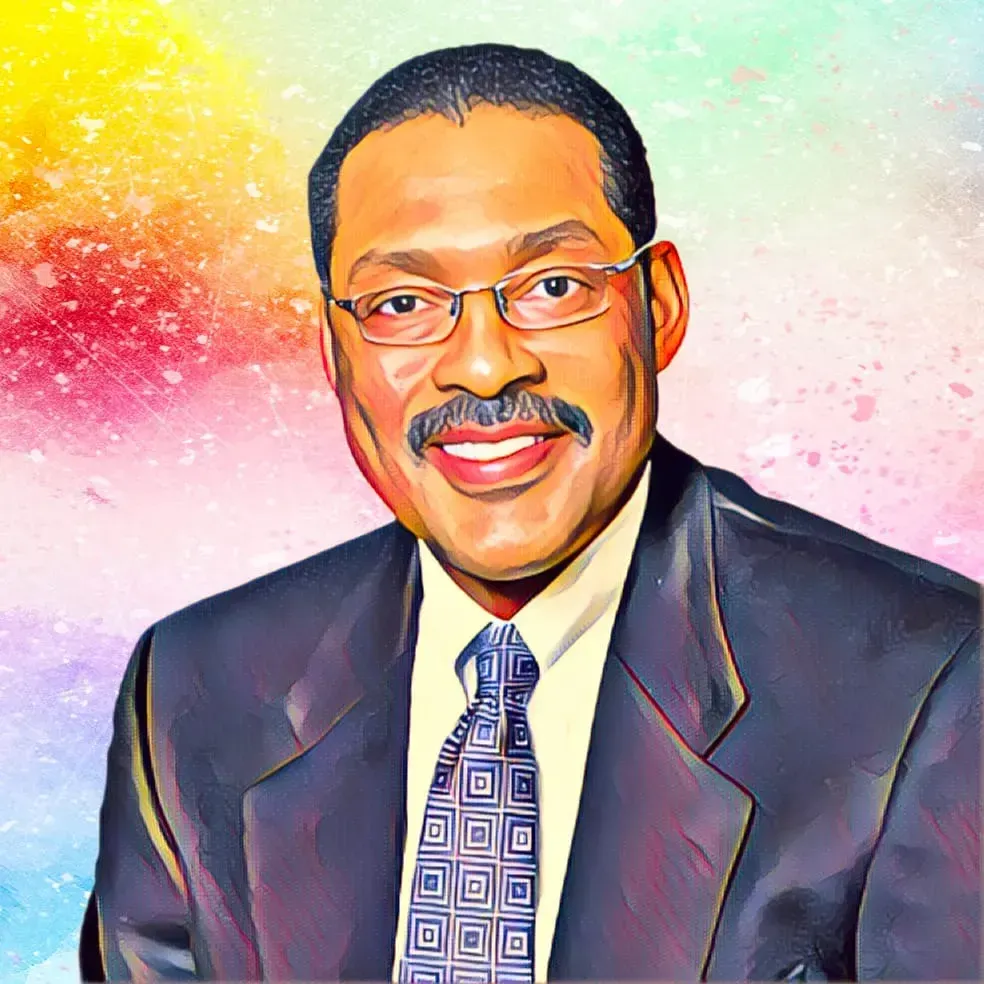
The man who would become one of the wealthiest former athletes in the world spent his summers working the drive-through window at a Wendy's in Milwaukee. Not as an owner. Not as an investor. As a cashier, learning orders, handling complaints, watching how the kitchen timed its tickets during the lunch rush. This was the late 1970s. Ulysses Lee Bridgeman Jr. was still an active NBA player, still suiting up for the Milwaukee Bucks, still averaging respectable numbers off the bench. He did not need the money. He needed the knowledge.
That detail, more than any contract figure or revenue milestone, explains everything about what Junior Bridgeman became. He was a man who treated business the way elite athletes treat skill development: with discipline, repetition and an almost obsessive willingness to start at the bottom even when his status did not require it. The result, over four decades of quiet, methodical work, was a fortune estimated at $600 million, built almost entirely outside the sport that made his name.
Bridgeman died on March 11, 2025, at age 71, after suffering a medical emergency during a charity luncheon in Louisville. He collapsed at the Galt House Hotel while supporting the Boy Scouts of America, which was precisely the kind of thing he did when nobody was watching. Louisville Mayor Craig Greenberg called him a "quiet, impactful" legend. The Milwaukee Bucks, whose retired No. 2 jersey hangs in Fiserv Forum, described his passing as a shock. The business world, which understood him more completely than the sports world ever did, lost one of its most instructive case studies in patient, compounding wealth creation.
The sixth man who studied the owners
Bridgeman was born in East Chicago, Indiana, the son of a steel mill worker and a homemaker. He grew up understanding that money was finite and that the gap between having it and not having it was thinner than most people wanted to admit. He was a gifted athlete, good enough to lead his Washington High School team to an undefeated state championship in Indiana in 1971, good enough to become a two-time Missouri Valley Conference Player of the Year at the University of Louisville and to help carry the Cardinals to the 1975 NCAA Final Four, where they lost in overtime to UCLA in John Wooden's last title run.
The Los Angeles Lakers drafted him in the first round in 1975, fifth overall. Then, before he played a single game for them, they traded him to Milwaukee for Kareem He averaged 13.6 points per game over his 12-season career. He never made an All-Star team. He never earned more than $350,000 in a single season.
What he did earn, in those years, was clarity. He watched team owners drive different cars, live in different neighborhoods and make different plans for their futures than the players did. A conversation with then-Bucks general manager Wayne Embry, who operated several McDonald's franchises on the side, crystallized something for him. Embry was not just an NBA executive. He was a business owner. The people who cut the checks, Bridgeman began to understand, operated by a different set of rules than the people who received them.
One Wendy's, then fifty, then five hundred
Bridgeman retired from the NBA in 1987 and almost immediately bought his first Wendy's franchise in Milwaukee. He bought it using money he had saved and invested carefully during his playing years, money he had protected because he understood from the beginning of his career that it would not last. He had not spent his offseasons working in the restaurant by accident. He had been studying.
The early years were not easy. His first franchise struggled. Bridgeman did not hire consultants or bring in outside management. He went back into the restaurant, learned what was breaking down operationally and fixed it himself. By the time the first location was running properly, he bought more. Then more after that. Within a decade he had grown Bridgeman Foods Inc. into one of the largest Wendy's franchise operations in the country.
At its peak in 2015, the portfolio stretched to more than 500 locations across 20 states, encompassing Wendy's, Chili's, Fazoli's and Pizza Hut under the Bridgeman Foods umbrella. The company employed over 11,000 people and generated annual revenues exceeding $530 million. Bridgeman was the second-largest Wendy's franchisee in the world. He had won the Diamond Award, the Wendy Award, the Founder's Award, the Jim Near Legacy Award, the Hall of Fame Award from Wendy's International and the Franchisee of the Year Award from Brinker International. He had turned a moderately successful basketball career into one of the most significant franchise operations in American fast food history.
His philosophy inside the restaurants was as deliberate as his investment strategy. He hired ex-convicts and gave them real jobs. He mentored entry-level employees and tracked their advancement through the ranks. He made Raving Fans, Ken Blanchard's book on customer service, required reading for his managers. He believed, as a practical and ethical matter, that the people who worked for him were the business, and that treating them as such was not charity but competitive advantage.
He took $250 million and bought Coca-Cola
In 2016, Bridgeman sold the majority of his restaurant holdings for approximately $250 million. The decision surprised some observers, who saw a thriving empire and wondered why he was walking away from it. Bridgeman saw something different: a maturing business in a saturated market, and a better opportunity waiting in beverages.
That same year, he purchased Heartland Coca-Cola Bottling Company for approximately $290 million. The acquisition gave him rights to bottle and distribute Coca-Cola products across a multi-state territory covering most of Kansas, a significant portion of Missouri, large sections of Illinois and parts of Nebraska. He moved into the operations directly, serving as president and CEO alongside his son Justin, running a production plant in Lenexa, Kansas, and 18 regional distribution centers.
The bet proved correct. By the early 2020s, Heartland's revenues had grown to approach $1 billion annually, driven by distribution efficiencies, expanded product lines and the durable economics of the Coca-Cola system, which provides bottling partners with a protected geographic territory and a globally recognized brand to move product behind. Heartland became the foundation of Bridgeman's wealth at the $600 million valuation point, and its continued growth after that is what pushed some estimates of his net worth significantly higher.
He retained a controlling stake in approximately 160 Wendy's franchises and 70 Fazoli's Italian restaurants after the 2016 sale, holdings that Forbes estimated were worth approximately $100 million combined including the underlying real estate. The restaurant business, in other words, never actually left his portfolio. He simply refocused it.
Ebony, a golf club and a seat at the Bucks table
In December 2020, Bridgeman acquired Ebony and Jet magazines through his Louisville-based Bridgeman Sports and Media company, purchasing both titles out of Chapter 11 bankruptcy for $14 million. The publications, once the most important media properties in Black American life, had fallen through a series of ownership changes after Johnson Publishing Company sold them in 2016. By the time Bridgeman stepped in, they had been hollowed out by debt and mismanagement.
He repositioned both titles as digital-first brands and gave operational control to his daughter Eden Bridgeman Sklenar, who became CEO of the relaunched publications. The acquisition was simultaneously a business decision, a cultural preservation act and a family investment. Bridgeman told interviewers that he remembered Ebony as a pillar of his community growing up, a magazine that showed Black Americans in their full complexity and dignity at a time when mainstream media largely did not. He wanted to bring that back. The $14 million price tag, relative to his overall net worth, made the bet low-risk. The cultural logic made it non-negotiable.
In 2022, Bridgeman joined a group of prominent Louisville businessmen to purchase Valhalla Golf Club, the Jack Nicklaus-designed course that has hosted multiple PGA Championships and Ryder Cups. The same year, through Manna Capital Partners, an investment firm he co-founded, he announced a partnership with Ball Corporation to construct and operate an integrated secondary aluminum mill in Los Lunas, New Mexico, and a separate agreement with the state of Alabama to build a bottling facility in Hope Hull, to be operated by Manna Beverages and Ventures. These were not passive investments. They were operating businesses with construction timelines, employment projections and community development commitments attached to them.
In September 2024, Bridgeman completed the arc that had begun half a century earlier when he arrived in Milwaukee as a 21-year-old rookie. He purchased a 10 percent ownership stake in the Milwaukee Bucks, the franchise where he had spent the better part of his playing career, at a deal valuing the team at $4 billion. His 10 percent stake was therefore worth approximately $400 million, a single asset larger than his entire estimated net worth from a decade earlier. The Bucks retired his jersey in 1988. In 2024, he helped own the building where it hangs.
What he actually built
The figure most commonly attached to Bridgeman's name before his death, $600 million, was a snapshot taken at a specific point in his trajectory rather than its endpoint. Forbes estimated his net worth at $1.4 billion by early 2025, incorporating the Bucks stake and the full maturation of Heartland's revenue growth. Either number is instructive, but the $600 million figure carries a particular clarity because it represents what he built before the largest single asset was added to the ledger.
What he built, at that level, was not a portfolio assembled by a wealthy athlete looking for tax efficiency. It was an operating business empire run by a man who had worked the drive-through window himself, who had turned around struggling franchise locations by walking the floor, who had hired employees that other companies refused to consider and watched them become managers and general managers. The philanthropy was consistent and largely quiet. He supported Louisville institutions, Boy Scout programs, community organizations and educational initiatives without the kind of public scaffolding that many wealthy donors build around their giving.
Isiah Thomas called him legendary. The Milwaukee Bucks called him a pioneer. The Louisville community that watched him grow up and grow rich called him their own. Junior Bridgeman would have said, probably, that he was just a man who worked the drive-through window and paid attention.
The intelligence satisfies curiosity. The paid briefings satisfy strategy.
Every Monday, Elite subscribers receive an Investor Memo breaking down the deal, the structure and the positioning behind the week's most consequential African wealth story - the kind of analysis that doesn't appear anywhere else.
Twice a month, a Wealth Intelligence brief profiles a single billionaire's holdings, cash flows and expansion pipeline in detail no public source matches.
→ Executive ($25/mo): Daily newsletter + Deep-Dive Reports
→ Elite ($75/mo): Everything above + Investor Memos + Wealth Intelligence + Quarterly Analyst Briefings
Subscribe now