


Table of Contents
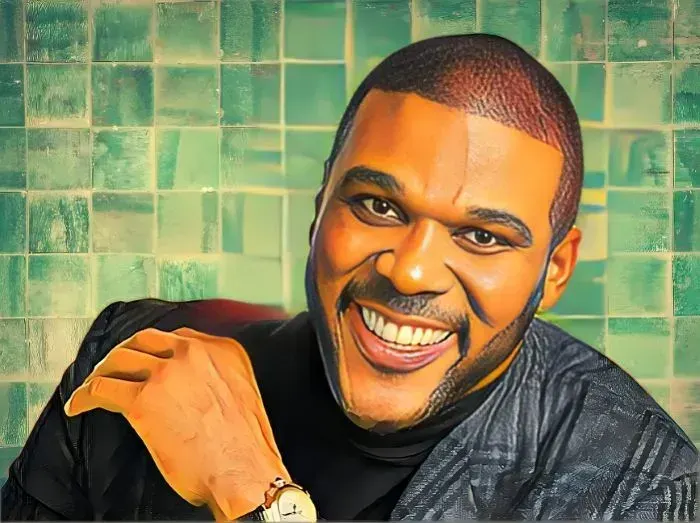
In 1983, Morgan Freeman was 45 years old, had won two Obie Awards, received a Tony nomination, spent years on daytime soap operas and a PBS children's show, and was seriously considering becoming a taxi driver. He had been at this for two decades. He was broke enough to consider quitting and proud enough to have lasted this long without doing so. As late as that year, with two Obie Awards, a Clarence Derwent Award, a Drama Desk Award and a Tony nomination to his name, he almost walked away from acting entirely. The breakthrough, when it came, was still four years away.
That trajectory, from a Memphis childhood to a near-exit from the profession to one of the most recognizable voices and faces in cinema, is the frame around which the entire Morgan Freeman story must be understood. He is the proof that the long game, played with enough patience and enough craft, eventually becomes its own reward. He did not receive his first significant film role until he was nearly 50 years old. What he built after that delay is a $250 million fortune, a production company, a real estate footprint across two states, a blues club on a Delta back street and one of the most durable commercial identities in the history of American entertainment.
Morgan Freeman was born on June 1, 1937, in Memphis, Tennessee, the youngest of five children. His early years moved between Mississippi and Illinois, through the segregated South, through modest circumstances that produced in him a discipline that would take decades to pay off commercially. He wanted to fly fighter jets. After high school in 1955, he joined the U.S. Air Force and served until 1959 as a radar repairman, an assignment that bore no resemblance to the cockpit fantasy but gave him four years of structured focus before the theater could claim him.
The long road to Fast Black
He arrived in New York after the Air Force with Hollywood ambitions and no credits. The path moved through dance, through touring companies, through the margins of the theater world. By 1967, he had made his Broadway debut in an all-Black production of "Hello, Dolly!" alongside Pearl Bailey and Cab Calloway. By the early 1970s, he was playing characters named Easy Reader and Vincent the Vegetable Vampire on PBS's "The Electric Company," a children's show that kept him working and visible in exactly the wrong rooms for a film career. In 1978, he earned a Tony nomination for his portrayal of an enraged drunk in "The Mighty Gents." None of it produced the career he was building toward.
The break came in 1987, when director Jerry Schatzberg cast him as Fast Black, a violent and charismatic Times Square pimp in the crime film "Street Smart." The critic Pauline Kael, reviewing the film, asked point-blank: "Is Morgan Freeman the greatest American actor?" It was the kind of notice that could not be manufactured. The performance earned him his first Academy Award nomination for Best Supporting Actor. He was 49 years old. In the following two years, he starred in "Lean on Me," "Glory" and the film version of "Driving Miss Daisy," reprising his Obie-winning stage role as the patient chauffeur Hoke Colburn opposite Jessica Tandy, earning his second Oscar nomination and a Golden Globe. The industry had arrived at the same conclusion Kael had drawn. It just needed a little longer.
What followed is now the most recognizable portion of the Morgan Freeman filmography. In 1994, he accepted a reported $300,000 to play Red in "The Shawshank Redemption," a fee that reflected the film's modest budget rather than his market value and that has been generating residuals for three decades since. The film was a box office disappointment on initial release. After its Academy Award nominations in 1995, it was re-released, earned an additional $10 million in theaters, and then proceeded to sell $80 million in home video. It has since become the most consistently highest-rated film on IMDb, which is to say it is the most beloved film in the database of recorded opinion. The $300,000 was not the story. The residuals were.
The voice that became a business
Freeman's commercial identity rests on a paradox: the most in-demand voice in documentary narration belongs to a man who spent two decades unable to get Hollywood to return his calls. By the time the market understood what it had, Freeman was old enough to price himself accordingly.
His films have grossed over $11 billion at the box office cumulatively, ranking him among the top 10 highest-grossing actors in cinema history. The fee structure that produced that gross has evolved significantly across his career. He was reportedly paid $5 million for each film in Christopher Nolan's Batman trilogy, totaling $15 million for "Batman Begins," "The Dark Knight" and "The Dark Knight Rises." He received a reported $10 million for "Olympus Has Fallen" in 2013. His current market rate for an on-camera role in a major production is estimated at approximately $10 million per film.
The narration and voiceover portfolio operates on a parallel track. He was paid a reported $1 million to narrate "March of the Penguins" in 2005, a documentary that went on to gross $127 million worldwide and introduced a global audience to the sound of his voice stripped of a character to inhabit. That voice, baritone and unhurried, carrying in it something that American culture has long associated with authority and moral clarity, became in the years that followed a commercial asset as reliable as any franchise. He has narrated Netflix documentary series including "Our Universe" (2022) and "Life on Our Planet" (2023), and his 2026 collaboration "The Dinosaurs" for the streaming platform continues the relationship. The fees Netflix pays for these projects are not disclosed, but they reflect a market in which Freeman's voice carries brand value independent of his screen presence.
The production company, the blues club and the bees
In 1996, Freeman and producer Lori McCreary co-founded Revelations Entertainment, an independent production company whose mission statement, "to reveal truth," is the kind of corporate language that usually means very little. At Revelations, it has meant something specific. The company produced "Invictus" (2009), Clint Eastwood's film about Nelson Mandela's use of the 1995 Rugby World Cup to unite post-apartheid South Africa, in which Freeman played Mandela and earned his fifth Academy Award nomination. The film, budgeted at $50 to 60 million, grossed $122.2 million worldwide. Revelations also produced "Madam Secretary," which ran for six seasons on CBS, "The Story of God with Morgan Freeman" for National Geographic, which became the highest-rated series in the channel's history, and "Through the Wormhole with Morgan Freeman," the science series for Discovery that earned Emmy nominations. The company has also produced the ESPN 30 for 30 documentary "The 16th Man," which won a Peabody Award and an Emmy Award. Revelations is not a vanity operation. It is a working independent studio with a two-decade output of critically recognized content across film, cable and streaming.
The personal balance sheet suffered its most significant blow not from a bad investment but from a divorce settlement. Celebrity Net Worth estimates Freeman paid his second wife, Myrna Colley-Lee, a settlement of $100 to $200 million in real estate and cash when their marriage ended in 2010 after a separation in 2007. At one point, Colley-Lee had sought as much as $400 million based on the valuation of their combined holdings and Freeman's future earning potential. The settlement, whatever its final figure, is the primary explanation for the distance between a career gross that should imply a nine-figure fortune and the $250 million that remains.
The real estate that survived that settlement is concentrated in Mississippi, the state that produced him and to which he has returned more deliberately than almost any comparable figure in American entertainment. He owns a home in Charleston, Mississippi, estimated at $10 million, and maintains a presence in the state that is not seasonal or occasional but constitutive. His roots there are visible in every investment he has made outside Hollywood.
In May 2001, Freeman co-founded Ground Zero Blues Club in Clarksdale, Mississippi, alongside attorney Bill Luckett and entertainment executive Howard Stovall, in a building that had sat vacant for 30 years after its previous life as the Delta Grocery and Cotton Co. wholesale operation. The club takes its name from Clarksdale's historical designation as Ground Zero of the Delta blues, the music that gave Robert Johnson, Muddy Waters and John Lee Hooker to the world and that Freeman grew up hearing as a boy in the Mississippi Delta. Ground Zero seats 400 and stands 800, serves traditional Southern food, features live blues from Wednesday through Saturday, and rents seven upstairs apartments to visitors. It is a cultural institution as much as a commercial one, and it reflects the same instinct that drives Revelations: find the asset the market has abandoned, restore it, and operate it in a way that honors what it was originally worth.
Freeman's 124-acre Mississippi ranch has been converted into a honeybee sanctuary in a project that began in 2014 and has since become one of the most discussed dimensions of his public life. He imported 26 beehives from Arkansas, planted magnolia trees, lavender and clover across the acreage, and has said he feeds the bees himself and has never been stung despite never wearing a protective suit. He does not harvest honey. The goal is habitat restoration for a species he has described as the foundation of the planet's vegetation. It is an unusual legacy project for a man of his wealth but a consistent one for a man whose relationship with Mississippi has always been more personal than commercial.
At 88, still present and still working
Freeman's philanthropic structure runs through the Tallahatchie River Foundation, which concentrates its grantmaking on Tallahatchie County and the broader state of Mississippi, with particular focus on early childhood education and youth outcomes through third grade. He has also supported Artists for a New South Africa, Stand Up to Cancer, and the Campaign for Female Education, and donated funds to establish the Morgan Freeman Equine Reproduction Research Unit at the Mississippi State College of Veterinary Medicine. He co-founded Plan!t Now, a natural disaster preparedness organization, following the 2004 Grenada tsunami. The philanthropic identity is consistent with the investment identity: rooted in Mississippi, oriented toward the long term, and operated without particular interest in publicity.
As of 2026, Celebrity Net Worth places his fortune at $250 million, a figure that reflects the post-settlement reality of an earning trajectory that should have produced something larger. The work has not slowed. He narrated Netflix's "The Dinosaurs" in 2026 and continues to appear in feature films at an age when his peers have long since retreated to the awards circuit and the memoir circuit. Revelations Entertainment continues to develop projects. Ground Zero keeps its lights on Wednesday through Saturday, and the bees keep their own schedule on 124 acres of Mississippi land that a man with $250 million decided should belong to them.
The paradox at the center of Morgan Freeman's story is the same one that has governed his career from the beginning: he is the most patient man in a business that rewards impatience, and the most rooted man in an industry that mistakes relocation for success. He waited until 49 to become famous. He returned to Mississippi when he could have lived anywhere. He gave his land to bees when he could have built something on it. And somewhere in that particular set of choices is the explanation for why, at 88, his voice still commands the room and his name still opens the negotiation.
The intelligence satisfies curiosity. The paid briefings satisfy strategy.
Every Monday, Elite subscribers receive an Investor Memo breaking down the deal, the structure and the positioning behind the week's most consequential African wealth story - the kind of analysis that doesn't appear anywhere else.
Twice a month, a Wealth Intelligence brief profiles a single billionaire's holdings, cash flows and expansion pipeline in detail no public source matches.
→ Executive ($25/mo): Daily newsletter + Deep-Dive Reports
→ Elite ($75/mo): Everything above + Investor Memos + Wealth Intelligence + Quarterly Analyst Briefings
Subscribe now