

Table of Contents
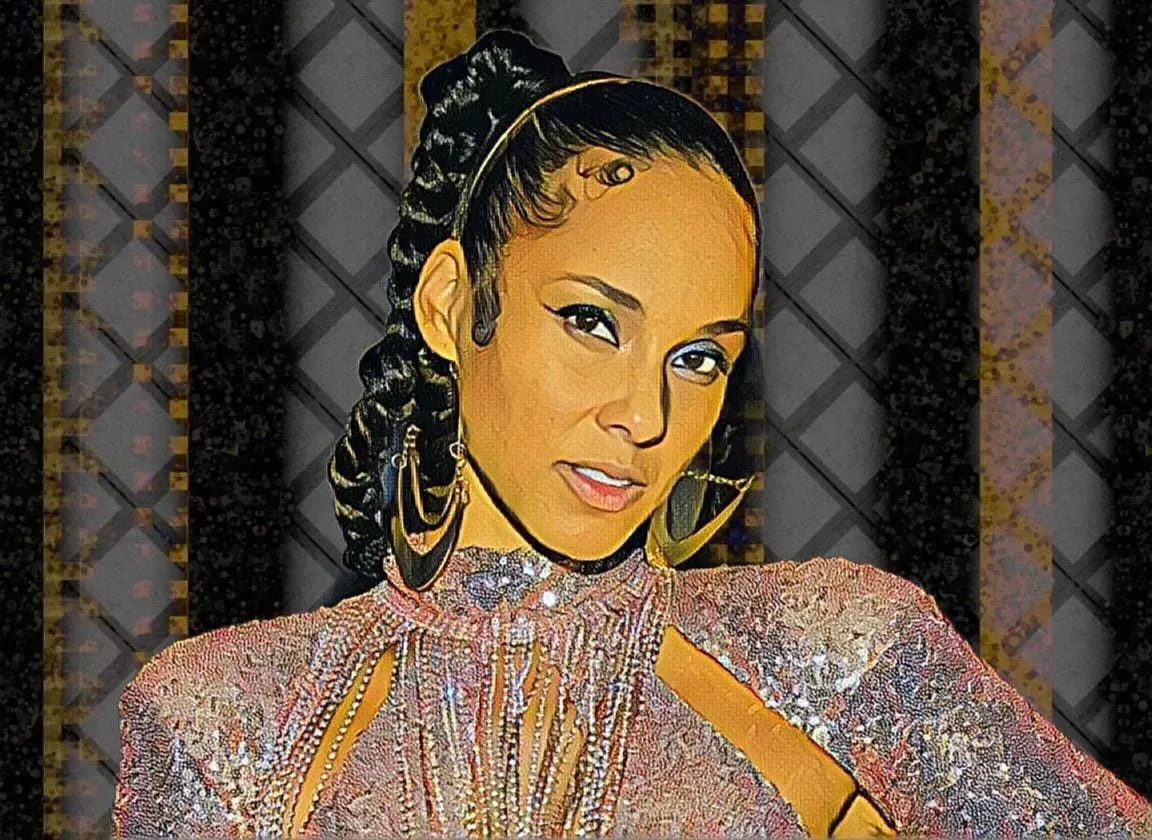
In April 2024, Alicia Keys sat in the Shubert Theatre on Broadway and watched a version of her own childhood unfold onstage. The musical was Hell's Kitchen, a semi-autobiographical story drawn from her songs and her upbringing in the Manhattan neighborhood of the same name, and its arrival marked a remarkable kind of homecoming. The girl who had grown up in a cramped apartment a few blocks away, raised by a single mother on the edge of the theater district, now had her life story playing in one of its grandest houses.
The distance she traveled to reach that seat is the heart of her story. Keys has sold more than 90 million records, won 16 Grammy Awards and built a fortune estimated at roughly $75 million (about 105 billion naira) on her own, part of a household empire worth around $150 million alongside her husband, the producer Swizz Beatz. The money came not just from music but from a beauty brand, a Broadway production, books, television and a cliffside glass mansion that ranks among the most famous celebrity homes in America.
What makes Keys unusual among pop stars is how deliberately she expanded beyond the studio. She treated her artistry as a platform rather than a ceiling, building businesses and institutions that carry her name and her values. The pianist from Hell's Kitchen became a mogul without ever seeming to chase the title.
Keys was born Alicia Augello Cook on Jan. 25, 1981, and raised in Hell's Kitchen by her mother, Terria Joseph, who worked as a paralegal and part-time actress. Money was tight and the neighborhood was rough in that era, but her mother kept her focused on music. A classically trained pianist who began lessons as a young child, Keys grew into a prodigious talent, writing songs as a teenager and drawing the attention of the industry while still in her teens.
Her breakthrough was total. After signing with the legendary executive Clive Davis, she released her debut album, Songs in A Minor, in 2001, a record that fused classical training with soul and hip-hop sensibilities and sold more than 12 million copies worldwide. The album won five Grammy Awards in a single night, including Song of the Year for the ballad Fallin', announcing a 20-year-old as one of the most gifted artists of her generation. The follow-up, The Diary of Alicia Keys, sold millions more and added four more Grammys.
The early success established the foundation of everything to come. Keys was not a manufactured pop star but a genuine musician, a writer and player whose credibility gave her durability. That authenticity would become her most valuable business asset, the thing that allowed her decades later to put her name on a beauty line or a Broadway show and have audiences believe it.
Across the two decades that followed, Keys built one of the most decorated catalogs in modern music. She delivered a steady run of hits, from No One and If I Ain't Got You to Girl on Fire and the inescapable Empire State of Mind alongside Jay-Z, an anthem that became the unofficial soundtrack of New York. Her records have sold more than 90 million copies worldwide, and her Grammy haul reached 16, placing her among the most awarded women in the history of the ceremony.
Her reach extended well beyond record sales. Keys served as a coach on the singing competition The Voice, a role reported to pay millions per season and one that introduced her to a vast television audience. She performed at the most prestigious events in entertainment, from the Super Bowl to presidential inaugurations, and maintained the kind of mainstream visibility that keeps an artist commercially valuable long after the debut-album hype fades.
The longevity is the point. Many artists who explode at 20 are gone by 30, but Keys built a career measured in decades, and that staying power compounded her wealth. Each tour, each album and each television season added to a fortune that her business ventures would later multiply. She remained relevant long enough to become an institution.
The financial engine behind that longevity is her catalog. Keys writes and co-owns much of her music, which means her biggest hits continue to generate royalties from streaming, licensing and radio long after their release, a passive income stream that grows more valuable as the songs become standards. An artist who merely performs other people's material earns once. An artist who owns her songs, as Keys does, collects for a lifetime. That ownership turned a string of early-2000s hits into an annuity that still pays, and it gave her the financial cushion to invest in the ventures that diversified her wealth.
Keys made her most significant business move in 2020, when she partnered with e.l.f. Beauty to create Keys Soulcare, a lifestyle and skincare brand built around her philosophy of wellness as self-care rather than vanity. The brand launched a line of dermatologist-developed, cruelty-free products spanning skincare and beyond, positioning Keys not as a celebrity endorser but as a founder with a genuine stake and creative control.
The venture reflected a sophisticated understanding of where the real money in celebrity sits. Rather than license her face to an existing product for a flat fee, Keys built a brand she co-owns, capturing the upside of every bottle sold and aligning the business with a message of inclusivity and confidence that matched her public persona. Backed by the infrastructure of a publicly traded beauty company, Keys Soulcare gave her a scalable consumer business with the potential to outlast her recording career.
The move placed her among a wave of entertainers who turned fame into ownership, and she did it on her own terms. Keys Soulcare was not a vanity project but a deliberate expansion of her brand into the lucrative wellness economy, the kind of asset that generates value whether or not she releases another album.
Keys has spent recent years proving that her creativity translates across mediums. The crowning example is Hell's Kitchen, the jukebox musical built on her music and inspired by her coming of age in Manhattan, which she developed as a creator and producer. After an acclaimed run at the Public Theater in 2023, it opened on Broadway in 2024, earned a slate of Tony Award nominations and won multiple trophies, validating her as a force in theater as well as music.
She has also worked as an author, publishing the New York Times bestselling memoir More Myself, and has built a producing résumé that extends her storytelling beyond song. Each of these ventures does double duty, generating income while deepening the personal narrative that makes her brand resonate. The Broadway show in particular turned her own life into intellectual property, an asset that can tour, license and generate royalties for years.
The throughline is ownership of her story. Keys has repeatedly converted her biography into commercial products, from the memoir to the musical, ensuring that the value of her life experiences flows back to her. It is a model of creative entrepreneurship that few musicians execute as completely.
Keys has paired her commercial ambitions with a long record of advocacy. In 2018 she launched She Is The Music, a nonprofit dedicated to increasing the number of women working across the music industry, from songwriters to engineers, through mentorship, databases and all-female creative sessions. The initiative attacked the gender imbalance of the business she had conquered, using her stature to open doors for others.
Her most enduring cause reaches across the Atlantic. In 2003 Keys co-founded Keep a Child Alive, a nonprofit that provides treatment, care and support to families affected by HIV and AIDS in Africa and India. Through its signature gala, the Black Ball, and years of campaigning, the organization has raised tens of millions of dollars and channeled the vast majority of it directly into programs on the ground. For Keys, the work has been a defining commitment, a connection between her platform and the lives of children and families a continent away.
The cause has shaped how she uses her fame. Keys has traveled to the communities the charity serves, lent her name and voice to AIDS awareness campaigns and positioned the fight against the epidemic at the center of her public identity for two decades. The Black Ball became one of the most prominent celebrity-driven fundraising events of its kind, drawing entertainers and philanthropists into a cause that, for much of the world, had faded from the headlines. That sustained focus on Africa gives her philanthropy a depth that distinguishes it from the one-off charitable gestures common among celebrities, and it ties her story directly to the continent.
Keys and Swizz Beatz own one of the most photographed homes in America, the so-called Razor House perched on a cliff in La Jolla, California. They bought the roughly 10,600-square-foot architectural landmark in 2019 for about $20.8 million, well below its original asking price, acquiring a glass-and-concrete masterwork long rumored to have inspired Tony Stark's home in the Iron Man films. The house functions as both a residence and a statement, a piece of livable sculpture that reflects the couple's identity as art collectors and design obsessives.
Not every property has been a triumph. The couple owned an estate in Englewood, New Jersey, that they had acquired from the comedian Eddie Murphy, and they ultimately sold it for a figure well below their asking price, a reminder that even celebrity real estate carries risk. Keys had also sold a striking New York City home earlier in her career. The portfolio reveals a buyer drawn to bold architecture and personal meaning rather than pure speculation, a homeowner who chooses properties the way she chooses creative projects.
Keys enters her mid-forties as a genuine multi-hyphenate mogul, with a beauty brand still scaling, a Broadway show extending her catalog into new revenue and a recording career that continues to tour and release. Her household partnership with Swizz Beatz, an accomplished producer and prominent art collector, doubles the creative and financial firepower behind her ventures, and their combined fortune of roughly $150 million reflects two careers reinforcing each other.
The arc from a one-room apartment to all of this is the kind of story Broadway was built to tell, which is precisely why hers ended up onstage. Keys turned 16 Grammys and 90 million records into a diversified empire spanning music, beauty, theater and philanthropy, and she did it while keeping creative control of nearly everything that bears her name. The pianist from Hell's Kitchen never just played the notes. She owned the song.
The intelligence satisfies curiosity. The paid briefings satisfy strategy.
Every Monday, Elite subscribers receive an Investor Memo breaking down the deal, the structure and the positioning behind the week's most consequential African wealth story - the kind of analysis that doesn't appear anywhere else.
Twice a month, a Wealth Intelligence brief profiles a single billionaire's holdings, cash flows and expansion pipeline in detail no public source matches.
→ Executive ($25/mo): Daily newsletter + Deep-Dive Reports
→ Elite ($75/mo): Everything above + Investor Memos + Wealth Intelligence + Quarterly Analyst Briefings
Subscribe now