


Table of Contents
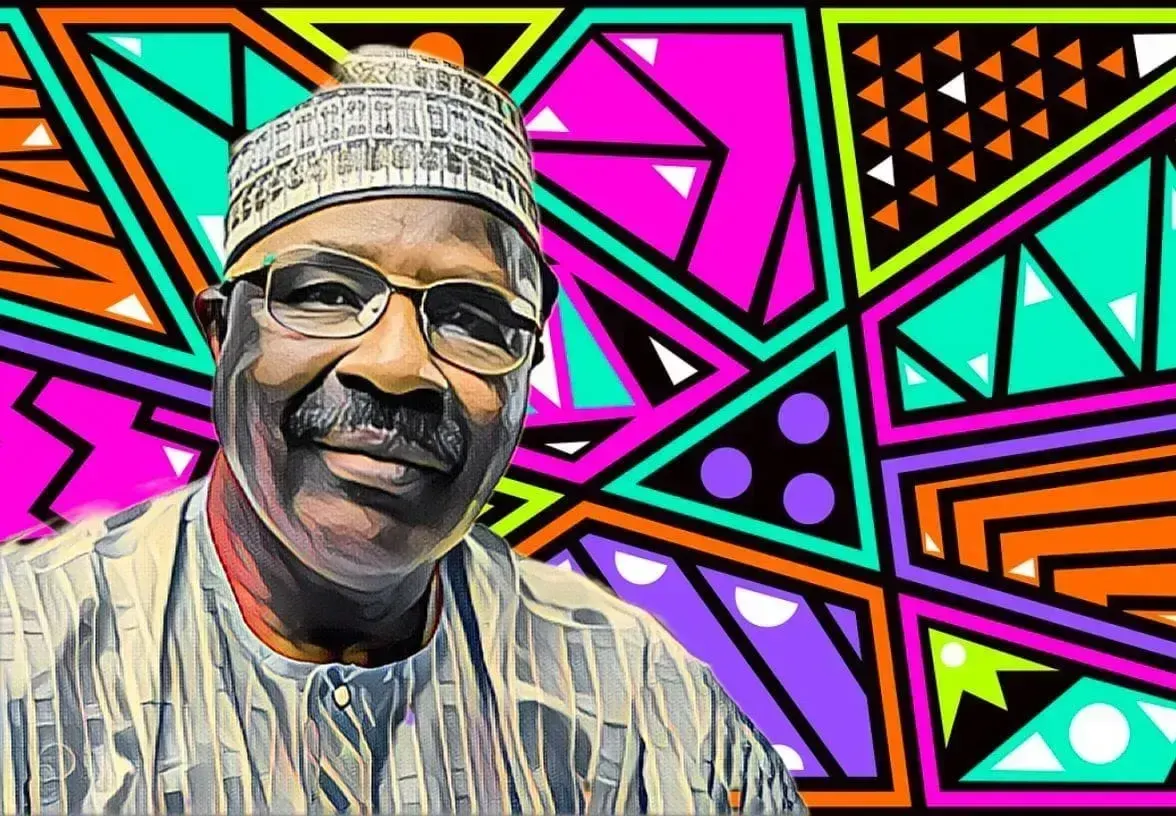
Five months after Michael Ade-Ojo graduated from the University of Nigeria, Nsukka, with a business administration degree, he sold his first car. It was 1965. He had no dealership, no capital base, and no Toyota franchise yet to speak of. What he had was a conviction, formed somewhere in the years before, that he would build his own enterprise within a decade of leaving university, no matter how secure the alternative looked.
The alternative was very secure. Ade-Ojo had stints at CFAO, the federal civil service and BP Nigeria Limited, the kind of postings that, in 1960s Nigeria, represented arrival. He walked away from all of it. Sixty years later, the company that grew out of that decision controls the sole distributorship of Toyota vehicles across Africa's most populous country, runs a $50 million vehicle assembly plant, sits on the boards of two of Nigeria's banking institutions, and has put thousands of young Nigerians through a university that bears his name.
The hawker who would not stay poor
Ade-Ojo was born Michael Adeniyan Ojo on June 14, 1938, in Ilara-Mokin, a town in the Ifedore local government area of Ondo State, in the family of Chief Solomon Ojo, the Lisa of Ilara-Mokin, and Mrs. Beatrice Ademolawe Ojo. He was the fifth of six children in a polygamous household, and his early years gave no hint of the empire to come.
As a boy, he hawked goods on the streets of Ondo State to survive. Charcoal. Matches. Pap. Firewood. Whatever could be carried and sold, he carried and sold. Formal education was not the obvious next step for a child working the streets, but his mother, who ran her own corn and pap grinding business, pushed him toward it and financed his schooling herself. He lost his father in 1956, while still in secondary school, and pressed on regardless.
He attended St. Michael's Anglican School in Ilara-Mokin before moving to the well-regarded Imade College in Owo, where he studied under the headmastership of the late Pa Adekunle Ajasin between 1954 and 1958. After secondary school, he completed an 18-month course at the School of Agriculture in Akure and briefly worked as a laboratory technician at the Ministry of Agriculture's Moor Plantation. None of it pointed toward automobiles. The pivot came later, at the University of Nigeria, Nsukka, where he earned his business administration degree and, just as significantly, met the woman who would become his first wife and his business partner.
Elizabeth, Ade, and a company born from a marriage
Chief Michael Ade-Ojo married Elizabeth Wuraola on February 26, 1966, in Enugu. Three years later, in 1968, he registered a business name: Elizade Trading Stores. It dealt in general textiles, including underwear, and represented one of the more unglamorous starting points imaginable for what would become one of Nigeria's most recognisable conglomerates. The name itself told the story before the business did. Elizade combined the first three letters of his wife's name with his own middle name, Ade. He had taken his middle name and fused it permanently onto his identity and his company at once, eventually folding it into his surname so that Michael Ojo became Michael Ade-Ojo.
In 1971, the underwear business gave way to something with considerably more horsepower. Ade-Ojo and Elizabeth founded Elizade Independent Agencies, an automobile marketing venture, and by June 1972 it had been formally incorporated as Elizade Nigeria Limited. The company started with one support staff. It is worth sitting with that detail. One support staff, a husband-and-wife team, and a bet that Nigeria's appetite for Japanese cars was about to outgrow everything else on the road.
Toyota comes to Nigeria, and so does Ade-Ojo
R.T. Briscoe had held the exclusive Toyota distributorship in Nigeria since 1965, the same year Ade-Ojo sold his first car under different colours entirely. That exclusivity ended in 1976, when the Nigerian federal government opened the franchise to additional players. Four companies were licensed alongside Briscoe: Baloni Nigeria Limited, Bao Motors, Nelphinco Nigeria Limited, and Elizade Nigeria Limited.
Operations started modestly out of an Ikeja office in Lagos. By 1979, the company had outgrown that space and moved to a larger location in Ogba, also in Lagos. An Akure branch had already opened in 1976 to serve the growing customer base back home in Ondo State. The company was finding its footing, dealer by dealer, region by region, in a market where reliability and after-sales service mattered as much as the badge on the bonnet.
In May 1995, Elizade commissioned its headquarters: a six-storey building called Elizade Toyota Plaza, sitting at 322A Ikorodu Road in Anthony, Lagos, with a double showroom built specifically to display the breadth of the Toyota range. It was a statement of permanence from a company that, a quarter-century earlier, had been selling underwear.
Building Toyota Nigeria from three partners down to one man's controlling stake
The defining corporate maneuver of Ade-Ojo's career came in 1996, when Elizade partnered with R.T. Briscoe and East Asiatic Company, a Japanese trading house, to form Toyota Nigeria Limited. The original ownership split gave R.T. Briscoe 51 percent, Elizade 40 percent, and East Asiatic the remaining 9 percent.
What followed was a slow, deliberate consolidation. When East Asiatic exited its African operations, the ownership structure was redrawn, and Elizade Nigeria Limited emerged with full control of the company. Toyota Motor Corporation in Japan, evidently wanting a Japanese stakeholder back in the mix, requested that Elizade allow Sumitomo Corporation to take a 26 percent equity stake, a request Ade-Ojo accommodated. He later went further still, acquiring 100 percent of R.T. Briscoe Nigeria outright and building his total holdings in Toyota Nigeria Limited up to 74 percent.
Today, Toyota Nigeria Limited is the sole importer and distributor of Toyota vehicles in the country, appointed directly by Toyota Motor Corporation, and works through seven accredited dealers including Elizade Nigeria Limited, R.T. Briscoe Nigeria Plc, Omoregie Motors, Germaine Auto Centre, Kojo Motors, Mandilas Motors, and Metropolitan Motors Limited. The company employs a workforce of roughly 10,000 across its dealership network and built what it calls a global-standard Service Centre in Lagos, doubling as a DOJO Centre, a Japanese term for a place of immersive, hands-on learning, where dealer staff receive specialised training.
Ade-Ojo has never been shy about what the relationship with Japan cost him in patience and what it has returned in trust. "I have dealt with the Japanese now for 44 years," he has said. "And it is only through me that they can mirror Nigeria. Throughout these 44 years, there have not been any promises broken, or monies owed. My word has always been my bond." He has also pointed to Toyota's standing inside Nigeria specifically, separate from the brand's global rank. "There are countries where Toyota is number three or number four in terms of market share, but when you take it overall, Toyota is number one in the world. They don't have to be number one in Nigeria. However, they have been number one in Nigeria for 15 years."
From distributor to manufacturer
For most of his career, Ade-Ojo built his fortune importing and distributing vehicles built elsewhere. That changed when he decided Nigeria needed to build them too.
He floated the idea publicly at the Abuja Motor Fair in 2013, telling attendees that the time had come for Toyota, as the consistent market leader in Nigeria, to establish a local assembly plant capable of serving both the domestic market and neighbouring countries. It took two years to move from idea to steel. In November 2015, Elizade completed a $50 million vehicle assembly plant with the capacity to assemble 40,000 units annually, spanning cars, light trucks, and mini-buses, for both Toyota and a newer Chinese partner brand, JAC.
That plant now sits at the centre of Elizade JAC Autoland Limited, an entity led by Ade-Ojo's son, Demola, as Managing Director and Chief Executive. The Ikotun facility in Lagos runs two separate assembly lines: a single-track line dedicated to passenger vehicles and a dual-track configuration for industrial vehicles. In December 2025, Nigeria's Federal Minister of Industry, Trade and Investment, Jumoke Oduwole, toured both the company's Ikeja headquarters and the Ikotun plant, describing the operation as a model for the country's automotive manufacturing future.
The current strategic push, as articulated by both father and son heading into 2026, is less about engineering and more about persuasion. Nigeria's automotive market remains overwhelmingly dominated by used imports, commonly called "tokunbo," and Elizade JAC's leadership has set its sights on shifting that consumer behaviour. "Right now, the Nigerian market is still very low when it comes to new vehicle sales as opposed to used vehicle sales," Ade-Ojo has acknowledged. "So we are looking at how we can begin to have Nigerians enjoy using and owning new vehicles." Demola Ade-Ojo has framed 2026 around a public education campaign aimed at convincing ordinary Nigerians that buying new, domestically assembled vehicles carries advantages that used imports simply cannot match, in reliability, in warranty, and in long-term value.
The conglomerate beyond cars
Toyota and JAC are the headline acts, but Elizade Group's portfolio runs considerably wider than automobiles. Ade-Ojo's holding structure includes Mikeade Investment Company Limited and Mikeade Property Development Company Limited, both vehicles for his real estate and investment interests, alongside Classic Motors Limited, Elizade Autoland Nigeria, Crow Motors Nigeria Limited, Okin Travels Limited, and Crown Drinks Limited.
One of the more unexpected branches of the conglomerate is Oodua Creations Limited, a garment manufacturing company specialising in traditional and corporate Yoruba wear made from Nigerian fabrics. It has picked up international awards over the years, and it reflects a side of Ade-Ojo that rarely makes it into the automotive trade press: a deep personal investment in Yoruba culture and its preservation through commerce rather than nostalgia alone. He also founded Smokin Hills Golf Resort in his hometown of Ilara-Mokin, giving the town a recreational facility that would otherwise have no obvious reason to exist outside a major city.
His board memberships extend his reach into Nigeria's financial sector. He chairs Moorhouse Company Limited, also referenced as Moore House Sofitel Company Limited, alongside Imperial Telecommunications Limited and Braun Limited. He sits on the boards of First City Monument Bank Group, Ecobank Plc, Custodian and Allied Insurance Plc, and SMT Nigeria Limited, the official Nigerian distributor for Mack trucks, Volvo trucks, and Volvo Construction Equipment. None of these are passive appointments collected for prestige. Each one connects back to a business empire that has spent five decades positioning itself across multiple points of Nigeria's industrial and financial infrastructure, from the vehicles people drive to the banks that finance them.
The scale of the group's economic footprint has been measured in tax contributions rather than headline revenue figures, which the family has kept private. Between 2005 and 2015 alone, Elizade's group of companies contributed approximately 200 billion naira to the Nigerian economy through customs duties, value-added tax, company income tax, and education tax, a figure that excludes the personal income taxes paid by the group's management and staff.
Elizade University and the bet on human capital
If the assembly plant represents Ade-Ojo's bet on Nigerian manufacturing, Elizade University represents his bet on Nigerian people. The project began life as something else entirely: Elizade Polytechnic, conceived as a skills acquisition centre to train technicians and entrepreneurs at a moment when Nigeria had a visible shortage of both. Changes in federal government policy around polytechnic education forced a pivot, and the polytechnic idea evolved into a full university.
The Nigerian federal government licensed Elizade University on February 28, 2012, and it opened its doors on January 6, 2013, with 64 students enrolled across 13 programmes in two faculties, located in Ade-Ojo's hometown of Ilara-Mokin. The growth since then has been substantial. By 2024, the university offered 31 fully accredited academic programmes spread across the Faculties of Basic and Applied Sciences, Allied Health Sciences, Engineering, Humanities, Social and Management Sciences, and Law, with approximately 3,000 students enrolled and postgraduate programmes, including Postgraduate Diplomas, Master of Arts, Master of Science, and Master of Philosophy degrees, running for four years and counting.
Ade-Ojo has framed the university as something closer to a philosophical position than a charitable gesture. He has said publicly that he believes sustainable development and the resolution of society's most pressing problems can only be achieved through functional higher education that produces the human capital capable of driving that development forward. It is a belief he had acted on long before the university existed. In 1991, more than two decades before Elizade University opened, he established the Ade Ojo Scholarship Scheme, which has since supported more than 120 students through their education.
The man behind the empire
Ade-Ojo carries the honorific OON, the Order of the Niger, and is known across Nigerian business circles simply as "The Chief." He holds the chieftaincy title of Aare Atayese of Ilara-Mokin, conferred in recognition of the developmental projects he has driven in his hometown, of which Elizade University and Smokin Hills Golf Resort are the most visible. His honorary Doctor of Business Administration came from the University of Nigeria, Nsukka, in 1999, the same institution where he completed his original degree and met Elizabeth.
His first wife, Chief Mrs Elizabeth Wuraola Ade-Ojo, predeceased him, and the couple had two daughters together. He married his second wife, Taiwo Ade-Ojo, in 2012. Two of his sons hold senior positions inside the businesses he built. Kunle Ade-Ojo, who holds a mechanical engineering degree from the University of Reading and a master's in automotive engineering from Cranfield University, worked as a Global Management Associate at Toyota Motor Sales USA before returning to Nigeria, where he rose from Business and Strategic Development Manager to Executive Director and eventually to Managing Director of Toyota Nigeria Limited. Demola, his brother, studied business administration at the University of Florida and earned an MBA from Wayne State University in Detroit, working at Toyota Motor Sales USA, Tabron Financial Services, and Mel Farr Ford before returning home to run Elizade Autoland and its JAC vehicle operations. A third son was educated at Keio University in Japan and joined Sumitomo Corporation in 1988, rising over decades to become a Corporate Officer and General Manager within Sumitomo's automotive sales and marketing division, a deliberate generational bridge maintaining the family's relationship with the Japanese side of the business.
At 87, Ade-Ojo has become something of an unlikely social media presence in his own right, known for the videos of him dancing at his birthday celebrations that circulate widely each June. He has described his vitality plainly, attributing it to faith. "God gives strength," he has said. He exercises most mornings, reserving Sunday mornings for church, and counts dancing and football among the things that keep him moving at an age when most men in his position would have long since handed the keys to someone else.
He has not handed over the keys. He chairs Toyota Nigeria Limited still, sits across his various boardrooms still, and continues showing up at the ribbon-cuttings and ministerial tours that mark each new phase of the business he started with one employee and a marriage. Sixty years after he sold his first car, the question he is still answering is not whether Nigerians will buy Toyotas. That question was settled decades ago. The question now is whether they will buy new ones, built down the road in Ikotun, rather than used ones shipped in from somewhere else. It is, in its own way, the same bet he made in 1965: that Nigeria was ready for something it did not yet know it wanted.
The intelligence satisfies curiosity. The paid briefings satisfy strategy.
Every Monday, Elite subscribers receive an Investor Memo breaking down the deal, the structure and the positioning behind the week's most consequential African wealth story - the kind of analysis that doesn't appear anywhere else.
Twice a month, a Wealth Intelligence brief profiles a single billionaire's holdings, cash flows and expansion pipeline in detail no public source matches.
→ Executive ($25/mo): Daily newsletter + Deep-Dive Reports
→ Elite ($75/mo): Everything above + Investor Memos + Wealth Intelligence + Quarterly Analyst Briefings
Subscribe now