

Table of Contents
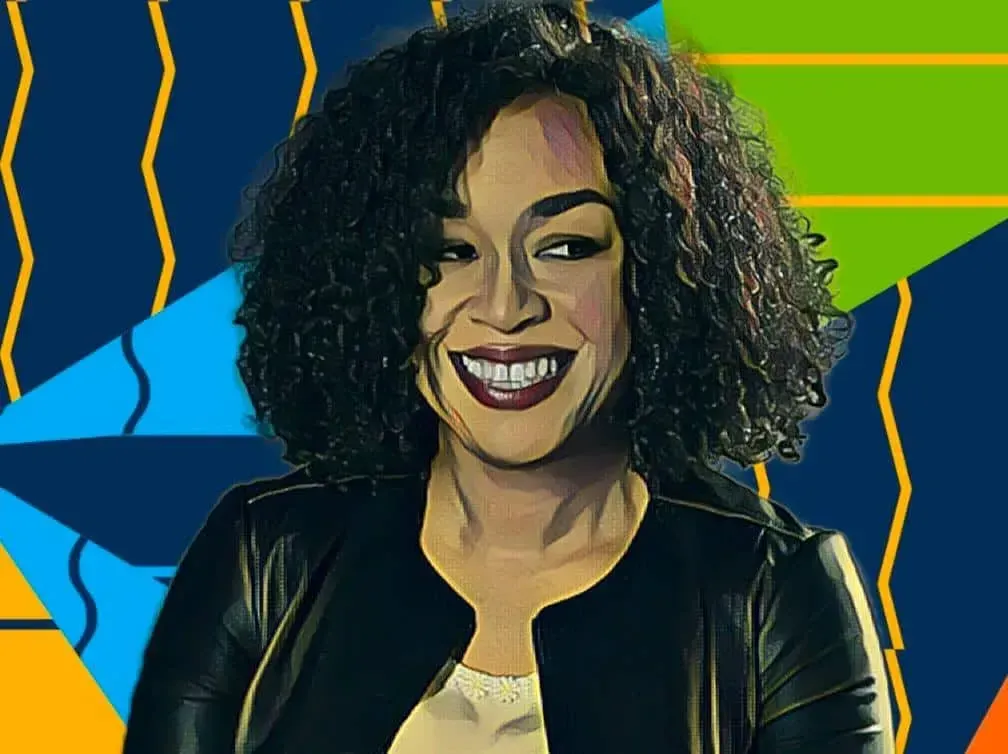
The youngest of six children, born on January 13, 1970, in Chicago, Illinois, Shonda Lynn Rhimes grew up in a house built by educators. Her father was a university administrator. Her mother was a university professor. They filled the house with books and with the expectation that words mattered, that stories were serious, and that the children who grew up inside those walls would do something consequential with what they had been given. Rhimes has said she grew up believing she would be the next Toni Morrison. Morrison already had that job, as Rhimes later put it, so she needed another plan.
The plan that emerged was not obvious and not fast. After graduating from Dartmouth with a degree in English in 1991, she moved across the country to pursue an MFA in screenwriting at the USC School of Cinematic Arts. She interned at Denzel Washington's Mundy Lane Entertainment. She graduated at the top of her class. She worked office jobs. She wrote a short film in 1998. She wrote the HBO television movie "Introducing Dorothy Dandridge" in 1999, starring Halle Berry as the first Black woman nominated for a Best Actress Academy Award. She wrote the Britney Spears vehicle "Crossroads" in 2002, which grossed $60 million despite being universally panned. She wrote "The Princess Diaries 2" in 2004. And in 2003, she wrote a pilot for ABC about young female war correspondents that the network rejected. The rejection stung. The lesson it produced was more valuable than the credit would have been.
None of this was the career she intended. It was the apprenticeship she completed. When ABC gave her another chance in 2004 and asked for a medical drama, she came in with everything she had learned about structure, character, and the specific weight of a network pilot, and delivered a show about female surgical residents at a Seattle hospital that the network scheduled as a midseason replacement because nobody was quite sure what they had. What they had, it turned out, was the most consequential primetime drama of the 2000s and the foundation of a $240 million personal fortune. What they did not have was any intention of paying her fairly for it.
The $2 billion gap and what it costs to close it
In the early seasons of "Grey's Anatomy," Rhimes earned $30,000 per episode for writing and producing a show that would generate an estimated $2 billion in revenue for ABC across her tenure. The disproportion is not ambiguous. She has spoken about it directly and without the softening that public figures often apply to discussions of their own underpayment. "It's really startling to realize how much money your work is earning for a place and then to discover how much they think you're worth versus that," she told Forbes. She fought the gap consistently and eventually closed most of it. By 2021, her per-episode fee for "Grey's Anatomy" had grown to $250,000. Her annual deal with ABC reached approximately $10 million, plus 10 percent of profits generated from syndication, a backend arrangement that converted the long tail of "Grey's Anatomy" reruns into passive income every time a cable network or streaming platform licensed the catalog. By that point she was running three simultaneous primetime series and had become the first African American woman to create three television dramas that each reached the 100-episode milestone. The $30,000 starting fee looks, from that vantage point, like precisely the kind of institutional miscalculation that makes departure feel like strategy rather than preference.
On August 14, 2017, Netflix announced that Rhimes had signed an exclusive content deal with the streaming platform, leaving behind the network that had made her rich, that had underpaid her for 12 years, and that had given her the commercial platform from which she was now departing. The initial deal, valued at between $100 million and $150 million, covered multiple years of exclusive content across television and film. It was the largest deal Netflix had signed with a television creator at that point, more than Ryan Murphy's arrangement and more than any comparable network defection in streaming history. The industry read it correctly: Netflix was not just buying Shonda Rhimes's next show. It was buying the institutional knowledge, the track record, and the cultural authority of the most commercially reliable creator in American primetime.
The Bridgerton billions and the deal that tripled
The first Shondaland production to reach Netflix audiences was not the show that defined the partnership. It was the one that followed. "Bridgerton," the Regency-era romance series based on Julia Quinn's novels, debuted on Netflix on Christmas Day 2020 and became, almost immediately, the most-watched original series in the platform's history at that time, drawing 82 million household views in its first 28 days. The show was racially diverse in its casting in a way that period drama had resisted for decades, presented with production values more commonly associated with major studio film releases, and emotionally calibrated to the specific kind of binge experience that Netflix's algorithms had identified as the key metric of subscriber retention. It was, commercially and culturally, a perfect piece of platform television, and it arrived at a moment when Netflix needed exactly that.
The Bridgerton success triggered a renegotiation. In July 2021, Netflix extended Rhimes's deal for five additional years and gave her a "significant" up-front raise from her initial guarantee, with bonuses that sources told The Hollywood Reporter could elevate the total value into the $300 million to $400 million range. The extension covered not just television but film, games, virtual reality, branding and merchandising, and live events through a Shondaland Media arrangement that added new revenue streams to the core content deal. It placed her in the same commercial bracket as Ryan Murphy, whose $300 million Netflix deal had been the previous benchmark, and it confirmed that the streaming economy had finally priced her correctly, something the network economy had consistently failed to do. Forbes estimated that in 2021 alone, Rhimes earned close to $40 million from the Netflix deal, including Bridgerton bonuses, $8 million in producing fees for "Grey's Anatomy" and "Station 19," $17 million from her share of profits from "Grey's," "Scandal" and "How to Get Away with Murder," and several million more from Shondaland's ancillary projects. That single year produced an estimated $70 million before taxes. Forbes also reported that since the beginning of her television career, Rhimes had banked more than $350 million pretax by 2021, a figure that has grown substantially in the five years since.
Shondaland, the production company Rhimes founded in 2005, is the commercial architecture through which all of this flows. From 2020 to 2024 alone, Shondaland productions generated $2.4 billion in revenue for streaming platforms, according to The Economist, a figure that places it among the most commercially productive independent television production companies in the world. The Shondaland portfolio now includes "Grey's Anatomy," which entered its 21st season in 2024 and remains one of broadcast television's highest-rated dramas; "Bridgerton," which Netflix renewed for its fifth and sixth seasons in May 2025 with season four confirmed for 2026; "Inventing Anna," which set a then-record for English-language Netflix series viewership with 511 million hours watched in its first 28 days; "Queen Charlotte: A Bridgerton Story"; and "The Residence," the White House murder mystery series that premiered in 2025 and is currently in consideration for Emmy nominations. Each of these productions carries Shondaland's fingerprint: casts that look like the actual world, emotional stakes that feel genuine, and production execution that competes with prestige film at a fraction of the development timeline.
The building with her name on it and the $10 million it took to get there
The paradox at the center of Shonda Rhimes's story is the same one she described in her 2014 Dartmouth commencement address: she grew up dreaming of writing novels and ended up running the most commercially productive television operation of her generation. She wanted to be Toni Morrison. She became Shondaland. The distance between those two outcomes is not a disappointment. It is the evidence of what happens when an extraordinary writer applies herself to a commercial form she initially underestimated and discovers that the form can carry exactly as much weight as she brings to it.
The Dartmouth connection has never been casual. In September 2025, Rhimes pledged $15 million to her alma mater to fund a new five-story undergraduate residence hall, which will bear her name. Shonda Rhimes Hall, scheduled to open in 2028 on West Wheelock Street, will be the first building at Dartmouth ever named for a woman and the first named for a Black alumnus, a distinction that says as much about Dartmouth as it does about Rhimes. She serves on the university's Board of Trustees. The fictional Meredith Grey, protagonist of her most enduring creation, is a Dartmouth alumna, seen wearing the school's name on multiple occasions across 21 seasons of television. That detail was not accidental. When she learned that the hall would carry a historic distinction, she said: "Dartmouth wasn't made in my image, but it is possible to remake it to include my image."
The broader philanthropic record reflects the same precision. In 2016, she pledged $10 million to the Smithsonian Institution's National Museum of African American History and Culture, one of the largest individual gifts the museum received during its founding campaign. Her Rhimes Foundation, which carries approximately $10 million in assets according to its most recent tax filing, supports the arts, education and related causes. The two major institutional gifts, to Dartmouth and the Smithsonian, reflect a philanthropic philosophy consistent with her professional one: invest in the infrastructure that produces the next generation of people who look like her, because that infrastructure did not exist at sufficient scale when she arrived.
What $240 million looks like when you built it yourself
Rhimes owns substantial properties in Los Angeles, Manhattan and a large estate in Westport, Connecticut, along with a Los Angeles home valued at approximately $8.8 million. She has three daughters, two adopted and one born through gestational surrogacy, and has spoken publicly about her decision to remain single, describing it on Oprah's program as a deliberate choice rather than an absence. She did not want a husband in her house, she said. She wanted her work, her children and the particular freedom that comes from not negotiating the terms of your own life with another person. That philosophy is consistent with the way she has managed every other significant decision in her career: with clarity about what she wants, patience about the timeline for getting it, and a willingness to walk away from any room that undervalues what she brings.
Her net worth stands at $240 million as of 2026, built across 21 years of "Grey's Anatomy," a Netflix deal that has paid her between $300 million and $400 million in total potential value, profit participation in three shows that between them produced hundreds of episodes of primetime television, and a production company that generated $2.4 billion in streaming revenue in four years. The number would have been larger had ABC priced her correctly from the beginning. She was paid $30,000 an episode while her work was generating billions for the network. She noticed, she fought, and she eventually left. The building at Dartmouth will carry her name for the next hundred years. The $30,000 per episode is a footnote. That, in the end, is what it looks like when you outlast the people who underestimated you.
The intelligence satisfies curiosity. The paid briefings satisfy strategy.
Every Monday, Elite subscribers receive an Investor Memo breaking down the deal, the structure and the positioning behind the week's most consequential African wealth story - the kind of analysis that doesn't appear anywhere else.
Twice a month, a Wealth Intelligence brief profiles a single billionaire's holdings, cash flows and expansion pipeline in detail no public source matches.
→ Executive ($25/mo): Daily newsletter + Deep-Dive Reports
→ Elite ($75/mo): Everything above + Investor Memos + Wealth Intelligence + Quarterly Analyst Briefings
Subscribe now