

Table of Contents
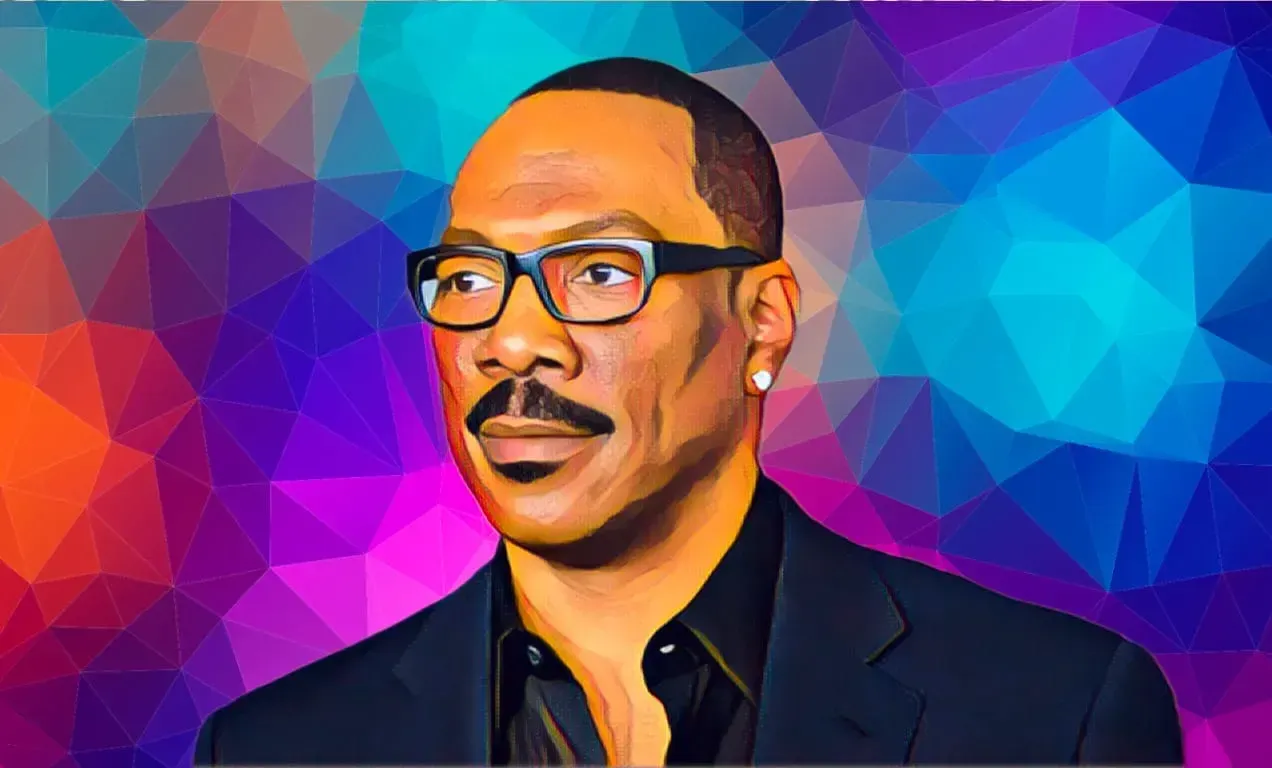
At the AFI Life Achievement Award Gala on April 18, 2026, in Hollywood, a lineup of presenters that included Dave Chappelle, Kevin Hart, Martin Lawrence, Spike Lee and Mike Myers took turns telling the room what Eddie Murphy had meant to them. The American Film Institute had given him its 51st Life Achievement Award, the most distinguished honor in American cinema. Murphy sat in the audience listening to testimony from the peers who had studied him, been shaped by him and in some cases been launched by his influence. He was 64 years old, had been famous since he was 19, had weathered a decade of commercial misfires and personal controversies that would have ended most careers, had come back so completely that his Netflix film the previous year had drawn 41 million views in five days, and was preparing to return as Donkey in a "Shrek" sequel scheduled for 2027. The Life Achievement Award is typically given to people who have finished doing the thing they are being honored for. Eddie Murphy has not finished.
That gap, between the tribute and the ongoing career, is the defining paradox of the Murphy story. He is a man the industry keeps trying to close the chapter on and who keeps opening new ones. His movies have grossed nearly $7 billion at the worldwide box office, making him the sixth highest-grossing American actor at the domestic box office. During his career he has earned at least $420 million in confirmed salary, backend royalties and deal proceeds. His current net worth is estimated at $200 million, a figure that sits comfortably in the second tier of Hollywood wealth but that would be substantially higher had the years between 1989 and 1996 not produced a sequence of commercial disappointments that cost him nearly a decade of market momentum at a time when studio movie stars were negotiating their peak earning windows.
Eddie Murphy was born on April 3, 1961, in Brooklyn, New York, the son of Charles Edward Murphy, a transit cop and amateur comedian, and Lillian Murphy. Charles Murphy was murdered in 1969 when Eddie was eight. Lillian's subsequent illness was severe enough that Eddie and his older brother Charlie were placed in foster care for approximately a year before she recovered, remarried a Breyers ice cream plant foreman, and brought the family to Roosevelt, Long Island. He began performing stand-up comedy at 15, doing impressions at local talent shows and building a material around a natural gift for mimicry and timing that Richard Pryor, whom he idolized, had made him believe was a viable path to everything. He was 19 when the phone rang with an offer to audition for Saturday Night Live.
The $4,500 episode and the career that rebuilt the institution
Murphy earned $4,500 per episode of Saturday Night Live when he joined the cast in 1980. The show was struggling without Lorne Michaels and the original cast. Murphy understood the moment differently from everyone around him. Rather than treating the instability as a liability, he treated it as an opening. His characters, Mr. Robinson's Neighborhood, Gumby, Velvet Jones, Buckwheat, James Brown's Celebrity Hot Tub Party, and White Like Me, made him the only reason a significant portion of the audience tuned in. He is widely credited with saving the show from cancellation. By the following year his per-episode salary had risen to $30,000. He appeared in 65 episodes between 1980 and 1984. The leverage he was building was not about SNL. It was about what SNL's audience would pay to see him do next.
In 1982, still a cast member, he starred opposite Nick Nolte in "48 Hrs." for $450,000 and demonstrated the box office chemistry that the next decade would be built around: a Black comedian from the streets operating alongside the white American establishment with more wit, more instinct and more charisma than anyone in the room expected. "Trading Places" followed in 1983. Then "Beverly Hills Cop" in 1984, and everything accelerated.
Beverly Hills Cop grossed over $230 million at the U.S. box office, becoming the highest-grossing film of 1984, the highest-grossing comedy of all time at its release, and the highest-grossing R-rated film of all time. Murphy had negotiated backend participation on the film. He ultimately earned approximately $14.5 million from the first Beverly Hills Cop when the profit participation was included, an extraordinary return for a comedian who had been making $4,500 a week on television three years earlier. It established the commercial logic he would pursue for the rest of the decade: take the upfront fee, negotiate the backend, and own a piece of what you make.
He earned $8 million for "Beverly Hills Cop II" in 1987, the same year his stand-up concert film "Eddie Murphy Raw" grossed $50 million at the box office, still the highest-grossing stand-up concert film in history at its release. He earned $8 million for "Coming to America" in 1988. He launched Eddie Murphy Television Enterprises with a reported $15 million deal at Paramount Television. In the 1980s, 90s, and early 2000s, he earned at least $250 million in film salaries and backend points alone.
The valley, the donkey and the $70 million streaming recovery
The years between 1989 and 1996 are the most instructive period of the Murphy commercial biography, not because they represent failure in a conventional sense, but because they illustrate what happens when an extraordinary talent loses its commercial alignment with audience expectation. "Harlem Nights" (1989), "Another 48 Hrs." (1990), "Boomerang" (1992), "Vampire in Brooklyn" (1995) and "The Adventures of Pluto Nash" (2002) produced a cumulative box office record that bore almost no relationship to the fees Murphy had commanded at his peak. The market was telling him that the streetwise comedy persona that had made him the highest-paid actor in Hollywood was no longer reliably selling tickets, and the misfire period cost him the compounding commercial momentum that his 1980s run had been building toward.
The recovery came from an unexpected direction. In 1996, "The Nutty Professor" grossed $273 million worldwide and demonstrated that Murphy's range extended well beyond the characters that had defined his peak commercial years. And in 2001, he voiced Donkey in "Shrek," a role that would introduce him to a generation that had not yet been born during "Beverly Hills Cop" and that would generate one of the most durable income streams of his career. He earned approximately $350,000 for voicing Donkey in the first Shrek film. His voice was worth significantly more by the time the sequels arrived. "Shrek 2" became the highest-grossing film of 2004. Across the four theatrical Shrek films, Murphy earned a total of approximately $35 million in voiceover work, and the character's continuing cultural relevance has generated residual income through licensing, merchandise and streaming rights for more than two decades since the original release.
The streaming economy arrived at a moment when Murphy had already demonstrated, through "Dolemite Is My Name" in 2019 and "Coming 2 America" in 2021, that his commercial credibility was fully intact. Netflix paid him $70 million in a multi-project deal announced in 2019 that included comedy specials and feature films. "Beverly Hills Cop: Axel F," produced by Murphy and Jerry Bruckheimer and released on Netflix on July 3, 2024, drew 41 million views in its first five days, making it the number one film on the platform globally. In its second week it remained number one, adding 22.2 million views. Murphy reportedly earned between $15 million and $20 million for the film plus performance bonuses tied to viewership. In June 2024, Murphy and Bruckheimer confirmed that a fifth Beverly Hills Cop film was already in development.
The island, the mansion and the ten children he is raising differently
The real estate portfolio that Murphy has assembled across four decades reflects a deliberate preference for privacy at scale. His crown jewel is a custom-built mansion in the exclusive North Beverly Park gated community in Beverly Hills, set on land he purchased for $10 million in 2001, a sprawling compound featuring 10 bedrooms, 17 bathrooms, a tennis court and a pool, currently estimated at $30 million to $40 million. The property is not a show residence. It is a compound built around the specific priorities of a man with ten children who has said, consistently and publicly, that fatherhood is the most important part of his life.
The second major property is Rooster Cay, a 15-acre private island in the Bahamas that Murphy purchased in 2007 for $15 million. The island acquisition is consistent with the Murphy approach to wealth at its most private: he builds and buys assets that create distance from the industry's ambient noise, that can be inherited, and that generate value independent of any particular film's performance.
The philanthropic record reflects the same discretion. Murphy has donated to the AIDS Healthcare Foundation, the Martin Luther King Jr. Center and contributed $100,000 to the Screen Actors Guild strike relief fund. He does not attach his name to causes in ways that generate publicity for his brand. He makes the contributions and moves on. In May 2025, his son Eric married Jasmin Lawrence, the daughter of Martin Lawrence, making the two comedy icons brothers-in-law and closing a generational loop that says something about the continuity of Black comedy in America that neither man has publicly acknowledged but that both understand perfectly.
Murphy's commercial output since 2024 has maintained a pace that most entertainers his age have abandoned. "The Pickup," an action-comedy for Amazon Prime with Pete Davidson and Keke Palmer, followed "Beverly Hills Cop: Axel F." "Being Eddie," a Netflix documentary directed by two-time Oscar winner Angus Wall, offered unprecedented access to his private world and simultaneously extended his brand presence on the platform that now represents his primary distribution relationship. He will return as Donkey in "Shrek 5," scheduled for release on June 30, 2027. A Beverly Hills Cop fifth film is in development. He has confirmed to Netflix that he is developing a remake of "It's a Mad, Mad, Mad, Mad World" (1963), which he intends to direct, a pivot toward behind-the-camera ownership that would expand both his producing fee base and his backend participation in projects of his own origination.
His net worth of $200 million is the result of 45 years of work in an industry that tried, at various points, to write him off as a spent force. The $4,500 SNL episode became a $450,000 film debut which became $14.5 million from a single franchise entry which became a $70 million Netflix deal which became 41 million views in five days. Every number in that sequence is the same story told in different currency: a kid from Roosevelt, Long Island who understood very early that the room was his if he wanted it, and has never stopped wanting it.
The intelligence satisfies curiosity. The paid briefings satisfy strategy.
Every Monday, Elite subscribers receive an Investor Memo breaking down the deal, the structure and the positioning behind the week's most consequential African wealth story — the kind of analysis that doesn't appear anywhere else.
Twice a month, a Wealth Intelligence brief profiles a single billionaire's holdings, cash flows and expansion pipeline in detail no public source matches.
→ Executive ($25/mo): Daily newsletter + Deep-Dive Reports
→ Elite ($75/mo): Everything above + Investor Memos + Wealth Intelligence + Quarterly Analyst Briefings
Subscribe now