

Table of Contents
In 1982, a young man from a village called Pargatenga in the province of Oubritenga, north of Ouagadougou, arrived in Burkina Faso's capital with nothing but ambition and whatever he had earned from the small jobs available to an uneducated village boy in a landlocked country in the middle of the Sahel. He spent two years doing odd jobs in Ouagadougou before saving enough for the bus fare to Abidjan. In Côte d'Ivoire he sold ice cream and accumulated everything he could. When he came back to Ouagadougou in 1987, he had 150,000 CFA francs in savings. Some sources put the initial capital at 13,500 FCFA at departure and 150,000 FCFA at return, reflecting two different moments in the same journey. Either figure is negligible. Either figure is the origin of everything that followed.
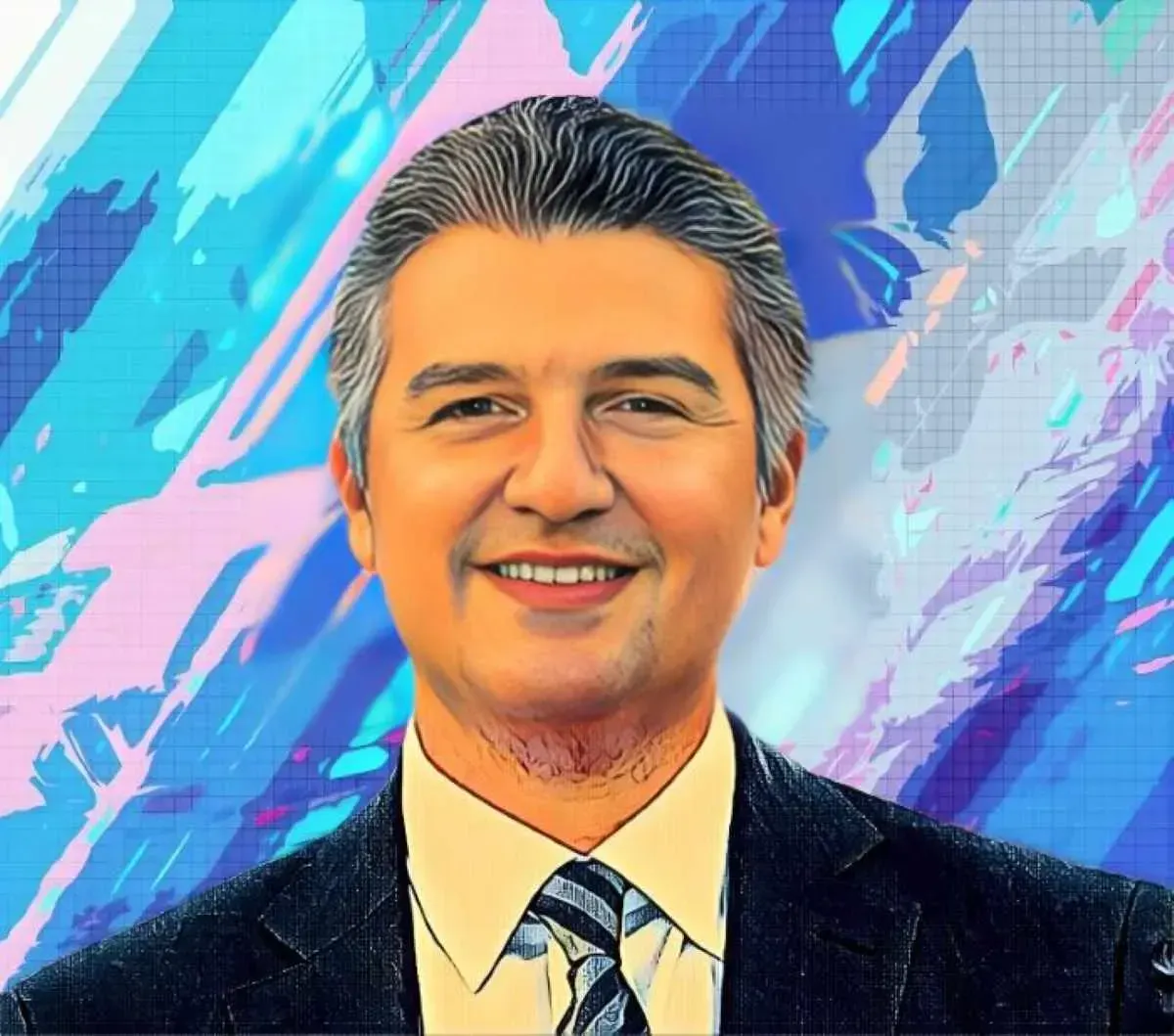
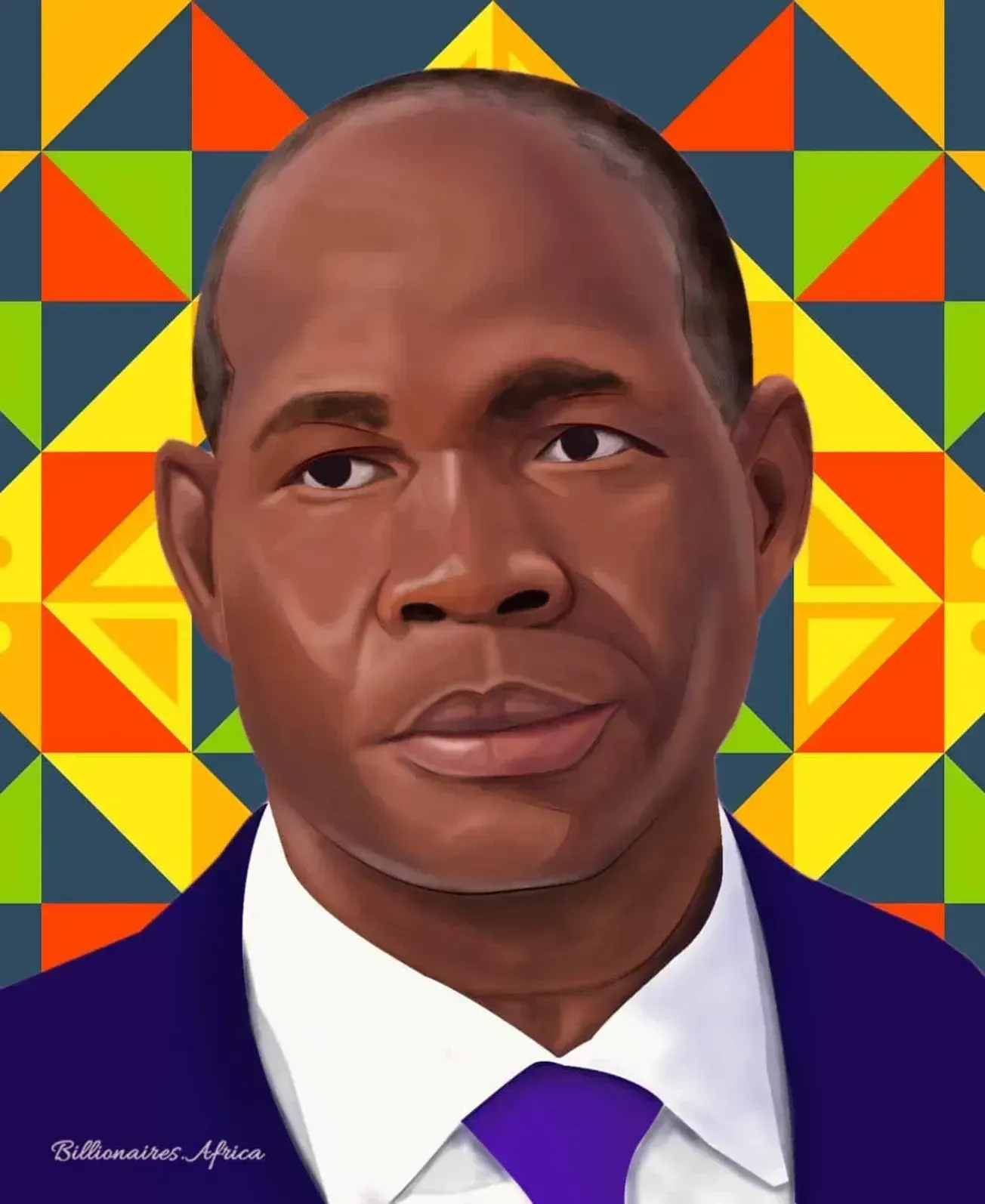
Inoussa Kanazoe, known affectionately across Burkina Faso as "Kanis," is today the founder and chairman of CIM Metal Group, a West African industrial conglomerate that operates more than five cement plants across Burkina Faso, Côte d'Ivoire, Togo, Mali and Ghana, an iron foundry in Ouagadougou, a logistics fleet of more than 1,000 trucks and 40 railway wagons, and a commodities trading arm that leads Burkina Faso's rice import market with 300,000 tonnes annually. In late 2023, he founded Soleil Resources International, a mining group that in 2024 and 2025 acquired the Avesoro and Roxgold gold mines from departing foreign operators, positioning him as one of the most significant beneficiaries of Burkina Faso's sweeping resource nationalism drive. He has no diploma. He built everything he owns without a single university credential, guided entirely by commercial instinct, a willingness to go where his more cautious compatriots were not yet looking, and a discipline with capital that reflects the scarcity of the environment that produced him.
His net worth is estimated at $500 million by some regional sources, placing him among the wealthiest individuals in Burkina Faso, though the opacity of his privately held portfolio makes precise verification impossible. What is verifiable is the output: a group that employs more than 5,000 people directly and generates more than 16,500 indirect jobs across the region, cement plants with combined capacity running into the millions of tonnes annually, gold mines that were previously producing for Toronto and Sydney-listed mining companies, and a logistics infrastructure that makes Kanazoe's commercial reach visible on every major road corridor in Francophone West Africa.
The cement years and the pivot to heavy industry
The commercial story that turned the 150,000 FCFA of 1987 into an industrial empire began, as so many West African trading fortunes do, in the unglamorous middle of commodity import chains. Kanazoe launched his business on January 4, 1987, initially investing in the import and export of foodstuffs, petrol and cement, running the trade routes between Burkina Faso and its coastal neighbors with the same instinct for arbitrage he had developed moving between Pargatenga and Ouagadougou and Abidjan as a young man. He built Kanis Commodities into a significant food trading operation, becoming the leading rice importer in Burkina Faso, a country that imports virtually all of its rice, at 300,000 tonnes annually.
The cement trading business was the commercial foundation from which everything industrial followed. He understood before most of his peers that the cement import market, controlled by foreign suppliers and dependent on coastal logistics, was vulnerable to disruption by a domestic manufacturer who could produce closer to the market at lower delivered cost. The question was whether the capital and the regulatory environment were available to make that disruption possible. It took him until the 2010s to assemble both.
In 2013, he founded CIMFASO, the Cimenterie du Faso, in Ouagadougou, a cement plant with an annual production capacity of 1.2 million tonnes that immediately captured a dominant share of the Burkinabe market. CIMFASO now supplies approximately 45 percent of Burkina Faso's domestic cement demand, estimated at more than 2.5 million tonnes annually, making it the undisputed national market leader and the reference against which every other supplier in the country is measured. The plant is a partner of Swiss group Holcim through its subsidiary Socimat, a relationship that provides technical expertise, quality standards and international credibility to an operation that Kanazoe built from domestic capital.
Burkina Faso was never going to be large enough for what Kanazoe had in mind. He launched CimIvoire in Côte d'Ivoire, investing approximately 60 billion CFA francs, equivalent to more than 90 million euros, in a plant of 3 million tonnes capacity installed in Abidjan's port zone, using German technology from Loesche Group, one of the world's leading vertical grinding mill manufacturers. The Ivorian market, estimated at 4.5 million tonnes per year with total installed capacity of 12 million tonnes and characterized by intense competition between major international cement producers, was a test of a different order. CimIvoire began selling production in early 2020, entering a market that already included Dangote, Heidelberg and WACEM. It was there anyway.
The Togolese plant, CimCo, located in Lomé's port zone, required an investment of 65 billion CFA francs, approximately $125 million, with the West African Development Bank contributing 20 to 25 billion CFA francs as a loan. Its annual production capacity is 2.5 million tonnes, deployed into a Togolese market that Dangote had also entered, with his own 1.5 million tonne plant financed with $60 million in Nigerian capital. The image of a self-educated man from a village in Oubritenga province competing head-to-head with Aliko Dangote for market share in Lomé is either the most remarkable advertisement for West African entrepreneurship available or a demonstration of the commercial seriousness that the cement industry's economics require of anyone who enters it at industrial scale. Essam Daoud, head of CimIvoire and president of the Association des Cimentiers de Côte d'Ivoire, described Kanazoe's Togolese move as the kind of strategic positioning that "leading economic operators on a continental scale" execute. The CimMali plant in Mali completed the West African cement geography that Kanazoe had been assembling since the CIMFASO launch.
The iron foundry, the thousand trucks and the logistics backbone
The cement plants are the most visible dimension of the CIM Metal Group portfolio but they are not the only one. Kanazoe invested 25 billion CFA francs in a steel and iron foundry, Cimetal SA, installed in Ouagadougou with a minimum capacity of 60,000 tonnes per year, extending his industrial reach from cement into the fabrication of roofing sheets and steel bars that the construction industry requires alongside the concrete his plants supply. The vertical integration logic is the same across both investments: control the inputs that the West African construction boom needs, build the supply infrastructure domestically, and extract the margin that currently flows to foreign manufacturers who ship finished goods into a market that can produce them locally.
The logistics arm, Kanis Logistic and CIM Transport, operates a fleet of more than 1,000 trucks and 40 railway wagons for the transport of raw materials, clinker and finished cement between Kanazoe's plants and their markets. CIM Metal Group invested 68 billion CFA francs to acquire 100 wagons for the railway logistics branch as part of a capital program designed to master transportation costs that represent one of the most significant variables in landlocked cement economics. Clinker, the calcium silicate intermediate product from which cement is ground, must be transported from coastal ports or producing countries into the Sahelian interior over distances that can add meaningfully to cost per tonne. The logistics fleet is the infrastructure that makes the cement plants financially viable rather than just technically operational.
The Swiss accounts, the arrest and the legal clearing
The most complicated passage of the Kanazoe commercial biography is one that he has largely survived, though its documentation remains in the public record and the full resolution of related proceedings is not entirely clear from available sources.
In April 2017, Kanazoe was arrested and held in preventative detention in Burkina Faso following an investigation prompted by a former business associate. Ouagadougou authorities at the time suspected him of forgery and use of forged documents for trade, tax fraud, aggravated breach of trust, and money laundering. The Swiss angle arose simultaneously: the country's Money Laundering Reporting Office contacted Geneva's public prosecutor regarding approximately CHF33 million held by Kanazoe in three Swiss banks, which the MROS said could not be excluded as proceeds of alleged CimFaso overbillings, where the Geneva firm MIXTA Négose was suspected of overcharging CimFaso for raw materials. Swiss prosecutors froze the accounts and opened preliminary proceedings. The Burkinabe case was dismissed within approximately a year. An appeals court in Ouagadougou overturned that dismissal in February 2019, ruling that charges of complicity in money laundering and forgery of documents were grounds to bring Kanazoe back before judges. Kanazoe subsequently claimed 30 million Swiss francs in compensation from Switzerland for the account freezing, a claim the Swiss courts rejected. The current state of any remaining Burkinabe proceedings is not publicly confirmed. Kanazoe has continued to operate freely, expand his business, receive state honors and engage prominently in public life throughout and after the period of legal scrutiny.
Jeune Afrique noted that Kanazoe had previously been described as the main supplier of consumer products to rebel-controlled northern Côte d'Ivoire during the country's civil war period, a characterization he has not publicly addressed. He was also described as having close links to the brother of former president Blaise Compaoré, the deposed Burkinabe president who now lives in exile in Côte d'Ivoire following the 2014 popular uprising that ended his 27-year rule. The current Traore junta administration's embrace of Kanazoe as a national industrial champion, demonstrated through the gold mine transfer arrangements, suggests that whatever the political lineage of his earlier commercial relationships, he has successfully navigated Burkina Faso's most radical political transition in decades.
The gold mines foreign companies are leaving behind
The most consequential recent development in the Kanazoe portfolio is not a new cement plant. It is a pivot into gold mining that has positioned him to acquire, at terms favorable to a domestic buyer in a nationalized market, assets that foreign-listed companies had spent hundreds of millions of dollars developing.
Soleil Resources International was founded in the last quarter of 2023, registered in Mauritius with Kanazoe as the effective Burkinabe beneficiary, with the stated objective of entering the mining sector. In May 2024, Soleil Resources acquired the mining assets of Turkish group Avesoro Burkina Holding Limited, including the BMC mine, the first significant domestic private acquisition under Traore's resource nationalism program. In 2025, Soleil Resources acquired the totality of shares in RoxGold SANU SA from Canada's Fortuna Mining Corporation, the operator of the Yaramoko mine complex in the province of Balé, along with three other subsidiaries. Fortuna received approximately $70 million at closing, plus approximately $57.5 million in 2024 dividends, making the total consideration approximately $127.5 million for a mine that the industry described as a high-grade underground operation with ore grades significantly above the West African average for open-pit deposits.
The Yaramoko mine complex is geologically distinguished by its high-grade underground ore, requiring sophisticated mining engineering and geotechnical expertise that open-pit operations do not demand. The transition from a Fortuna Mining team to a Kanazoe-owned entity introduces operational questions that will take several years and several production cycles to answer definitively. What the acquisition achieved immediately was a position in Burkina Faso's $7 billion gold sector that no amount of cement manufacturing could have provided: control of a producing mine, direct exposure to gold's price cycle, and the most visible possible endorsement from a junta administration that has framed domestic mining ownership as a national sovereignty issue.
Burkina Faso is simultaneously one of Africa's top five gold producers and one of its most dangerous operating environments, with more than two million people displaced by a persistent Islamist insurgency that has complicated logistics, raised security costs and made international insurance coverage increasingly difficult to obtain. Kanazoe is operating these mines in the same security environment that drove IAMGOLD, Nordgold and West African Resources to exit. Whether domestic ownership reduces the operational difficulties that foreign companies faced, or merely transfers them to a different balance sheet, is the question the Soleil Resources story will answer over the coming years.
Commandeur de l'ordre de l'Etalon and the ENAM generations
On May 9, 2025, Kanazoe was elevated to the rank of Commandeur de l'ordre national de l'Etalon, Burkina Faso's highest national honor, at the graduation ceremony of the Ecole nationale d'administration et de magistrature, the country's premier public administration school, whose graduating classes of 2021-2023 and 2022-2024 he had agreed to sponsor. The recognition was entirely consistent with a philanthropic record built across four decades of public generosity. He donated a library to ENAM in 2021 and at the 2025 ceremony provided motorcycles valued at more than 900,000 FCFA each for the top graduates, 48 computers worth approximately 12 million FCFA, and funded live broadcast of the ceremony on national television. He has held an associate professorship at ENAM since April 2019, teaching aspiring public administrators the principles of entrepreneurship and national development, a man without a diploma explaining to the country's most credentialed young people how to build something that lasts.
He donated 1,000 tonnes of CimFaso cement, valued at 110 million FCFA, approximately $180,000, toward the construction of a youth complex for Burkina Faso's National Youth Council in August 2023, speaking at the ceremony about the obligation of success: "Believe in your potential, for we believe in you. Success is the outcome of relentless work. Yes, work tirelessly. One cannot succeed in life without a fight."
His group employs more than 5,000 people directly and generates more than 16,500 indirect jobs across its operating territories. The average age of his employees is in the thirties, a deliberate recruitment philosophy that reflects his stated commitment to youth employment and his personal identification with the young people of Burkina Faso who, like him in 1982, are looking for the first foothold in an economy that does not yet have enough room for all of them. The man who left Pargatenga with 13,500 FCFA has, in four decades, built a platform that now gives 5,000 of those young people a salary. Whether the gold mines he is now acquiring will extend that platform further, or introduce a new category of operational and security risk to a portfolio that cement manufacturing had made relatively predictable, is the defining question of the next chapter of the Inoussa Kanazoe story.
The intelligence satisfies curiosity. The paid briefings satisfy strategy.
Every Monday, Elite subscribers receive an Investor Memo breaking down the deal, the structure and the positioning behind the week's most consequential African wealth story — the kind of analysis that doesn't appear anywhere else.
Twice a month, a Wealth Intelligence brief profiles a single billionaire's holdings, cash flows and expansion pipeline in detail no public source matches.
→ Executive ($25/mo): Daily newsletter + Deep-Dive Reports
→ Elite ($75/mo): Everything above + Investor Memos + Wealth Intelligence + Quarterly Analyst Briefings
Subscribe now