

Table of Contents
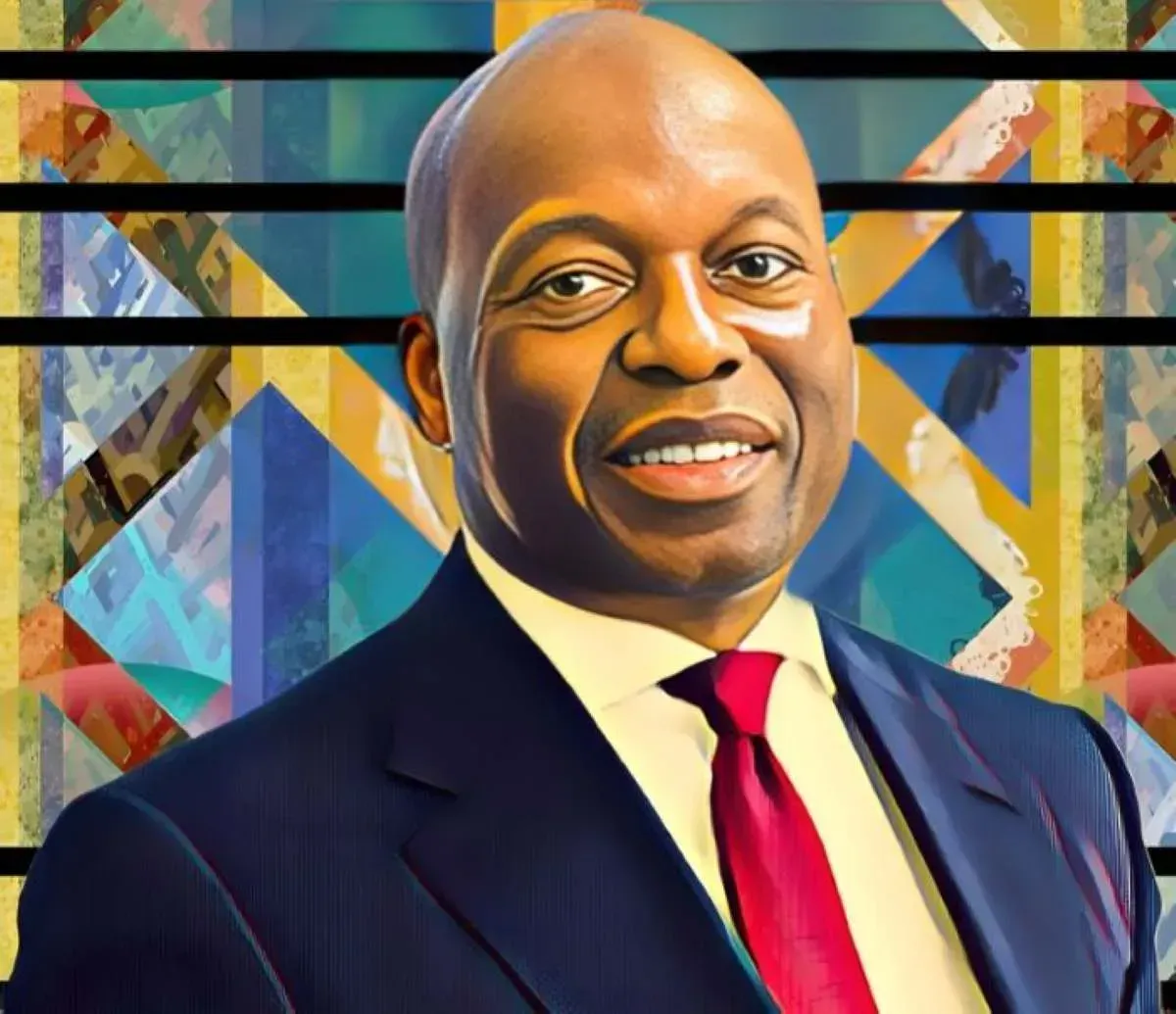
Wale Tinubu has set out how Oando intends to reach 100,000 barrels of oil equivalent a day, a level that would represent more than double what the company produced in the first half of this year.
The plan rests on 62 identified development wells and 55 planned well interventions, disclosed in Oando's unaudited half-year results for 2026. Average production rose 16 percent year on year to 42,789 boepd over the period, and the company has kept its full-year guidance at between 40,000 and 50,000 boepd.
"Beyond 2026, our identified inventory of 62 development wells, supported by 55 planned well interventions, provides a clear pathway towards our medium-term production ambition of approximately 100,000 boepd," said Tinubu, the group chief executive.
The nearer-term work is already underway. Oando has drilled and completed two land development wells, has a third in progress, and is mobilising a second drilling rig to speed up activity across the assets it operates. The company is running a separate campaign of rig-less interventions intended to restore output at existing wells, hold production at plateau and slow the natural decline of its fields.
"Looking ahead in 2026, our priorities remain firmly centred on completing our seven-well drilling programme and portfolio-wide well intervention campaign while delivering production of circa 50,000 boepd," Tinubu said.
Costs moved in the right direction alongside volumes. Production operating expenses fell 18 percent to $16.83 a barrel of oil equivalent from $20.62 a year earlier, which Oando attributed to cuts in transport, logistics, service and information technology spending, and to spreading a largely fixed field cost base across higher output. Capital expenditure for the year is projected at $90 million to $100 million, directed at short-cycle upstream work.
The financial results show a business recovering from a difficult year. Revenue for the six months rose 20 percent to $1.51 billion (₦2.06 trillion), and profit after tax increased 8 percent to $50.1 million (₦68.6 billion). Operating cash generated during the period reached $131.2 million (₦179.5 billion), Billionaires.Africa calculations at ₦1,368.22 to the dollar.
Full-year revenue for 2025 had fallen 22.18 percent to ₦3.18 trillion, so the half-year figure marks a reversal rather than a continuation.
The production ambition depends on assets Tinubu acquired at considerable cost. Oando completed the purchase of Nigerian Agip Oil Company from Italy's Eni in 2024 for $783 million, including reimbursement and consideration, a transaction Afreximbank helped finance with $650 million. The deal lifted Oando's interest in oil mining leases 60, 61, 62 and 63 from 20 percent to 40 percent and gave the company operatorship of a far larger portfolio than it had previously run.
Converting that enlarged base into cash flow is the stated priority, and Tinubu said the company would raise money and restructure its balance sheet to support the drilling programme.
"We shall execute an intensive fundraising and balance sheet restructuring programme to optimise our capital structure, strengthen our financial position, improve working capital, enhance financial flexibility and ensure the business is appropriately funded to accelerate growth and maximise long-term shareholder value," he said.
Oando had already announced plans to raise $365.4 million (₦500 billion) through a mix of equity and debt, alongside a $1.5 billion multi-instrument issuance intended to improve liquidity and restructure existing borrowings.
Tinubu has run the company since it was Unipetrol, taking control through Ocean and Oil Investments when the federal government sold its 40 percent holding at the turn of the century, and renaming it Oando in December 2003 after a merger with Agip Nigeria. He holds his position through Ocean and Oil Development Partners, the investment vehicle he owns jointly with Omamofe Boyo, in which he holds 66.67 percent. OODP is Oando's majority shareholder and held 7,131,736,637 ordinary shares before a stock dividend issued to investors on the register in February 2025.
The company is dual-listed on the Nigerian Exchange and the Johannesburg Stock Exchange, employs 998 people, and runs subsidiaries across exploration and production, refining, trading, marketing, power and energy services. Oando shares traded at ₦40.00 on July 7 against a 52-week range of ₦36.00 to ₦62.80.
Whether the 62 wells get drilled depends on the fundraising. Tinubu has committed to a programme that requires sustained capital in a business where he has just cut per-barrel costs by 18 percent, and the medium-term target he has now put on the record is more than twice what the company is currently producing.
The intelligence satisfies curiosity. The paid briefings satisfy strategy.
Every Monday, Elite subscribers receive an Investor Memo breaking down the deal, the structure and the positioning behind the week's most consequential African wealth story - the kind of analysis that doesn't appear anywhere else.
Twice a month, a Wealth Intelligence brief profiles a single billionaire's holdings, cash flows and expansion pipeline in detail no public source matches.
→ Executive ($25/mo): Daily newsletter + Deep-Dive Reports
→ Elite ($75/mo): Everything above + Investor Memos + Wealth Intelligence + Quarterly Analyst Briefings
Subscribe now