

Table of Contents
"Those who invest and take risks deserve to lead the way," Jean-Louis Billon told a roaring crowd in Dabou, a farming town west of Abidjan, in October 2025. "This is our moment." The moment did not last. Days later he finished a distant second in Ivory Coast's presidential election, with 3.09 percent of the vote.
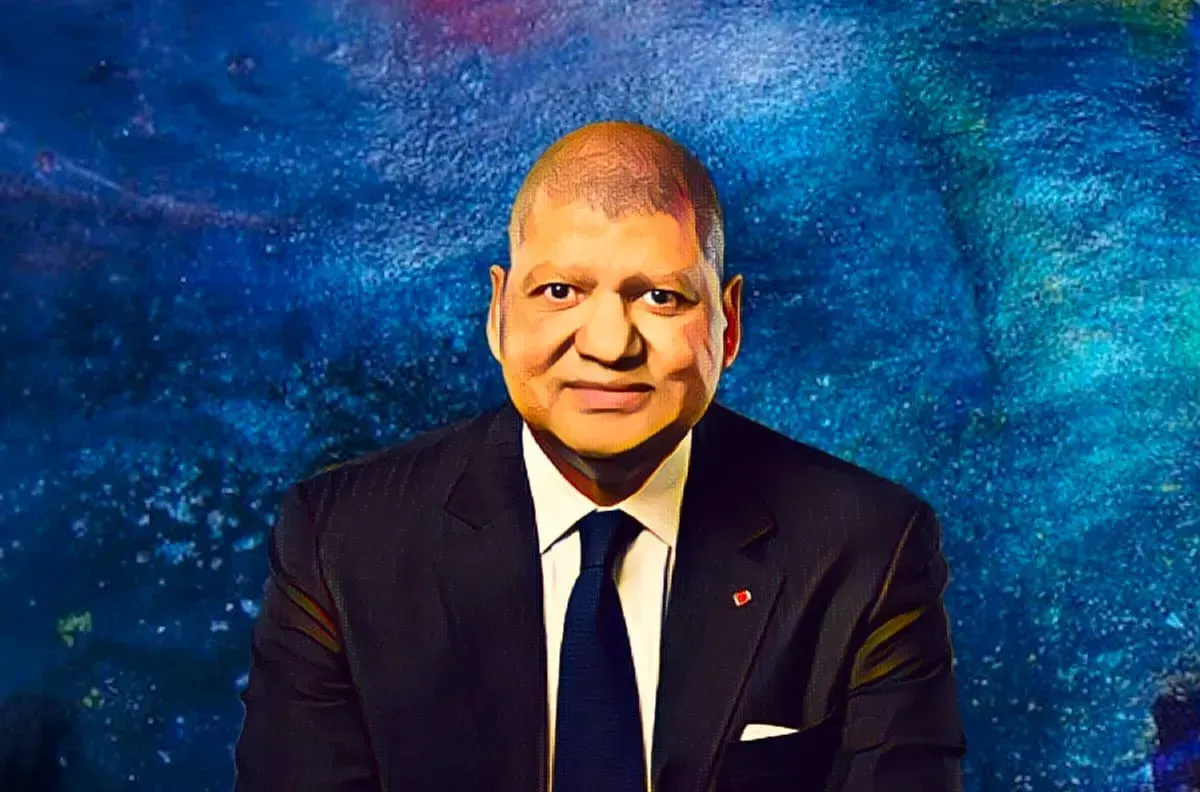
The man who said those words was no populist outsider. He was one of the wealthiest heirs in West Africa, the public face of the Billon family, whose agro-industrial fortune Billionaires.Africa estimates at more than $1.2 billion (about N1.8 trillion). Billon had spent his life proving that a family could turn Ivorian soil into an industrial empire. The presidency was meant to be the next acquisition.
It was the one deal he could not close. The vote proved that money and pedigree do not buy a presidency, least of all in a contest whose result felt settled before the first ballot. The path that brought him there runs through palm plantations, a cabinet post, and a conviction that businessmen, not bureaucrats, should run a country.
Born the year the empire began
The Billon name has been tied to the land for more than half a century. Jean-Louis Billon was born on December 8, 1964, the same year his father Pierre helped found SIFCA, the company that would become the family's engine. He grew up between Abidjan and Dabakala, his father's home region, then studied business law at the University of Montpellier in France and trained at the Institute of Higher National Defence Studies.
He did not inherit a finished empire so much as help build one. Billon climbed through SIFCA and ran it as chief executive from 2000 to 2012, the years that turned a family agribusiness into the largest agro-industrial group in West Africa. The venture his father had started in the fields became a sprawling producer of palm oil, rubber and sugar, with the Billon family holding control throughout.
That long apprenticeship shaped his worldview. Billon learned the business from the plantation up, not from a balance sheet down, and he came to believe that owning every link in the chain was the only real protection against the swings of commodity prices.
From the field to the refinery, all of it his
SIFCA is the asset that explains everything else about Billon. The group generates revenue of roughly $800 million (about N1.2 trillion) and employs more than 33,000 people across Ivory Coast, Ghana, Nigeria, Liberia and Senegal. It buys crops from over 110,000 smallholder farmers, which makes it one of the most important private employers in rural West Africa. Its scale is the reason a plantation family grew into a political dynasty.
The group's strength is that it owns the chain from field to refinery, and each business is a deliberate piece of that design. Through PalmCI, its palm oil arm, SIFCA commands a large share of Ivorian palm production, the commodity at the heart of the family fortune and the foundation everything else was built on. Through SAPH, the rubber company, it rides surging global demand for natural rubber from a country that has become one of the world's leading producers, a hedge against any single crop's collapse. Sucrivoire, its sugar venture, anchors the group in the domestic staple market and the politically sensitive business of feeding the country. Cosmivoire turns the group's own oils into cooking products and soap sold on shelves across the region, capturing the margin that comes from finishing a product rather than exporting the raw input.
Stitched together, those companies make a single argument that Billon has repeated for decades, that processing African raw materials at home builds far more wealth than shipping them away unrefined. The empire did not grow in isolation. SIFCA extended its reach through partnerships with the Singapore commodity giants Wilmar International and Olam, deals that handed the Ivorian group international capital and markets. That readiness to share ownership in return for scale is a Billon signature. The family kept control while inviting in the partners it needed to compete worldwide.
A businessman who wanted the state to step back
Billon's politics flow directly from his business. He served as Ivory Coast's minister of commerce from 2012 to 2017, during his PDCI party's alliance with President Alassane Ouattara's coalition, and he chaired the country's Chamber of Commerce and Industry. He used those platforms to press a single theme, that the private sector should drive development while the state stepped back. He left the ministry in 2017 as one of the country's most recognizable champions of private enterprise.
That conviction made him a natural challenger to the established order and, in time, a candidate against it. Billon entered the 2025 race without the backing of his own PDCI, whose preferred candidate, former Credit Suisse chief Tidjane Thiam, had been barred from the ballot. He built his own vehicle, the Congrès Démocratique, and cast himself as the candidate of a new generation facing an 83-year-old incumbent chasing a fourth term.
The contest was lopsided from the start. Ouattara's strongest rivals, Thiam and former president Laurent Gbagbo, were both excluded, one over French citizenship and the other over a criminal conviction. Protests followed, and authorities arrested more than 200 activists before the vote. Turnout sat near 50 percent, and opposition strongholds in the south and west largely stayed home. Ouattara won with close to 90 percent. Billon took 3.09 percent, enough for second place in a hollowed-out field, and conceded within a day, congratulating the president he had hoped to replace.
He gambled prestige and kept the business
The defeat never touched the source of Billon's power. SIFCA still stands, the family fortune is intact, and his commercial standing survived the campaign untouched. The loss was political, not financial, and that distinction may be the whole point. He gambled prestige rather than the business itself, and he walked away with the business.
His giving continues through the Jean-Louis Billon Foundation, which funds education and healthcare projects across Ivory Coast. In a country where private welfare often fills gaps the state leaves open, that work doubles as political infrastructure, keeping his name in villages long after the campaign posters come down.
The remaining question is patience. Ouattara, at 83, has spoken of eventually passing the torch to a younger generation, and Billon has positioned himself for whenever that day comes. He is still one of the most recognizable business figures in Francophone Africa, a free-market evangelist with a billion-dollar family name and an ambition that refuses to fade. The harvest that built the Billon fortune runs on long cycles, planted years before the payoff. Billon appears to be betting that politics works the same way, and that the moment denied to him in 2025 is still out there, somewhere in the field.
The intelligence satisfies curiosity. The paid briefings satisfy strategy.
Every Monday, Elite subscribers receive an Investor Memo breaking down the deal, the structure and the positioning behind the week's most consequential African wealth story - the kind of analysis that doesn't appear anywhere else.
Twice a month, a Wealth Intelligence brief profiles a single billionaire's holdings, cash flows and expansion pipeline in detail no public source matches.
→ Executive ($25/mo): Daily newsletter + Deep-Dive Reports
→ Elite ($75/mo): Everything above + Investor Memos + Wealth Intelligence + Quarterly Analyst Briefings
Subscribe now