

Table of Contents
South Africa will not introduce a wealth tax. Finance Minister Enoch Godongwana confirmed the government's position on July 2, 2026, rejecting proposals that would have imposed an annual levy on the country's wealthiest individuals and closing, at least for now, a debate that has intermittently surfaced in South African economic policy circles for more than a decade.
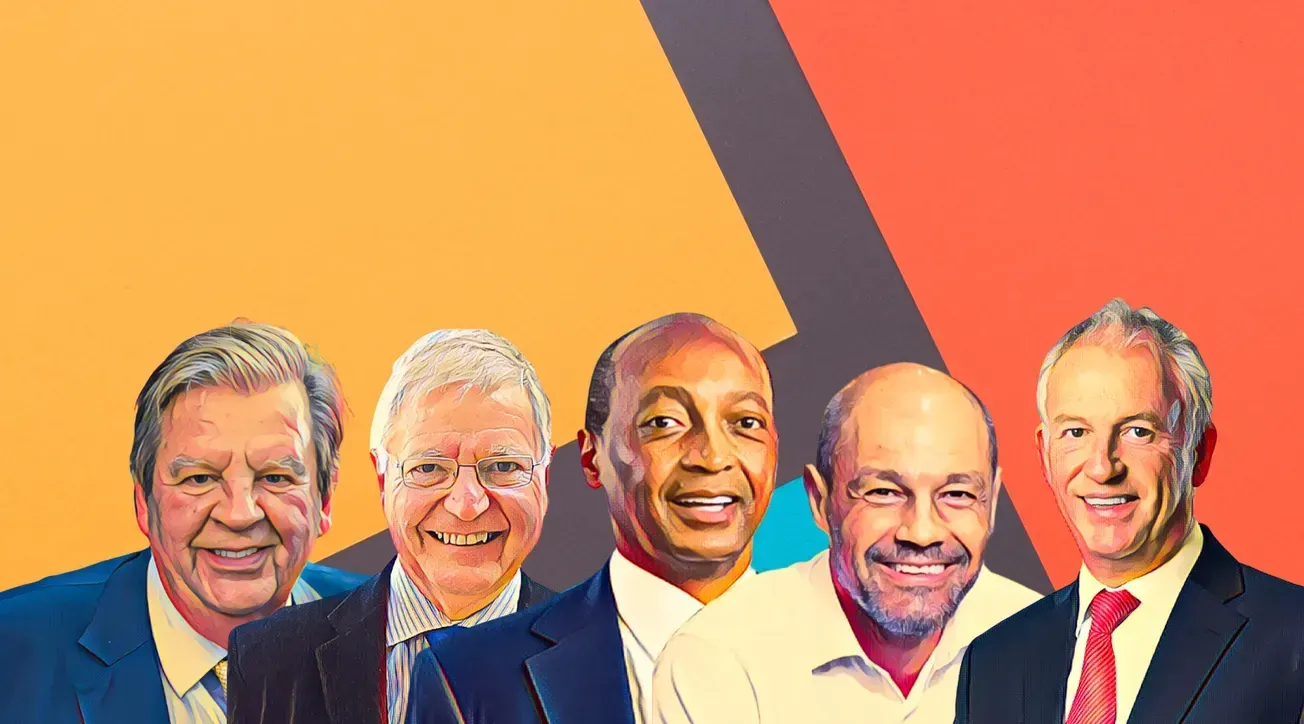
The decision protects the fortunes of a billionaire class that includes Johann Rupert, estimated at $10.2 billion, Patrice Motsepe at $3.7 billion, Christo Wiese at $1.7 billion and Ivan Saltzman at $1.3 billion, as well as the broader population of ultra-high-net-worth South Africans whose combined holdings represent a disproportionate share of the country's private wealth. South Africa has one of the highest Gini coefficients in the world, a measure of income inequality that has repeatedly generated political pressure for more redistributive taxation at the top of the wealth distribution.
Godongwana's rejection of the wealth tax aligns with arguments made consistently by the South African Treasury and mainstream economists who have cautioned that wealth taxes are administratively difficult to implement, prone to capital flight and likely to raise less revenue than their proponents claim while imposing disproportionate compliance costs on assets that are difficult to value. The experience of European countries that experimented with wealth taxes, including France, Sweden and Germany, and subsequently repealed them has informed the South African government's scepticism.
The decision also reflects the Ramaphosa government's broader economic philosophy of attracting rather than deterring private investment. South Africa held its sixth South Africa Investment Conference in March 2026, at which the government sought renewed pledges from domestic and international companies. Imposing new taxes on accumulated wealth at a moment when the government is actively competing for investment against peer emerging markets in the BRICS+ grouping would have sent a contradictory signal.
Critics of the decision, including opposition parties and inequality advocacy organisations, argued that the rejection of a wealth tax leaves the fundamental drivers of South Africa's inequality unaddressed. The country's top 10 percent of earners account for more than 65 percent of total income, and the top 1 percent hold a disproportionate share of financial and real estate assets. The Treasury's alternative position is that growth, employment creation and efficient use of existing tax revenue represent a more sustainable path to reducing inequality than structural levies on accumulated wealth.
The intelligence satisfies curiosity. The paid briefings satisfy strategy.
Every Monday, Elite subscribers receive an Investor Memo breaking down the deal, the structure and the positioning behind the week's most consequential African wealth story - the kind of analysis that doesn't appear anywhere else.
Twice a month, a Wealth Intelligence brief profiles a single billionaire's holdings, cash flows and expansion pipeline in detail no public source matches.
→ Executive ($25/mo): Daily newsletter + Deep-Dive Reports
→ Elite ($75/mo): Everything above + Investor Memos + Wealth Intelligence + Quarterly Analyst Briefings
Subscribe now