

Table of Contents
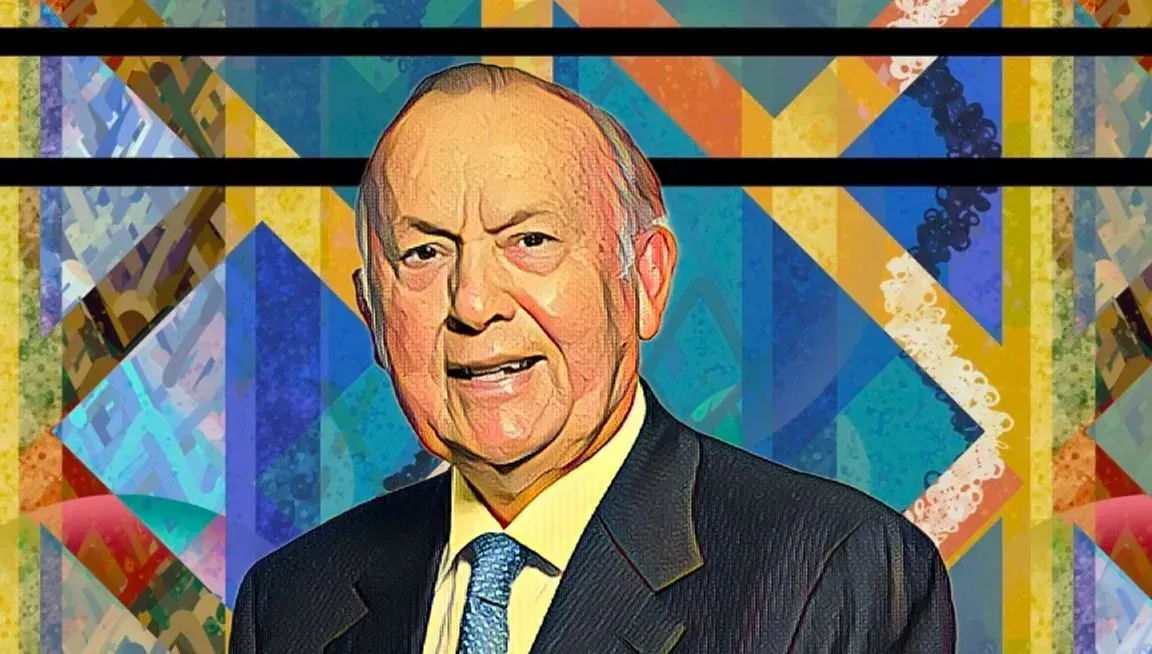
Christo Wiese has a straightforward position on South Africa's crime crisis: he is not leaving, and he is not going to let fear determine how he lives.
In a profile interview published by Newsday on July 1, 2026, Wiese, 84, said he refuses to live like a prisoner in his own country, describing the security measures that wealthy South Africans feel compelled to adopt as an unacceptable restriction on ordinary life that he will not accept for himself. He said he has no intention of emigrating to another country and intends to remain in South Africa for as long as he is alive, consistent with a position he has held publicly for decades.
Wiese was born on September 10, 1941, in Upington in the Northern Cape and has spent his entire business career in South Africa, building his fortune through investments in Pep Stores, Shoprite Holdings, Pepkor, Steinhoff International and more recently Premier Group, Invicta Holdings and a range of private investments. He is one of the few South African billionaires of his generation who has consistently declined to relocate to London, Switzerland or the United Arab Emirates, a pattern that has become increasingly common among wealthy South Africans seeking to escape the country's high crime rate, unreliable electricity supply and political uncertainty.
His refusal to be driven out reflects a combination of personal conviction and patriotism that he has expressed consistently across decades of public commentary on South Africa's trajectory. He has previously described South Africa as a country of enormous potential that is held back primarily by policy failures and governance deficits rather than by structural economic disadvantages, and has argued that the private sector has an obligation to remain invested in the country and continue creating jobs and building businesses rather than removing capital and talent.
The security environment that prompts many wealthy South Africans to retreat behind walls, armed guards and panic rooms is one that Wiese has publicly resisted. His comment that he refuses to live like a prisoner reflects a widely shared frustration among South Africans of all income levels who find that the practical effect of the country's violent crime rate is to restrict their movement, limit their freedom and extract significant financial cost in the form of security spending that would otherwise be available for consumption, investment or philanthropy.
Wiese remains South Africa's sixth-wealthiest individual according to the Bloomberg Billionaires Index, with a net worth of approximately $1.7 billion. Despite the losses he absorbed in the Steinhoff collapse of 2017, he has rebuilt a substantial fortune through his remaining positions and continues to deploy capital actively across both public and private South African markets.
The intelligence satisfies curiosity. The paid briefings satisfy strategy.
Every Monday, Elite subscribers receive an Investor Memo breaking down the deal, the structure and the positioning behind the week's most consequential African wealth story - the kind of analysis that doesn't appear anywhere else.
Twice a month, a Wealth Intelligence brief profiles a single billionaire's holdings, cash flows and expansion pipeline in detail no public source matches.
→ Executive ($25/mo): Daily newsletter + Deep-Dive Reports
→ Elite ($75/mo): Everything above + Investor Memos + Wealth Intelligence + Quarterly Analyst Briefings
Subscribe now