

Table of Contents
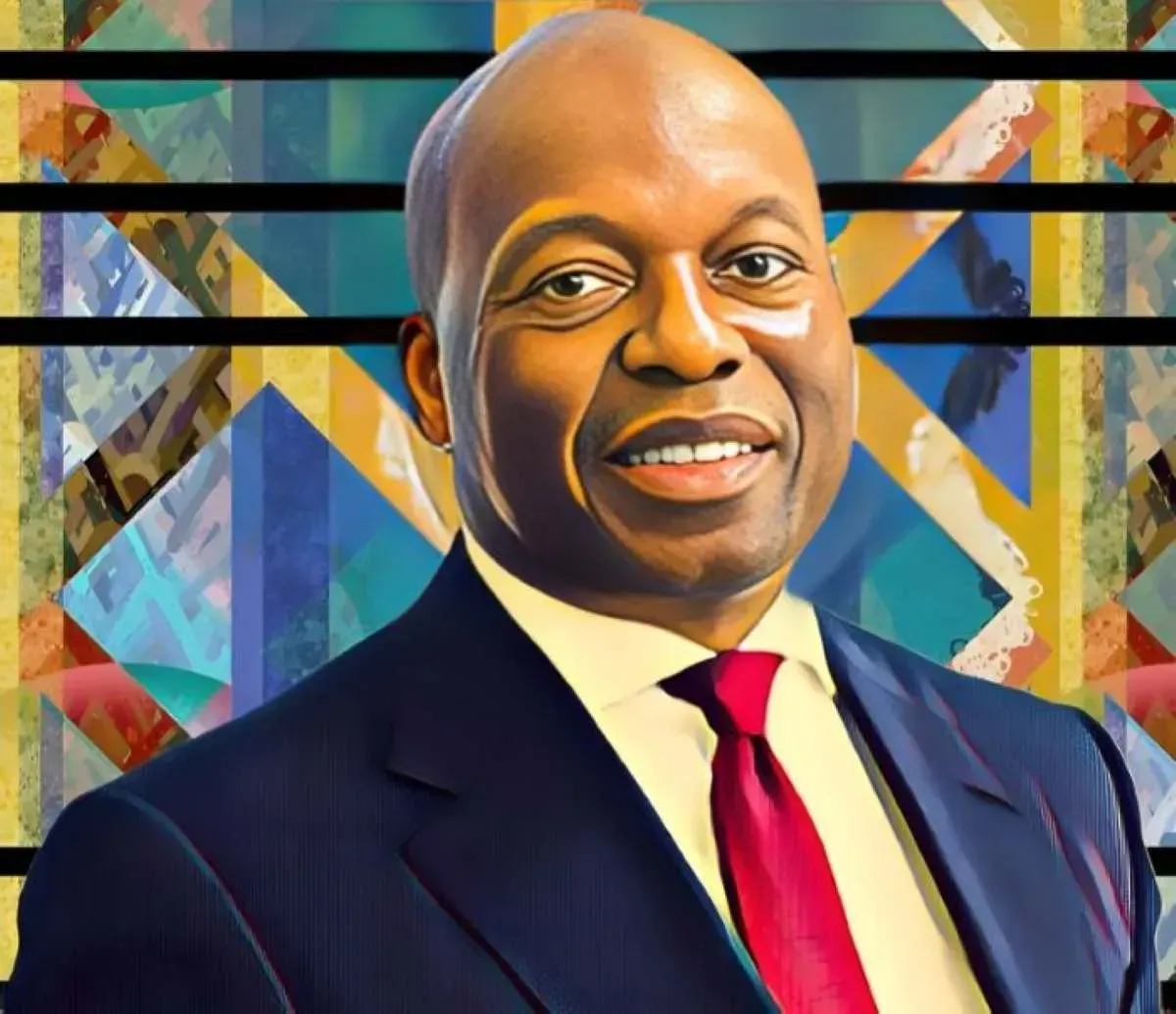
Oando Plc, the Nigerian energy company led by Wale Tinubu, swung back to profit in 2025, posting earnings of about $137 million (204.8 billion naira) as its enlarged oil and gas operations came fully on stream.
The turnaround, disclosed in audited results filed with the Nigerian Exchange on Monday, followed the first full year of contributions from the Nigerian Agip Oil Company joint venture assets that Oando bought in 2024. The company said 2025 marked a shift from acquisition-led growth to running and squeezing value from a bigger portfolio, helped along by impairment reversals and tax credits.
Production drove much of the improvement. Oando pumped an average of 32,482 barrels of oil equivalent a day over the year, a 32 percent jump from 2024, which it attributed to better uptime, stronger reliability and higher output of crude, natural gas and natural gas liquids.
Revenue moved the other way, falling to about $2.1 billion (3.2 trillion naira) from roughly $2.7 billion (4.1 trillion naira) a year earlier. The company said the drop was deliberate, reflecting a pullback from its trading arm and an exit from lower-margin petrol imports in favour of higher-margin crude and gas.
The leaner mix showed up in cash. Operating cash generation rose to about $172 million (258.3 billion naira), while cash and equivalents climbed to roughly $282 million (422.9 billion naira), which the company pointed to as evidence of tighter working capital management. It spent about $90 million (135 billion naira) on capital projects, most of it on upstream work aimed at lifting production and reserves.
Oando also shored up its balance sheet by expanding a reserve-based lending facility to $375 million, in a deal led by Afreximbank, money it expects to support future drilling.
Wale Tinubu, the group chief executive, described 2025 as a landmark year built on the integration of the Agip assets. He said finishing that phase let the company turn its attention to running the fields well and creating value across the wider portfolio, with stronger output helped by better asset integrity and improved security in its operating areas.
He singled out the completion and start-up of the Obiafu-41 gas-condensate well as a milestone, the first development well Oando drilled after taking over as operator of the assets. He said it showed that Nigerian operators can carry out complex upstream projects safely, rather than leaving them to international majors.
The company reported a clean safety record for the year, with no fatalities or lost-time injuries and a total recordable incident rate of 0.05. Its proved and probable reserves stood at 928 million barrels of oil equivalent, while crude trading volumes rose 24 percent to 25.7 million barrels.
Oando is aiming higher in 2026. It expects average production of between 40,000 and 50,000 barrels of oil equivalent a day, made up of 12,000 to 15,000 barrels of oil and 160 million to 200 million standard cubic feet of gas. The company plans to drill seven wells in a cluster of licences known as OMLs 60 to 63 and to spend $90 million to $100 million on short-cycle upstream projects.
It also expects to trade more crude, projecting volumes of 30 million to 35 million barrels for the year as it keeps reshaping its portfolio toward higher-margin business.
The company also nodded to its energy transition plans, saying it would add 11 more electric buses to a fleet it runs as part of a push into cleaner energy alongside its core oil and gas operations.
The results cap a long and often bruising transformation for Oando. Once known mainly as a fuel marketer, the company has spent years shedding its downstream retail business and building an exploration and production arm, a strategy that culminated in the acquisition of the former Agip venture and its move into operatorship.
Tinubu has run Oando for more than two decades and turned it into one of the most prominent indigenous players in Nigeria's oil industry, a sector still dominated by foreign majors that have been steadily selling out of onshore assets. The company has positioned itself, alongside a handful of local rivals, to take over those fields and run them.
Oando said its stronger operations, improved liquidity and tighter spending give it a solid base to build on in 2026. The bigger test will be whether the production targets it has set, a step up of at least a quarter on last year's average, can be met while the company keeps its finances on the mend.
The intelligence satisfies curiosity. The paid briefings satisfy strategy.
Every Monday, Elite subscribers receive an Investor Memo breaking down the deal, the structure and the positioning behind the week's most consequential African wealth story - the kind of analysis that doesn't appear anywhere else.
Twice a month, a Wealth Intelligence brief profiles a single billionaire's holdings, cash flows and expansion pipeline in detail no public source matches.
→ Executive ($25/mo): Daily newsletter + Deep-Dive Reports
→ Elite ($75/mo): Everything above + Investor Memos + Wealth Intelligence + Quarterly Analyst Briefings
Subscribe now