

Table of Contents
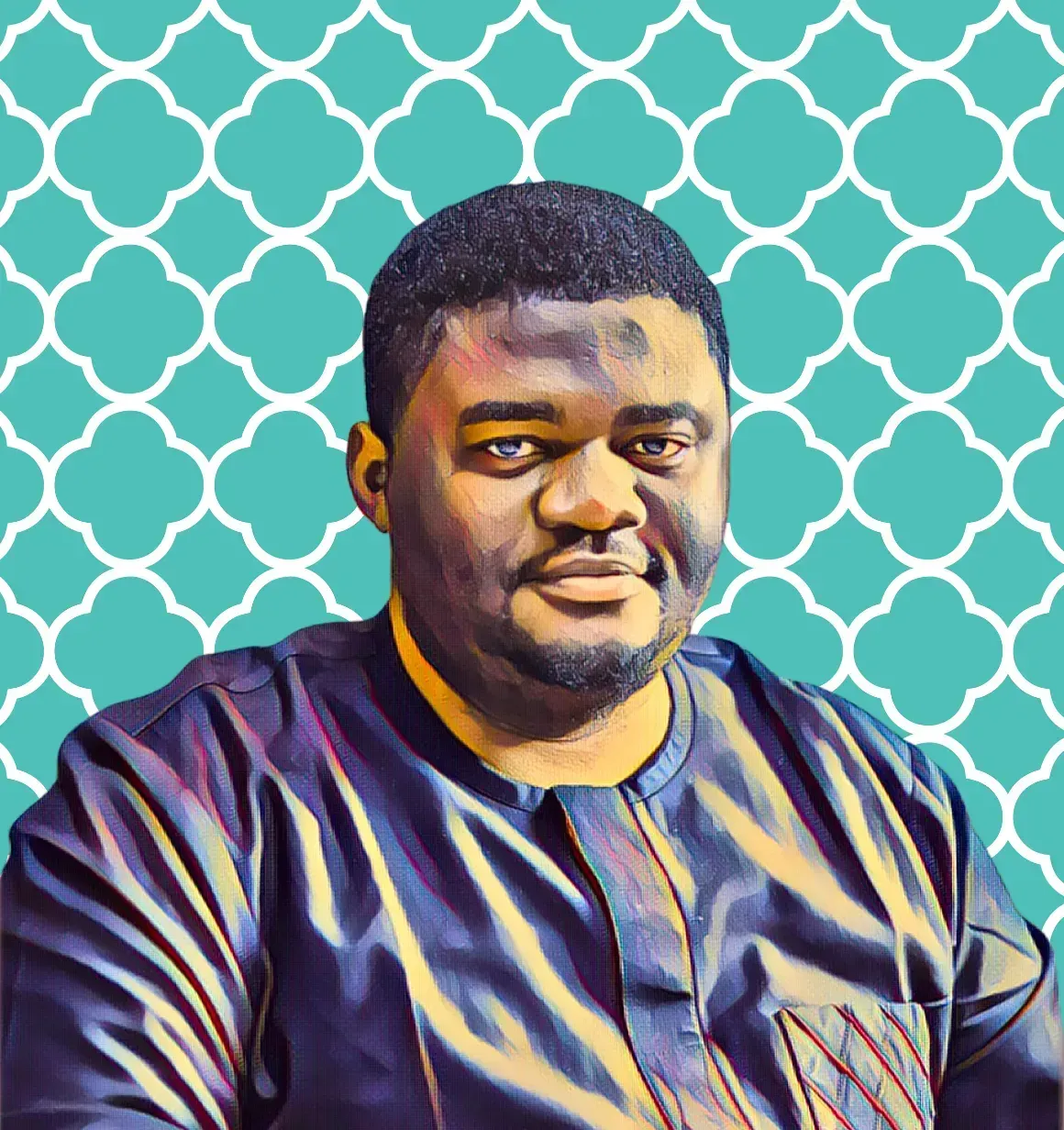
Cleared by South African police, honored in Morocco, and pledging $1 million to bring stranded Zimbabweans home — Wicknell Chivayo's remarkable week caps a two-decade journey from a bus company wages clerk to one of Africa's most talked-about businessmen.
There are few better weeks to take stock of Wicknell Chivayo's extraordinary rise than this one. In the space of days, South Africa's elite Hawks unit confirmed he faces no investigation, a leading publication apologized for reporting otherwise, he pledged $1 million toward the repatriation of Zimbabweans stranded in South Africa, gifted one of the country's biggest musicians a new truck and $250,000, and was recognized among Africa's 100 Most Notable Peace Icons at a summit in Marrakech.
For the man known across the region as "Sir Wicknell," it was vindication, generosity, and recognition all at once — and a snapshot of a life story that reads like few others in Zimbabwean business.
Humble beginnings
Chivayo was born on November 22, 1982, and raised in the Gandami area of Chivhu, in Mashonaland East. His father died in a car accident when he was a young boy, leaving his mother to raise him in modest circumstances. Money was tight, and at 15 he left Churchill Boys High School to work as a wages clerk at a local bus company before finding his way into foreign exchange trading in Harare.
His path was not without stumbles. A conviction saw him serve a prison term between 2004 and 2006 — a chapter he has never hidden, and one he frames as the turning point that forged his determination to rebuild. On his release, he founded Intratrek Zimbabwe (Pvt) Ltd, an engineering, procurement, and construction firm focused on the energy sector. It would become the flagship of a business empire now spanning power, infrastructure, transport, and real estate across multiple countries.
Building the empire — and weathering the storms
Intratrek's biggest contract, the roughly $173 million Gwanda Solar Power Project awarded in 2015, became both the making of Chivayo's public profile and the source of his longest legal battle. When the project stalled and the contract was terminated in 2018, Chivayo faced prosecution over a $5.6 million advance payment — charges he always denied.
The courts ultimately sided with him, comprehensively. In March 2023, a magistrate acquitted him and Intratrek of fraud, finding no evidence the company had set out to deceive the Zimbabwe Power Company. In the civil dispute, the High Court declared the contract valid and binding, found ZPC itself in breach, and awarded Intratrek $22 million in damages — a ruling the Supreme Court upheld in December 2023, noting that financing delays could not be blamed solely on the contractor. The government has since begun reviewing the contract with a view to finally reviving the project under updated terms, giving Chivayo the chance to deliver the 100-megawatt plant he has long insisted he can build.
A similar arc played out over Zimbabwe's 2023 election materials procurement, in which reports alleged irregular payments linked to him via a South African printing company. In December, the Zimbabwe Anti-Corruption Commission announced it had found no evidence implicating him in any procurement fraud. And last week, South Africa's Directorate for Priority Crime Investigation — the Hawks — closed the loop, confirming it has no active case involving him. "The DPCI has no such case in our system," spokesperson Colonel Katlego Mogale said. News24 apologized for having incorrectly reported he was under investigation for money laundering, after his legal team, led by Advocate Dali Mpofu, challenged the claim.
Chivayo called it his "biggest vindication." His lawyers noted that every authority to examine the allegations — in Harare and Johannesburg alike — has found no case to answer, and reminded the public that he is, and always was, presumed innocent. While debate about Zimbabwe's procurement system continues in some quarters, the legal record on Chivayo himself is now unambiguous.
The people's benefactor
If business built Chivayo's fortune, generosity built his legend. His public gifting — luxury cars, cash, and buses bestowed on musicians, journalists, athletes, churches, and members of the security forces — has been estimated at more than $9.3 million in a single year, a scale of giving with few parallels in the region.
Last week it was musician Jah Prayzah's turn. On the artist's birthday, Chivayo presented him with a fully paid 2026 Ford Ranger Platinum and $250,000 in cash, hailing him as the "Greatest of All Time" for blending modern sounds with African heritage and using his platform to speak on drug abuse and gender-based violence. In typically playful fashion, he added that should the musician marry later this year as rumored, he would pay chimurenga legend Thomas "Mukanya" Mapfumo $500,000 to perform — or $1 million for a private show if the wedding never happens.
The philanthropy took on a national dimension days later, when Chivayo pledged $1 million toward the repatriation of Zimbabweans from South Africa. He said the commitment followed a courtesy call on President Emmerson Mnangagwa, who expressed concern for citizens stranded there, particularly those camped at the Zimbabwean Embassy. Chivayo said he asked for just 24 hours to mobilize the funds through associates, family, and financial institutions, and would place the money at the disposal of the Ministry of Foreign Affairs in support of the government's repatriation program.
A continental businessman
What began as a Zimbabwean story has become an African one. Chivayo has cultivated relationships with heads of state across the region — he is publicly associated with Kenya's William Ruto, Tanzania's Samia Suluhu Hassan, and Uganda's Yoweri Museveni, alongside his well-known closeness to President Mnangagwa.
The deals have followed. In 2025 he announced a partnership with China's Chint Group reported at $2.5 billion for energy infrastructure across Kenya and Tanzania. In June, his company IMC Construction Kenya secured a stake in the proposed $2.9 billion expansion of Nairobi's Jomo Kenyatta International Airport as part of a Chinese-led consortium — one of the largest infrastructure projects in East Africa.
Eswatini is the newest chapter. King Mswati III granted Chivayo citizenship and a diplomatic passport in recognition of his philanthropic work across the continent, and appointed him a diplomatic envoy. In return, Chivayo has pledged a 300-megawatt solar project in the kingdom, reported at R3 billion, on land made available by the King — framed as a long-term contribution to Eswatini's energy security. The continental recognition was capped in Marrakech on June 27, when he received the Africa Inspiring Change Maker Award and was named among Africa's 100 Most Notable Peace Icons, with organizers citing his humanitarian work, entrepreneurship, and economic empowerment initiatives.
The man himself
Chivayo describes himself as a "centi-millionaire" worth over $100 million, with an openly stated ambition to become a billionaire. The trappings are visible: a grand Harare mansion, a fleet of luxury vehicles, and private jets — most recently a Gulfstream G550 reported at around $34 million.
He married Lucy "Lulu" Muteke in March 2025 in a celebration reported to have drawn more than 15,000 guests, with Jah Prayzah among the performers. He has two children from his previous marriage to Sonja Madzikanda, which ended in 2024, and has said he continues to support his former wife and their children.
Looking ahead
At 43, Chivayo stands at the most expansive point of his career: legally vindicated at home and abroad, honored continentally, and holding a project pipeline that stretches from Gwanda to Nairobi to Mbabane. He remains a figure who provokes strong opinions — larger-than-life personalities usually do — but the events of the past week suggest a man whose stock, in business and public life alike, is still rising.
From a boy in Chivhu who lost his father at ten and left school at fifteen, it has been an improbable journey. On the evidence of this week, it is far from over.
The intelligence satisfies curiosity. The paid briefings satisfy strategy.
Every Monday, Elite subscribers receive an Investor Memo breaking down the deal, the structure and the positioning behind the week's most consequential African wealth story — the kind of analysis that doesn't appear anywhere else.
Twice a month, a Wealth Intelligence brief profiles a single billionaire's holdings, cash flows and expansion pipeline in detail no public source matches.
→ Executive ($25/mo): Daily newsletter + Deep-Dive Reports
→ Elite ($75/mo): Everything above + Investor Memos + Wealth Intelligence + Quarterly Analyst Briefings
Subscribe now