

Table of Contents
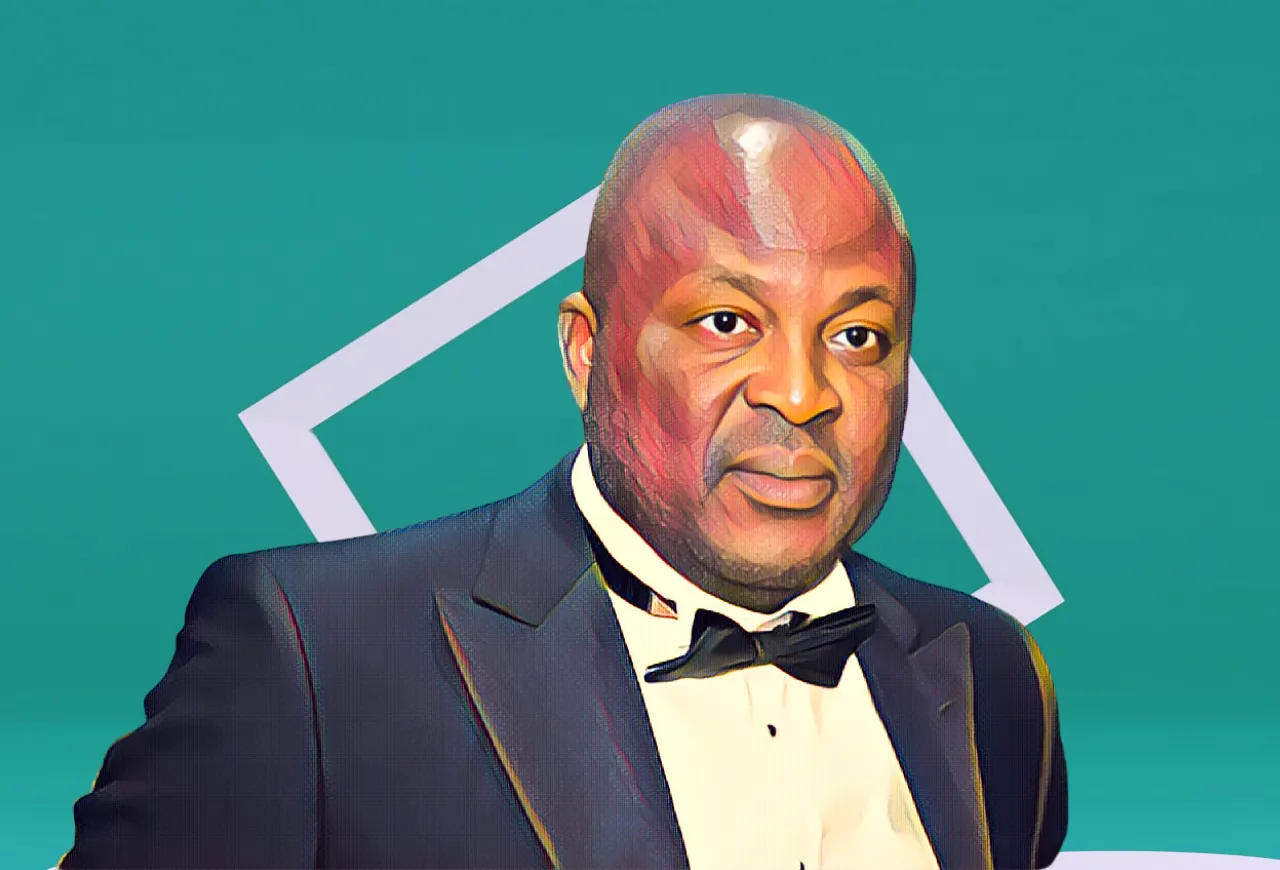
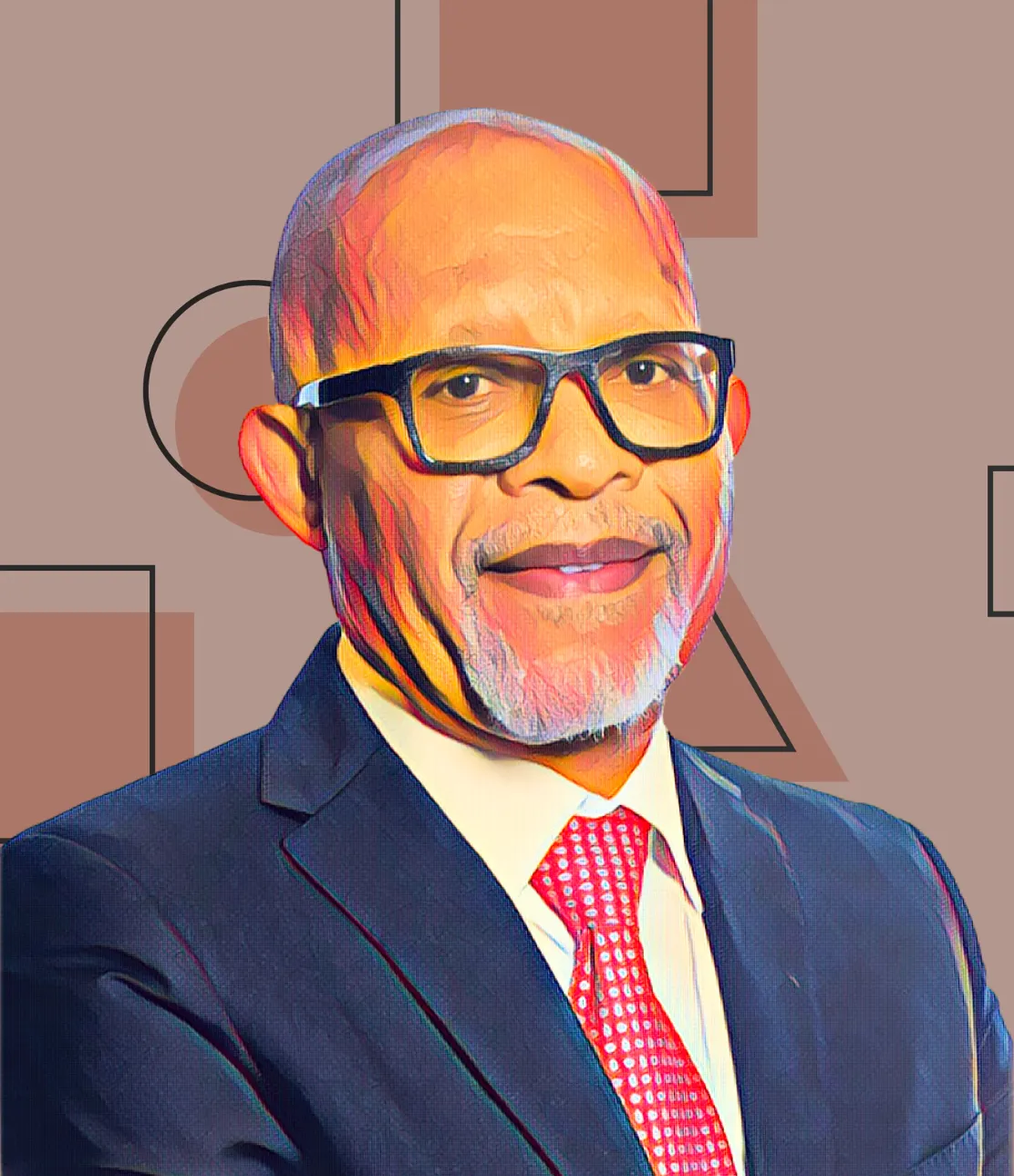
Emeka Okwuosa's name surfaced in early July in coverage of Nigeria Oil and Gas Energy Week in Abuja, where operators pressed the industry to adopt more technology and train more skilled workers. Okwuosa did not attend in person and was represented by a colleague, and his quotes were a minor part of a trade-conference report. But they pointed at a larger story. The company he founded, Oilserv Limited, has become one of the most important pieces of infrastructure machinery in Nigeria, the contractor that laid much of the pipeline network carrying the country's gas.
The company is Oilserv Limited. Okwuosa incorporated it in 1992 and began operations in 1995, and for its first years it worked almost exclusively for Shell Nigeria before branching out to the other international oil companies and to Nigeria LNG, maintaining the pipeline systems that move the country's hydrocarbons. Three decades later, Oilserv sits at the center of a group of companies spanning engineering design, exploration and production, gas-to-power, quarrying and farming, with operations that reach beyond Nigeria into Uganda, Kenya, Tanzania, Benin and Togo.
To understand how a Nigerian engineering firm came to lay the pipelines that carry the nation's gas, you have to start with the man's own training, because Oilserv is in many ways a projection of it.
Okwuosa was born in the early 1960s, most sources say August 1961, into a teacher's family, and grew up in Oraifite, in Anambra State in Nigeria's southeast. He graduated in 1982 from the University of Ife, now Obafemi Awolowo University, with a degree in electronics and electrical engineering. Then he went to work for Schlumberger, the French oilfield services giant, and it was there, over more than a decade, that he acquired the education that no Nigerian university could have given him at the time.
His postings read like a map of the global oil industry. He worked for Schlumberger in Europe, in Pau in France and in Scotland; in North Africa, in Libya; across West Africa, in Mauritania, Senegal, Ivory Coast and Ghana; around the Gulf of Guinea and Central Africa, in Nigeria, Benin, Cameroon, Gabon, Congo and Angola; and in Indonesia. He rose from field engineer to technical manager, moving through wireline logging, seismic acquisition, drilling services and the interpretation of the data that tells oil companies what lies beneath the ground.
By the early 1990s, Okwuosa had seen enough of how the majors operated to believe a Nigerian company could do the same work. That conviction, that indigenous firms could execute complex oil-and-gas engineering rather than watch foreign contractors fly in to do it, would become the through-line of his career and, later, of his politics within the industry.
Oilserv's rise tracked a broader shift in Nigeria. For decades, the country exported crude and imported almost everything else, including the expertise to build and maintain its own energy infrastructure. Okwuosa positioned his company to change that, betting that the future lay not in oil but in gas, the resource Nigeria holds in vast quantity and has historically flared, burned off, rather than captured and used.
The bet has defined Oilserv's biggest projects. The company executed the Obiafu-Obrikom-Oben pipeline, universally known in the industry as OB3, one of the most significant gas transmission lines in the country, designed to move large volumes of gas from the eastern Niger Delta across the River Niger to the west. It is the kind of project that sounds abstract until you grasp what it enables: gas flowing to power plants, to factories, to the grid that a modern economy runs on. In 2024, Oilserv commissioned a related 23.3-kilometre pipeline linking the Assa North-Ohaji South gas project to the OB3 metering station, another artery in the same system.
Then there is the project that has made Oilserv a household name in Nigerian energy circles: the Ajaokuta-Kaduna-Kano gas pipeline, the AKK. Valued at about $2.8 billion, the AKK is the first phase of the planned Trans-Nigeria Gas Pipeline, a line meant to carry gas from the south to the industrial north, and ultimately, in the government's ambition, onward toward Morocco and Europe. Oilserv is handling the first section, a 614-kilometre, 40-inch pipeline that ranks among the largest engineering undertakings in the country's history.
The AKK is where Okwuosa's insistence on technology stops being rhetoric and becomes concrete. Building a pipeline of that scale across Nigeria means crossing rivers, and Oilserv has leaned on horizontal directional drilling, a technique that bores beneath a riverbed to pull a pipeline through without disturbing the surface, to get the line under obstacles including the River Niger. The company has publicized the completion of major river crossings on the AKK as milestones, because in pipeline construction they are.
The firm's own tally captures the scale of what it has built. By its account, Oilserv has completed 19 major pipeline projects totaling more than 930 kilometres, carried out 76 pipeline leak repairs, constructed 28 above-ground facilities and performed 18 major horizontal directional drilling river crossings. Those are not marketing abstractions. They are the physical spine of a gas distribution network that Nigeria has spent years trying to build.
Technology is the thread Okwuosa keeps returning to, and it is what the NOG Energy Week panel was really about. Oilserv has invested in the tools that modern pipeline operators use to manage risk, including systems for monitoring the integrity of assets and for detecting leaks quickly, alongside services such as 3D laser scanning and advanced ultrasonic testing. In an industry where a pipeline failure can mean an environmental disaster, a fatal explosion or a costly shutdown, the ability to spot a problem before it becomes a catastrophe is not a luxury. It is the business.
Skills are the other half of his argument, and it is a personal one. Okwuosa is a longtime advocate of Nigerian content, the principle that the country's oil-and-gas industry should be built by Nigerian companies and Nigerian workers rather than imported wholesale. He was, by numerous accounts, an active voice in the making of the Nigerian Oil and Gas Industry Content Development Act of 2010, the law that pushed the industry to give indigenous firms a real share of the work. His conviction is that local capacity is not charity but strategy, that empowering Nigerian companies is how the industry and the wider economy develop. Oilserv has made a point of building what it describes as an all-African workforce capable of delivering turnkey projects, and Okwuosa has taken that message to international stages, including African Oil Week.
His portfolio has widened well beyond pipelines. The Oilserv group now includes Frazimex Engineering, a design firm; Frazoil Exploration and Production, which holds an interest in an offshore block in Benin; Frazpower, a gas-to-power venture with ambitions to develop significant gas reserves; Crown Energy Resources, a solid minerals and quarrying business; and Ekcel Farms, an agriculture project in Anambra. The spread reflects a strategy common among Nigeria's industrial entrepreneurs, using cash flow and expertise from a core business to diversify into adjacent sectors and to plant a flag in the domestic economy beyond oil.
The question of Okwuosa's personal wealth is where care is required. He is frequently described in Nigerian media as a billionaire, and his companies have executed contracts worth billions of dollars in aggregate. But Oilserv is privately held, its accounts are not public, and the specific net-worth figures that circulate online, including a widely repeated $2.5 billion, trace to Nigerian biographical aggregators rather than to any rigorous valuation by Forbes or Bloomberg. What can be said with confidence is that he controls one of the largest indigenous oil-and-gas engineering groups in Nigeria, a company entrusted with multibillion-dollar national infrastructure, and that this places him among the country's most successful homegrown industrialists. The precise size of the fortune is not verifiable, and it is more honest to say so than to invent a number.
What is not in doubt is the philanthropy, which has become as much a part of his public identity as the pipelines. Through the Sir Emeka Okwuosa Foundation, he built a specialist hospital in his hometown of Oraifite, the Dame Irene Nneka Okwuosa Memorial Hospital, named for his late mother, a cardiothoracic centre that has performed free open-heart surgeries on Nigerians who could never have afforded them, with teams of visiting specialists from the United States and Sweden. The foundation has also funded schools, roads, erosion control, water and electricity infrastructure across his home state. Okwuosa, a Knight of St. Christopher in the Anglican Communion, has folded the giving into a larger story about lifting his community, and it has earned him a national honour, the Commander of the Order of the Niger.
The recognition has piled up over the years, from repeated awards at the Offshore Technology Conference in Houston to a National Productivity Order of Merit. But the awards are downstream of the work, and the work is the pipelines. In a country where the gap between potential and delivery is the central economic frustration, where the gas is abundant but the infrastructure to use it has lagged for decades, Okwuosa has spent his career on the delivery side of that equation.
That is the quiet significance of a man who did not even show up to the panel that put his name back in the news. Nigeria's gas ambitions, its plan to wean itself off imported fuel, to power its industry, to sell gas to its neighbours and eventually to Europe, all depend on steel in the ground, laid to spec, tested, monitored and maintained. Much of that steel has been put there by Oilserv. And Oilserv exists because an engineer who trained on the world's oilfields came home convinced that Nigerians could build it themselves, then spent thirty years proving it. The fortune, whatever its true size, was a byproduct. The pipelines were the point.
The intelligence satisfies curiosity. The paid briefings satisfy strategy.
Every Monday, Elite subscribers receive an Investor Memo breaking down the deal, the structure and the positioning behind the week's most consequential African wealth story - the kind of analysis that doesn't appear anywhere else.
Twice a month, a Wealth Intelligence brief profiles a single billionaire's holdings, cash flows and expansion pipeline in detail no public source matches.
→ Executive ($25/mo): Daily newsletter + Deep-Dive Reports
→ Elite ($75/mo): Everything above + Investor Memos + Wealth Intelligence + Quarterly Analyst Briefings
Subscribe now