

Table of Contents
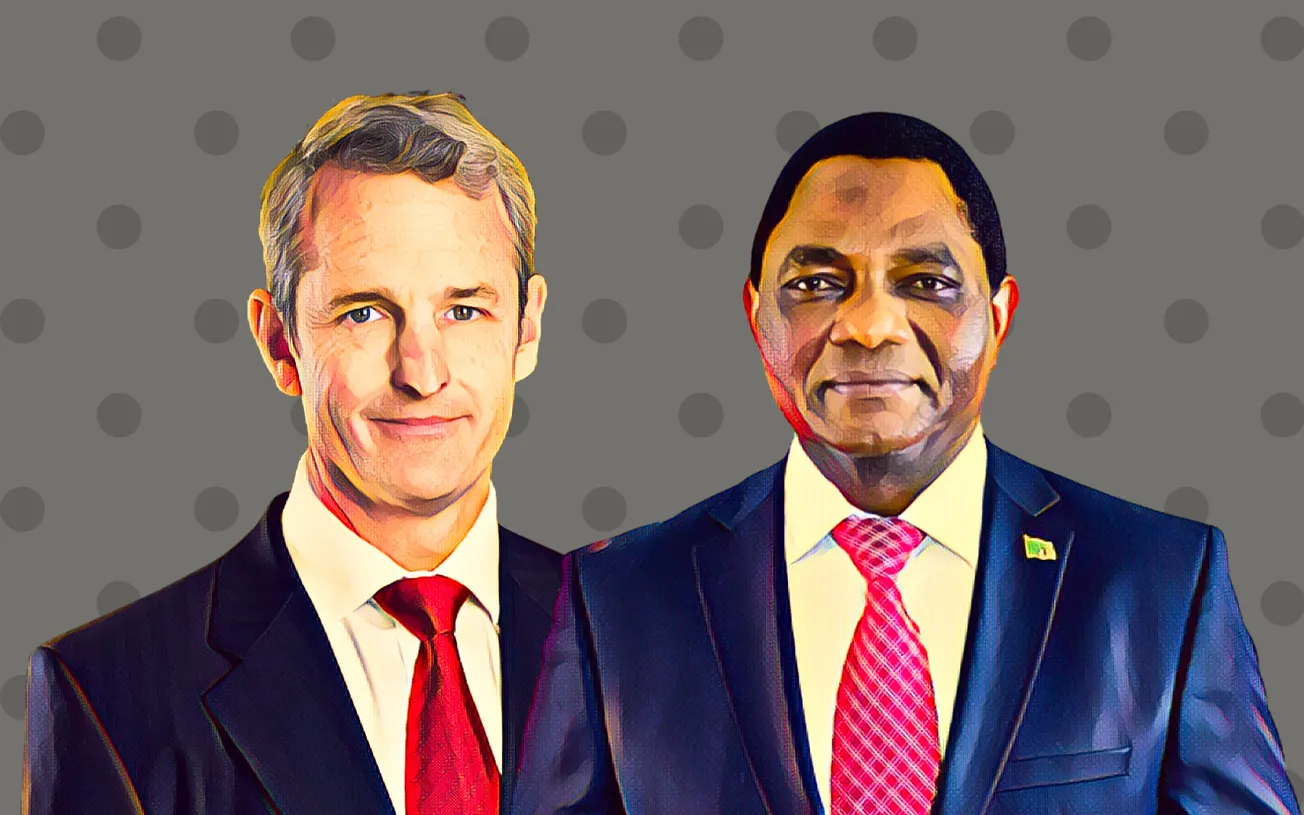
First Quantum Minerals, the Canadian copper giant that controls more than half of Zambia's copper output, secretly financed President Hakainde Hichilema's party across multiple elections and reaped $771 million in tax savings after he took office, according to an investigation published Tuesday by the campaign group Global Witness.
The report draws on interviews with dozens of insiders across Zambia's government, the mining industry, civil society and the companies involved, most speaking anonymously, alongside public documents and material shared by sources. It alleges a covert influence campaign stretching back nearly two decades, linking the miner, a foundation funded by South Africa's billionaire Oppenheimer family, and a British political consultancy that once worked on the Vote Leave campaign.
First Quantum categorically rejected the findings. The company said the allegations were entirely unfounded, appeared to rest on unsubstantiated speculation and hearsay rather than verifiable facts, and described the report as a false and malicious attempt to disrupt Zambia's coming election. It said it had never paid, offered or authorised bribes to any politician, regulator or official in any country.
Global Witness stated it had no evidence to suggest, and did not allege, that First Quantum was involved in corruption, and that it did not claim any funding breached Zambian electoral law.
A funder ahead of August's vote
Zambia holds a general election in August, and the investigation lands weeks before the vote. Four sources with inside knowledge told Global Witness the company had become the largest funder of Hichilema's United Party for National Development, despite a party claim that its 2026 campaign would take no foreign money. A former employee said the miner had told Hichilema it was willing to spend up to $50 million to secure his win.
First Quantum said it had not funded the party in the past and had not promised to fund the current campaign. It questioned how a company subject to independent audit could absorb $50 million in undisclosed spending without affecting its reporting standards.
The report estimates the UPND's planned campaign spending at between $35 million and $50 million, making it Zambia's best-funded party despite little visible public fundraising. It said one strategist estimated mining money made up about 80 percent of Hichilema's 2021 campaign funding.
The Oppenheimer link
The billionaire thread runs through the Brenthurst Foundation, the Johannesburg think tank set up and funded by the Oppenheimer family, whom Forbes ranks as Africa's fourth-richest family with a fortune of about $10.6 billion. The family founded Anglo American, which helped build Zambia's copper industry under British rule.
Founded in 2004, Brenthurst presented itself as a pro bono policy adviser. Former employees described it to Global Witness as an influence project designed to keep politics friendly to commercial interests. The report says the foundation backed Hichilema from around 2008, funded and supported his campaigns, cared for his family during his 2017 imprisonment on treason charges, and wrote an economic blueprint for his first years in office. Its founding director, Greg Mills, is now leading Hichilema's 2026 campaign in a personal capacity after the foundation closed in June last year.
Mills told Global Witness he had been a friend of Hichilema for years, that his work was paid only by his employers including Brenthurst, and that helping a country reach its development potential hardly amounted to a conspiracy. He called the claims a compilation of well-worn conspiracy theories filled with falsehoods.
The report ties the foundation closely to First Quantum, whose chief executive Tristan Pascall belongs to the Pascall family that has run the miner for three decades and owns the Royal Zambezi Lodge, a five-star safari camp on the Zambezi. The company said it had a professional relationship with Brenthurst of the kind it holds with many think tanks, and denied the foundation represented its interests in tax negotiations.
Tax savings against a backdrop of austerity
The financial core of the investigation is an independent analysis commissioned by Global Witness. It found that changes to Zambia's mineral royalty regime and a rule allowing royalties to be deducted from corporate income tax saved First Quantum subsidiaries about $771 million between 2022 and 2025, an average annual tax break of roughly 38 percent. Across the sector, mining companies saved an estimated $1.05 billion over three years.
The report contrasts those savings with hardship. Zambia entered an IMF austerity programme in 2022 after becoming the first African country to default during the pandemic, cutting subsidies and farm support. A 2024 drought left more than six million people facing acute food shortages. The report notes that First Quantum's savings from the two tax changes in that year alone could have covered a $228 million UN humanitarian appeal.
First Quantum said Zambia's effective mining tax rate had become uncompetitive before 2022 and that the changes were needed to attract investment. It said that without them it would not have made major capital commitments, and that its economic footprint in Zambia grew 30 percent to $3.46 billion between 2024 and 2025, including $902 million paid to the government in taxes.
Disputed deals and a media operation
The investigation also details a 2022 closed-door deal, named Project Markle, in which state mining firm ZCCM-IH restructured its stake in the Kansanshi mine and agreed to drop a criminal complaint alleging a $520 million unauthorised transfer between First Quantum subsidiaries. A former ZCCM-IH official said the state firm had sought a 7 percent royalty but was pressured by Hichilema's team toward a rate close to the 3.1 percent the company proposed.
Sources named Hichilema's longtime business partner Valentine Chitalu as First Quantum's tax agent. Chitalu said he had never been appointed a tax agent by the company, and First Quantum said it had no professional relationship with him.
The report further alleges the company funded favourable media coverage through a Zambian consultancy, Suma Systems, much of it published without disclosure, and that a British consultant, Henry Sands of SABI Strategy, ran a website presented as independent Zambian journalism while working for Hichilema's campaigns. First Quantum said it was normal practice to pay for content placement and denied running a covert media operation.
Global Witness noted throughout that it was not alleging the conduct it described broke Zambian law. Hichilema's government, which has faced criticism over a crackdown on journalists and a contested constitutional amendment last December, did not feature a direct response in the report. The election is scheduled for August.
The intelligence satisfies curiosity. The paid briefings satisfy strategy.
Every Monday, Elite subscribers receive an Investor Memo breaking down the deal, the structure and the positioning behind the week's most consequential African wealth story - the kind of analysis that doesn't appear anywhere else.
Twice a month, a Wealth Intelligence brief profiles a single billionaire's holdings, cash flows and expansion pipeline in detail no public source matches.
→ Executive ($25/mo): Daily newsletter + Deep-Dive Reports
→ Elite ($75/mo): Everything above + Investor Memos + Wealth Intelligence + Quarterly Analyst Briefings
Subscribe now