

Table of Contents
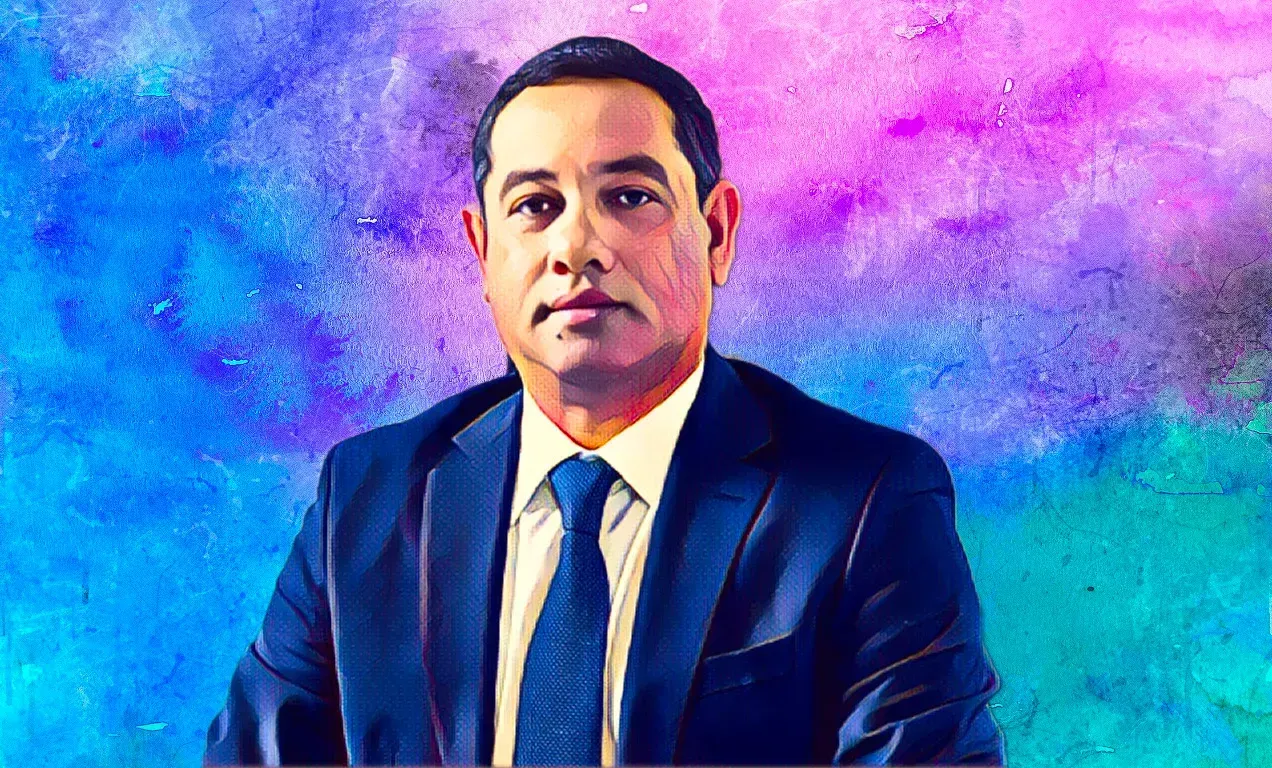
Mamy Ravatomanga has been held in a Mauritian prison for seven months on provisional charges, and prosecutors have yet to file the formal accusation that would allow the case against him to proceed to trial.
The Malagasy magnate appeared by videoconference from Melrose prison on Monday, when his lawyers made a fresh application for bail before the Bail and Remand Court. The defence argued that the length of his detention and the absence of any formal charge made continued custody unsustainable. The Financial Crimes Commission opposed the application, saying detention remains necessary to allow investigators to complete their work.
The magistrate declined to rule on the substance and adjourned the matter to July 30.
A case that has not advanced
Under Mauritian law, a provisional charge allows investigators to hold a suspect while they build a case, ahead of the main charge that formally initiates proceedings. Seven months after Ravatomanga's arrest, no main charge has been lodged.
That gap has become the centre of the argument. His lawyers contend that provisional detention cannot be extended indefinitely while a file remains unfinished. The commission maintains that an investigation spanning three jurisdictions requires time.
Successive hearings have been adjourned at the commission's request so it can produce affidavits replying to defence challenges, including objections to the Criminal Attachment Order freezing his assets and to the detention itself. Each adjournment pushes back consideration of the underlying applications.
How he got to Melrose
The sequence began during Madagascar's political crisis. Ravatomanga arrived in Mauritius on October 12 and 13 last year aboard a private jet belonging to Sodiat Group, the conglomerate he founded, as protests in Antananarivo brought down the government of President Andry Rajoelina.
The commission obtained a Criminal Attachment Order on October 21, freezing assets it valued at about $180 million (Rs 7.3 billion). Three days later he was arrested at the Premium Care clinic in Phoenix on provisional charges of money laundering and conspiracy.
He appeared before the Port Louis District Court on November 6, where bail was refused and his immediate detention ordered. He was subsequently transferred to hospital after cardiac problems.
Investigators from the commission travelled to Madagascar in May to pursue enquiries into Sodiat. The commission confirmed on May 28 that he remained in custody with no main charge filed. On June 29 the Bail and Remand Court heard that investigators from France's Parquet National Financier had visited Melrose prison to question him directly.
Three countries, one investigation
The Mauritian case is one strand of a broader pursuit. Madagascar's anti-corruption court, known as the PAC, issued the first of three international arrest warrants against him in late February over alleged lychee export fraud between 2019 and 2026, together with associated money laundering allegations. Investigators there have also examined the HITA oil refinery, amid allegations that artificial shortages of cooking oil and other staples were engineered to extract rents from Malagasy consumers.
In early June the PAC placed several Sodiat subsidiaries under provisional judicial administration, froze roughly 30 bank accounts and seized properties registered in his name. The Ravatomanga family publicly contested the administration order, saying the owners had never been consulted.
France opened its own line years earlier. He has been under investigation there for tax fraud and money laundering, and the Paris High Court ordered the seizure of three properties he bought near the French capital in 2011. A joint investigation team linking the Mauritian commission and the French prosecutor was formalised at Eurojust headquarters in The Hague on April 14.
Ravatomanga has not been convicted of any offence in any jurisdiction, and the charges against him in Mauritius remain provisional.
The empire behind the case
He founded Sodiat in 1990 as a transport business and expanded it into Madagascar's most diversified private group, spanning oil, construction, hospitality, media, health, agriculture, logistics, real estate and import-export, employing about 4,000 people. Forbes ranked him the second wealthiest person in Madagascar in 2017, behind Ylias Akbaraly.
Born in Morondava in November 1968, he backed Rajoelina's rise to power after the 2009 crisis and became his unofficial economic adviser, a relationship that made him one of the most influential private citizens in the country for close to two decades. He was appointed honorary consul of Serbia in 2019 and of Ivory Coast in 2023.
The commercial consequences have accumulated alongside the legal ones. A security company formerly linked to him severed its relationship with the French firm Amarante International last month, one of several business ruptures since the investigations began.
The hearing on July 30 will address the bail application. It will also test whether the delays the commission has cited remain proportionate to the progress its investigators have made.
The intelligence satisfies curiosity. The paid briefings satisfy strategy.
Every Monday, Elite subscribers receive an Investor Memo breaking down the deal, the structure and the positioning behind the week's most consequential African wealth story - the kind of analysis that doesn't appear anywhere else.
Twice a month, a Wealth Intelligence brief profiles a single billionaire's holdings, cash flows and expansion pipeline in detail no public source matches.
→ Executive ($25/mo): Daily newsletter + Deep-Dive Reports
→ Elite ($75/mo): Everything above + Investor Memos + Wealth Intelligence + Quarterly Analyst Briefings
Subscribe now