

Table of Contents
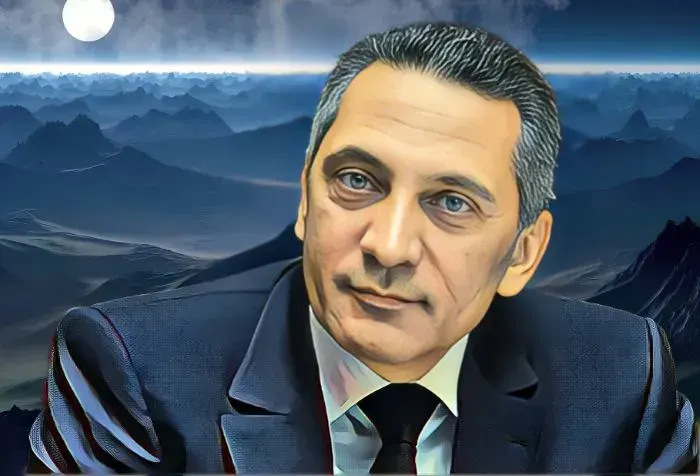
Aziz Akhannouch rose in the House of Representatives on Dec. 16, 2024, during the monthly session at which Morocco's head of government answers to parliament, and told the chamber something no prime minister had said before. A consortium including two of his own companies had won the contract to build the largest seawater desalination plant in Africa.
He had done it, he said, with full transparency. His bid had been the cheapest. The winner would put more than $650 million (6.5 billion dirhams) into the project without taking public money, and that, he suggested, was a risk the state should be grateful someone was willing to carry.
The opposition heard something else. Abdelilah Benkirane, a former prime minister who now leads the Justice and Development Party, called for his resignation within days, pointing out that a government statement issued six days earlier had listed desalination among projects approved for public support. Party officials noted a further complication. The project is overseen by ONEE, the national water and electricity office, and the chairman of ONEE's administrative board is the prime minister.
Fuel tanks welded from American army scrap
The question that has trailed Akhannouch for two decades is not whether he broke a law. It is where his company ends and the Moroccan state begins, and whether anyone in the kingdom can still tell.
Forbes puts him at $1.6 billion, 19th among Africa's richest. Almost all of it sits in a conglomerate that his father started building in a country that did not yet exist as an independent nation.
Ahmed Oulhadj Akhannouch went into business with his brother-in-law, Ahmed Wakrim, in 1932, in the Souss, the arid southern region that has supplied Morocco with its merchant class the way Gujarat supplied East Africa with its own. Aziz was born in Tafraout, a town of pink granite houses in the Anti-Atlas, in August 1961. The company that made the family rich, Afriquia SMDC, was incorporated in 1959, three years after independence, when the French majors still owned the fuel trade.
The early history is a study in scarcity. The elder Akhannouch had contacts in Moscow, and used them to bring in 200,000 litres of Soviet petroleum at a time when Western suppliers had little interest in a Moroccan upstart. When the partners could not afford tanks, they welded them out of the wreckage of abandoned American military bases. By 1962 they had a depot in Casablanca holding 286,000 cubic metres.
That depot is the key to everything that followed.
Morocco has no oil. It also, since Samir went into liquidation in 2015, has no refinery. Every litre of petrol and diesel burned in the kingdom arrives by ship. In an import economy, the scarce asset is not the pump on the forecourt. It is the tank on the coast. Whoever controls storage controls what arrives, when it arrives and what it costs on the day it lands.
Afriquia holds roughly 980,000 cubic metres of it, the largest privately held capacity in Morocco, feeding around 560 service stations and about 35 percent of the fuel market. Getting there took acquisition rather than invention. The group bought the Oismine Group and its Somepi network in 2005. Its gas arm absorbed Tissir Gaz. The chain passed 400 stations by 2007 and has not stopped since. Akwa Group, the holding company, turns over around $3 billion a year.
Two windows exist into an otherwise private empire, and both are on the Casablanca Stock Exchange. Afriquia Gaz imports, refines and distributes liquefied petroleum gas under five brands through a web of subsidiaries with names like Salam Gaz and Dragon Gaz. Akwa owns about 30 percent, a holding worth roughly $430 million when it was last measured, which makes Akhannouch the largest individual investor on the Moroccan bourse. Maghreb Oxygène, founded in the 1970s, makes industrial and medical gases and supplies much of the country's hospital system.
Everything else is unlisted and therefore unmeasured. Afriquia Lubrifiants, a joint venture struck with Chevron in 2006 and rebalanced to an even 50-50 split in 2019, which gave the family an American partner and a route into export markets. Green of Africa, a renewable energy vehicle launched in 2015 with O Capital Group, which would later become one of the two Akwa entities named in the desalination award. The Fairmont hotel at Taghazout Bay. A magazine stable including La Vie éco and Femmes du Maroc, which means the family holds a position in the press that reports on it.
Akhannouch himself trained for none of this in Morocco. He took an MBA at the University of Sherbrooke in Quebec in 1986 and came home to join the firm as deputy general manager, alongside Ali Wakrim, the son of his father's partner. The two families still own the business jointly. The Wakrims still chair the listed pieces of it. The arrangement has held for three generations without a public rupture, which in family capitalism is its own kind of achievement.
The month Moroccans stopped buying his petrol
He entered politics through the regions, running the Souss-Massa-Drâa council from 2003 to 2007, and had sat in a policy circle convened by the late King Hassan II until 1999. In October 2007 he was made minister of agriculture and fisheries, a post he would hold for fourteen years under three prime ministers.
The following April, King Mohammed VI launched the Green Morocco Plan, and Akhannouch became the man who ran it. Public money went into irrigation, export horticulture and the consolidation of smallholdings into commercial agribusiness. International institutions praised it. He also administered the Halieutis fisheries strategy from 2009.
He did not sell the fuel business. That single decision shapes everything that has happened to him since. A minister sat inside a cabinet that sets fuel taxes and regulates distribution while his family owned the largest distributor in the country, and the arrangement was entirely lawful.
Moroccans worked out what they thought about it on April 20, 2018. An anonymous Facebook post named three brands and asked people to stop buying them: Sidi Ali water, Centrale Danone milk, and Afriquia. There were no organizers, no funding and no leaders. Within two weeks, about nine in ten Moroccans knew about the campaign, and a poll conducted for the newspaper L'Economiste found 57 percent taking part.
Sales at Afriquia stations fell 47 percent in Nador and 39 percent in one working-class district of Casablanca, according to Akhbar Alyaoum. Centrale Danone closed the year with a loss of about $55 million (538 million dirhams), down 27 percent on the year before. What made the boycott remarkable was not its economics. It was the discovery that in a kingdom where street protest carries real risk, a citizen could register a political objection by driving past a petrol station.
Akhannouch's answer at the time was to defend the dairy sector's 470,000 workers and remind the public that the government had set up a consumer complaints line. Three years later he took over the country.
He had assumed the leadership of the National Rally of Independents in October 2016 and rebuilt a party of provincial notables into a functioning electoral machine. It won 102 seats in September 2021, a gain of 65, and the king named him head of government on Oct. 7. He became the wealthiest person ever to hold the office.
Contracts written by a state he runs
The premiership did not shrink the business. It grew.
In July 2021, weeks before the election, his company Africa Gas signed with the British firm Sound Energy over the Tendrara gas field in eastern Morocco. The arrangement that emerged gives Afriquia Gaz a ten-year take-or-pay contract for 100 million cubic metres of liquefied natural gas a year, priced between $6 and $8.35 per million British thermal units. Sound Energy has since sold out completely, exiting in May for $57 million, with the mining group Managem taking 75 percent of the concession. First gas is expected this quarter. Ownership of the field has changed twice. The buyer has not.
Then came the desalination award, and a fuel supply contract from ONEE worth about $244 million (2.44 billion dirhams), which went to his group in its entirety. Benkirane's objection to that one was structural rather than legal. In most countries, he argued, a contract of that size would be split among four or five suppliers regardless of who bid lowest.
The sector had already drawn regulatory fire. In November 2023 Morocco's Competition Council fined nine fuel distributors a combined $180 million (1.84 billion dirhams) for breaching competition rules and fixing prices, following a report that found three companies controlling 60 percent of the diesel and petrol market.
Akhannouch's position has been consistent and, on its own terms, coherent. He opposes capping fuel prices and rejects nationalizing the dead Samir refinery, arguing that taking on a broken industrial asset would expose public finances and that price controls would deter the investment Morocco needs. It is an argument that persuades investors more easily than it persuades taxi drivers.
The household's reach extends past fuel. His wife, Salwa Idrissi Akhannouch, built Aksal Group from 2004 into the dominant force in Moroccan luxury retail, holding exclusive franchises for around 45 international brands including Zara, Gucci, Fendi and Gap, with annual turnover near $514 million (5 billion dirhams). She owns half of the Morocco Mall in Casablanca, ten hectares built for about $250 million and opened in 2011. Her own money began with tea. Her grandfather, Haj Ahmed Benlafkih, made a fortune trading it in the 1960s, another Souss merchant house. Between them the couple sell Moroccans their petrol, their cooking gas, their clothes and the building they buy them in.
His charitable work runs through royal institutions rather than a foundation bearing his name. He sits on the board of the Mohammed VI Foundation for Environmental Protection and is a managing member of the Mohammed VI Foundation for the Reintegration of Prisoners. The largest social programme attached to him is the Green Morocco Plan, which he administered with public money rather than his own.
His party moved him aside before the voters could
On Sept. 27 last year, an anonymous collective calling itself GenZ 212 called people into the streets over hospitals and schools. The immediate trigger was the deaths of several women during caesarean sections at a hospital in Agadir, the city where Akhannouch is also mayor.
The protests ran three weeks across more than a dozen cities. Three people were killed, hundreds injured, 409 detained. The movement published a list of demands addressed to the king, and the first was the dismissal of Akhannouch and the dissolution of his government. Protesters in Rabat carried signs reading health, not stadiums, a reference to spending on the 2030 World Cup.
The palace answered with money. Close to $15 billion went to health and education in the 2026 budget, a 16 percent increase, with more than 27,000 jobs promised. The king told ministers that negligence was unacceptable and urged them to move faster. He did not mention the prime minister by name, and he did not remove him.
The party did what the palace declined to do. In January, Akhannouch announced he would not stand again for the RNI chairmanship. At a congress in early February he was replaced by Mohamed Chaouki, a parliamentary faction leader barely known outside the party's own networks. The richest politician in the kingdom had become a liability to the machine he built.
Morocco votes on Sept. 23 for all 395 seats in the House of Representatives, with roughly 16.5 million registered voters and a campaign opening on Sept. 10. Akhannouch is still head of government. He no longer leads the party that would need to win in order to keep him there.
The boycott of 2018 never formally ended. It simply stopped being news, the way a fever breaks without the illness clearing. What it settled was a fact that has followed him into office and will follow him out: in a country where one family sells a third of the fuel and stores most of what arrives, the price at the pump is not an economic indicator. It is a verdict.
The intelligence satisfies curiosity. The paid briefings satisfy strategy.
Every Monday, Elite subscribers receive an Investor Memo breaking down the deal, the structure and the positioning behind the week's most consequential African wealth story - the kind of analysis that doesn't appear anywhere else.
Twice a month, a Wealth Intelligence brief profiles a single billionaire's holdings, cash flows and expansion pipeline in detail no public source matches.
→ Executive ($25/mo): Daily newsletter + Deep-Dive Reports
→ Elite ($75/mo): Everything above + Investor Memos + Wealth Intelligence + Quarterly Analyst Briefings
Subscribe now