


Table of Contents
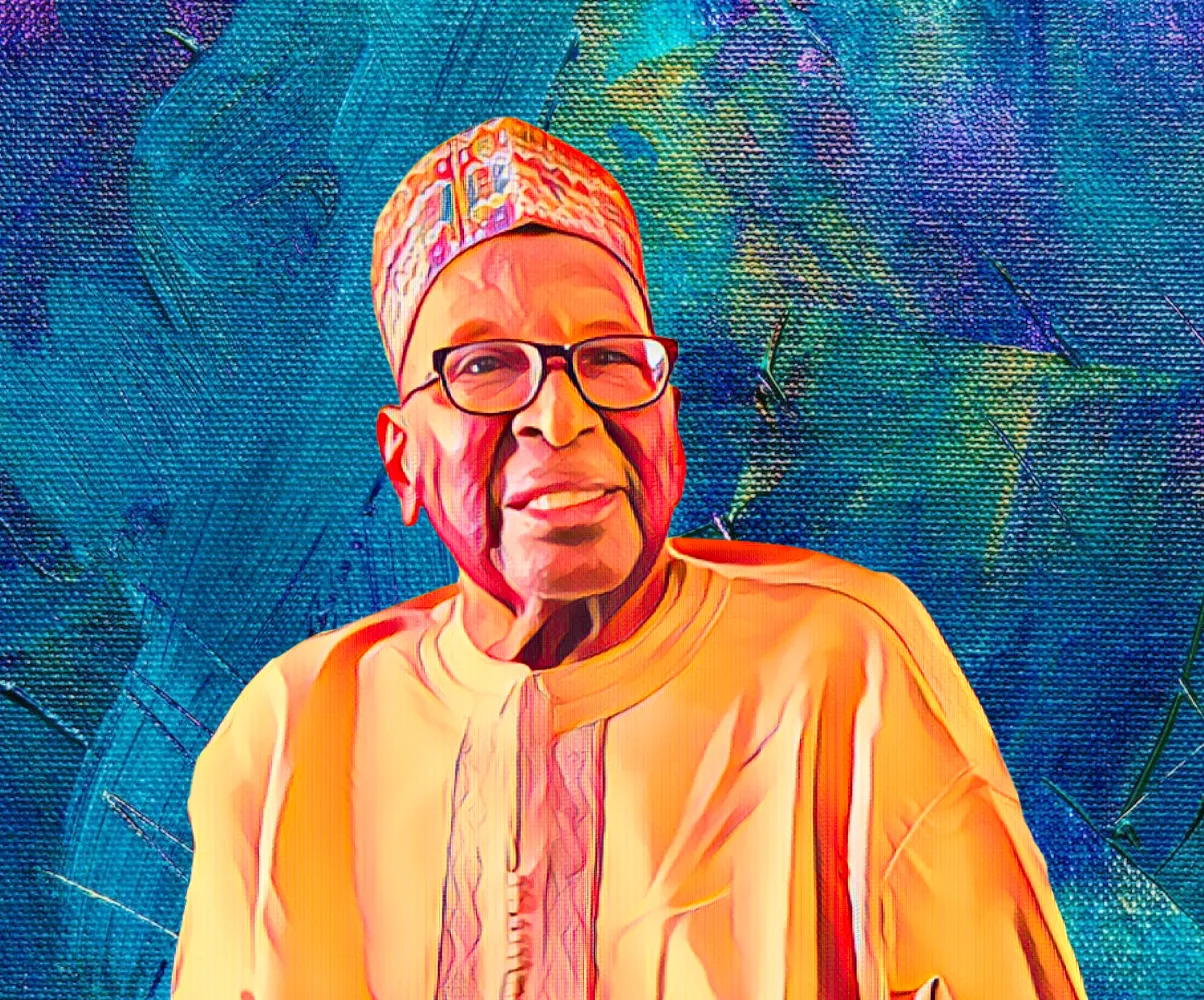
Bamanga Tukur died on Saturday at the age of 90, three days short of his 91st birthday. His son Awwal Tukur announced it in a statement for the family. He had been ill since 2023.
Tukur ran the Nigerian Ports Authority from 1975 to 1982. Somewhere in those seven years, while he was still the man in charge of the country's harbours, he registered a shipping agency.
Daddo Maritime Services says it started in 1980. Daily Trust dates it to 1981. Either way the company was born while its founder held the office that ran the ports it would spend the next four decades working in.
He arrived at the authority in the worst year it had ever had. Nigeria's military government had ordered more cement than the country's harbours could physically receive, and by 1975 the ships carrying it were anchored off Lagos in a queue that took months to clear. The cement armada became shorthand in Nigeria for what happens when money outruns infrastructure.
Tukur spent his tenure adding capacity. The government built more seaports, partly to reduce what it cost to move goods in and out, and the work got him elected first African vice president of the International Association of Ports and Harbours, the industry body for port authorities worldwide.
He left in 1982. What he took with him was an unusually detailed understanding of how Nigerian ports actually function, and a company positioned to use it.
A shipping agency does not own ships. It works for the people who do, meeting a vessel when it arrives, securing a berth, clearing it through customs, rotating the crew, arranging medical care, loading stores and moving whatever needs moving on land. The margins come from knowing the port and the people who run it.
Daddo does that across the Gulf of Guinea, and it does it on the most valuable cargo Nigeria ships. The company held mandates covering wet cargo, which is the trade's term for liquids, at terminals including Bonga, Bonny, Apapa, Abo, Agbami, Akpo and Ebok. Agbami and Bonga are among the most productive deepwater oil fields in the country.
Nigerian shipping agents do something else besides. They collect statutory levies from vessels on the government's behalf and pass the money to the maritime regulator.
In June 2024 Daily Trust reported that Daddo was one of three agencies accused of failing to do that. The newspaper put the combined shortfall above $79.9 million and Daddo's portion at roughly $34.5 million, covering the 3% statutory levy, the 2% cabotage surcharge and offshore waste and sea protection charges, with the arrears running back to 2004.
Osagie Edward, who handles public relations at the Nigerian Maritime Administration and Safety Agency, said the agency was investigating under its director general Dayo Mobereola and that anyone indicted would face the law regardless of standing. Daily Trust could not reach Daddo for comment. Nothing has been tested in court and Tukur was never charged.
His politics came in short bursts.
He won the Gongola State governorship in 1983, covering what are now Adamawa and Taraba, and lasted about three months before the December coup ended the Second Republic. General Sani Abacha made him Minister of Industries a decade later, from 1993 to 1995. He became national chairman of the Peoples Democratic Party in March 2012 with Goodluck Jonathan's support and was gone by January 2014, pushed out after months of factional fighting. Adamu Mu'azu took the job.
The work that lasted was continental. Tukur founded the Africa Business Roundtable, ran it as executive president and stayed on as life patron, and chaired the business group attached to the New Partnership for Africa's Development, the African Union's economic programme. Both roles put him in the room when African governments negotiated with private capital, and for two decades there were very few African-led organisations doing that at all.
He held the Nigerian honour of Commander of the Order of the Niger, the Togolese Commander of the Order of the Mono, and the traditional titles of Tafidan Adamawa and Wakilin Ganye.
President Bola Tinubu called him urbane and generous in a statement issued through his adviser Bayo Onanuga, and described him as a man of big ideas and bold enterprise. Adamawa governor Ahmadu Fintiri said his death was a loss to the state and the country.
What he actually owned is another matter. The presidential statement put the Daddo Group's interests across manufacturing, agriculture, logistics and trading without naming a single company. No outlet that covered his death named one either. The group files no accounts, neither Forbes nor Bloomberg has ever carried a figure for him, and when Daily Trust searched the Corporate Affairs Commission register for Daddo Maritime Services in 2024, nothing came back.
The intelligence satisfies curiosity. The paid briefings satisfy strategy.
Every Monday, Elite subscribers receive an Investor Memo breaking down the deal, the structure and the positioning behind the week's most consequential African wealth story - the kind of analysis that doesn't appear anywhere else.
Twice a month, a Wealth Intelligence brief profiles a single billionaire's holdings, cash flows and expansion pipeline in detail no public source matches.
→ Executive ($25/mo): Daily newsletter + Deep-Dive Reports
→ Elite ($75/mo): Everything above + Investor Memos + Wealth Intelligence + Quarterly Analyst Briefings
Subscribe now


