

Table of Contents
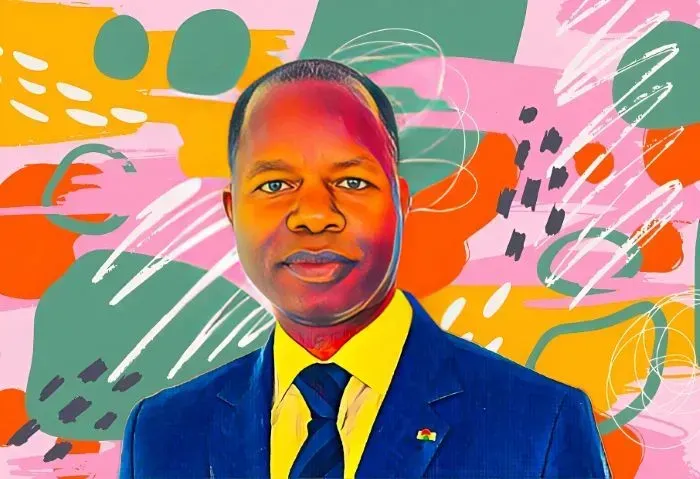
Coris Bank International, the lender founded by Burkinabè businessman Idrissa Nassa, plans to open a branch in the Central African Republic, extending a push into Central Africa that already covers three other countries.
A delegation led by Mamadou Sanon, the group's director for Africa, travelled to Bangui, the Central African capital, and met CEMAC's commissioner for the common market, Ngabo Seli Mbogo, on July 30 to discuss the proposed entry.
CEMAC is the Economic and Monetary Community of Central Africa, a bloc of six countries that share a common currency, the Central African CFA franc, and a single banking regulator. Its members are Cameroon, Gabon, Chad, Congo-Brazzaville, Equatorial Guinea and the Central African Republic.
The move is being made possible by a rule change that took effect on January 1, 2025. The Central African Banking Commission, known as COBAC, introduced a single-licence regime allowing a banking group authorised in one member state to open branches in the others, subject to approval from the local supervisor. Coris Bank already holds a licence in Chad, which gives it a route into the rest of the bloc.
A bank built in Ouagadougou
Nassa founded Coris Bank in Burkina Faso, a landlocked West African country of about 23 million people, and built it into one of the larger banking groups in francophone West Africa.
Its expansion into Central Africa began in December 2024, when it completed the purchase of Société Générale's Chadian business from the French bank, which has been retreating from African markets. That subsidiary was renamed Coris Bank International Tchad and is 67.8% owned by the group.
Two further markets are further along than the Central African Republic.
In early July the group incorporated a Cameroonian subsidiary, Coris Bank International Cameroun, based in Douala with share capital of 26 billion CFA francs, about 39.6 million euros. Alice Dakuyo Kaboré will chair its board, with Lionel Wenceslas Ouédraogo as managing director and Ling Namou as his deputy. Its articles of association make provision for an Islamic finance division alongside conventional deposit-taking and lending.
Incorporating a company is not the same as being allowed to trade. Coris Bank still needs approval from COBAC and from Cameroon's finance ministry before the subsidiary can open its doors.
Gabon is closer still. Nassa confirmed the group's entry in February after meeting the Gabonese president, the required approvals have been granted, and the bank intends to build a headquarters in Libreville, the capital.
A small market with room in it
The Central African Republic is among the poorest countries in the world and has spent much of the past decade in conflict. Its banking sector reflects that. Only four banks operated in the country at the end of 2025.
One dominates. BGFIBank Centrafrique accounted for 65.72% of all loans issued in the first quarter of this year, a concentration that would be unusual in almost any other market.
Others have noticed the gap. Afriland First Bank, based in Cameroon, opened a branch in the country in June with 2.15 billion CFA francs of capital, about 3.3 million euros. A Coris Bank entry would add a fifth institution.
For a bank the size of Coris, the attraction is not the market's current scale but its lack of competition and the low base from which lending can grow. The single-licence regime also means the cost of entry is far lower than it was before 2025, when each country required its own separate authorisation.
A regional strategy
Taken together, the moves describe a deliberate pattern. Coris Bank is assembling a Central African network to sit alongside the West African one it already runs, using an acquisition in Chad as the foothold and the new single-licence rules to spread from there.
That puts it among a small group of African-owned banks expanding across the continent as European lenders withdraw. Société Générale, BNP Paribas and others have been selling African subsidiaries for several years, and the buyers have increasingly been regional groups rather than global ones.
The Central African Republic branch remains a plan rather than a certainty. No timetable, capital figure or approval has been announced, and the group has not said when it expects to open.
The intelligence satisfies curiosity. The paid briefings satisfy strategy.
Every Monday, Elite subscribers receive an Investor Memo breaking down the deal, the structure and the positioning behind the week's most consequential African wealth story - the kind of analysis that doesn't appear anywhere else.
Twice a month, a Wealth Intelligence brief profiles a single billionaire's holdings, cash flows and expansion pipeline in detail no public source matches.
→ Executive ($25/mo): Daily newsletter + Deep-Dive Reports
→ Elite ($75/mo): Everything above + Investor Memos + Wealth Intelligence + Quarterly Analyst Briefings
Subscribe now