

Table of Contents
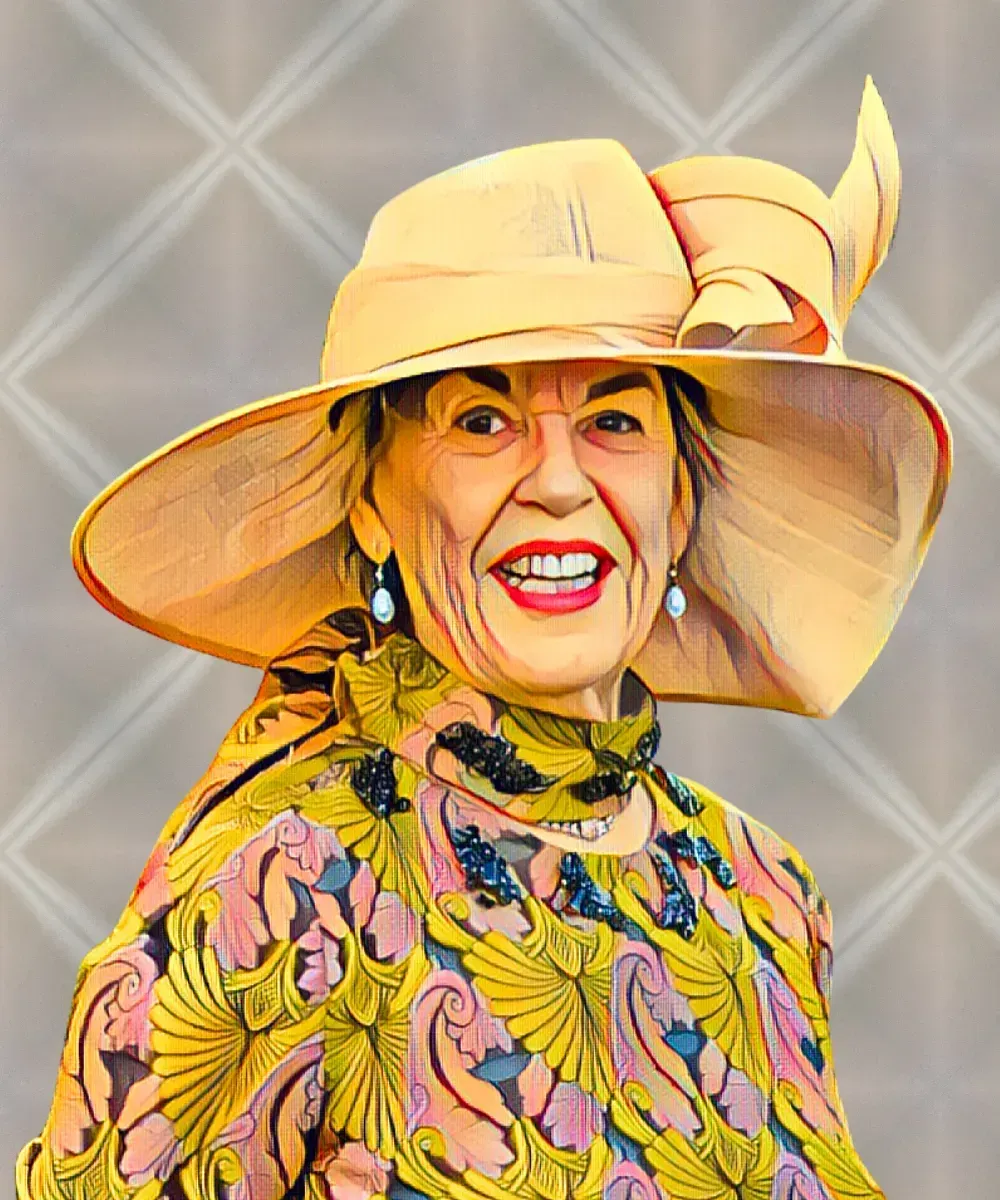
Mary Oppenheimer Slack did not want anyone to know how much money she gives to political parties.
When South Africa's Political Party Funding Act came into force in April 2021, requiring parties to declare every donation above R100,000, she told News24 that publishing the names of funders might frighten benefactors away in future. Four months earlier she had written the single largest cheque the Democratic Alliance received that year, R15 million, paid on May 14.
Five years on, the disclosures she opposed show that she and her three daughters have given more than R100.71 million to South African political parties, by Billionaires.Africa's calculation. That is roughly $6.07 million, and it makes one family among the largest sources of private political money in the country.
What the register shows
Slack herself has disclosed R32 million since 2021. Of that, R25 million went to the Democratic Alliance across the 2021/22 and 2023/24 reporting periods, R6 million to Build One South Africa, and R1 million to the United Democratic Movement.
Ahead of the 2024 general election she was the DA's second-largest individual backer, behind Michiel le Roux, the Capitec founder.
Her daughters have given more than she has, and they have spread it wider.
Victoria Freudenheim, a director of Mary Oppenheimer Daughters in the United Kingdom, has disclosed R31.08 million, all of it to ActionSA. Jessica Slack-Jell has given R19.33 million, split between R11.3 million to ActionSA, R6 million to Build One South Africa and R2 million to the DA. Rebecca Oppenheimer has given R18.3 million, comprising R15 million to Rise Mzansi and R3.3 million to ActionSA.
None of the three has given to the African National Congress, which has governed South Africa since 1994.
Add the rest of the family and the figure roughly doubles. Six Oppenheimer descendants, including Nicky Oppenheimer and his son Jonathan, have disclosed more than R200 million since reporting became mandatory. South African parties have declared R880.7 million in total donations above the threshold over the same period, meaning a single family accounts for something close to a quarter of all disclosed private political funding in the country.
The true share is unknowable. Donations below R100,000 do not have to be declared.
The heir who never took the chair
Slack was born in December 1943, the eldest child of Harry Oppenheimer and the granddaughter of Sir Ernest Oppenheimer, who founded Anglo American Corporation in 1917 to mine gold on the Witwatersrand and took control of De Beers, the diamond company, in 1929.
Her father ran De Beers from 1957 and built the family into the dominant force in South African mining, a position that made the Oppenheimers the closest thing the country had to an industrial dynasty. She was educated at Heathfield School in Ascot, England, where she was head girl, and afterwards at the Sorbonne in Paris.
When Harry Oppenheimer died in 2000, he divided the estate equally. Slack and her younger brother Nicky each took half, and she holds voting rights equal to his.
That equality has almost never been visible. Nicky Oppenheimer chaired De Beers and served as deputy chairman of Anglo American. He appears on the Bloomberg Billionaires Index, where he has been valued between $10 billion and $12 billion depending on the year. His sister appears on no list at all.
The reason is structural rather than deliberate. Wealth trackers value people through identifiable holdings, usually shares in listed companies or documented stakes in private ones. Slack's assets sit inside family trusts and a private office, and she has never held an executive position at a public company. The money is there. The paper trail a compiler would need is not.
Her influence has surfaced at least once. She is reported to have played a decisive part in the family's decision to sell its remaining 40 percent of De Beers to Anglo American, a transaction announced in 2011 and worth $5.1 billion in cash. That sale ended eight decades of Oppenheimer control over the world's most famous diamond company, and it converted an illiquid dynastic asset into money that could be invested anywhere.
Where the money went
Much of her half now runs through Mary Oppenheimer Daughters, a family office known as MODO, with operations in Johannesburg, London and the Isle of Man.
It manages more than $3 billion. The portfolio is spread across foreign government bonds, stock market indices and private equity funds, and the family acts as anchor investor in several vehicles including Stockdale Street, Tana Africa Capital, Senqu and Senqu Capital. Specific allocations are not disclosed.
The structure tells you something about the strategy. A family office holding sovereign debt and index exposure offshore, denominated largely in hard currency, is not making a bet on South Africa. It is insulating a fortune from it.
That makes the political donations more interesting rather than less. The capital is hedged against the country. The philanthropy and the party funding are not.
MODO has occasionally deployed money domestically and unusually. In 2020 it extended R100 million in post-commencement finance to Phumelela Gaming and Leisure, the largest horse-racing operator in South Africa, after the company entered business rescue. That was a rescue of an industry she is personally involved in rather than a portfolio decision.
Theatre, and a company on the JSE
Slack's own career predates the inheritance and had little to do with mining.
She served as managing director of the Market Theatre in Johannesburg, the venue that staged work by Athol Fugard and others during apartheid and became one of the few racially integrated cultural spaces in the country. Running it was not a ceremonial appointment for an heiress. It was a politically exposed job in a politically dangerous decade.
She later chaired the Oppenheimer Memorial Trust, the family's principal philanthropic vehicle, which has funded university scholarships and academic institutions across South Africa for decades.
Her most substantive commercial venture was Women Investment Portfolio Holdings, known as Wiphold, which she co-founded and which became one of the first women-led companies to list on the Johannesburg Stock Exchange. She has also owned Amaridian, a gallery in SoHo, New York, dealing in contemporary African art.
The daughters
Slack married the Scottish rugby international Gordon Waddell in 1965, having met him three years earlier. They divorced in 1971 and he took custody of their two daughters, Victoria and Rebecca. She later married Henry Richmond Slack, with whom she had Jessica. She has four daughters in total and is not currently married.
Three of them are now significant political donors in their own right, and their choices diverge from hers.
Where Slack has concentrated on the Democratic Alliance, the official opposition, her daughters have put the larger share of their money into newer parties. ActionSA, founded by the former Johannesburg mayor Herman Mashaba, has received R45.68 million from Freudenheim, Slack-Jell and Oppenheimer combined. Rise Mzansi, formed in 2023, took R15 million from Rebecca Oppenheimer alone.
That is not a family voting bloc. It is four women funding four different theories of what should replace the current governing arrangement.
Horses, and a house
Slack lives at Brenthurst Estate in Parktown, Johannesburg, the compound Ernest Oppenheimer acquired and where three generations of the family have lived. She also owns Vergenoeg, a mansion in Muizenberg outside Cape Town designed by the architect Herbert Baker and declared a national monument.
She runs two thoroughbred operations, Wilgerbosdrift and Mauritzfontein, and is among the most influential figures in South African racing. Jessica Slack-Jell manages Mauritzfontein and is married to the trainer Steven Jell.
The racing is not a hobby in the sense of an idle one. Between them the two studs have produced champions and shaped South African bloodstock for years, and the Phumelela intervention indicates she regards the industry's survival as her responsibility.
What the money is for
The Oppenheimers have consistently maintained that their political giving is intended to strengthen democracy rather than purchase influence, and the Brenthurst Foundation, established by Jonathan Oppenheimer, funds policy research and economic reform advocacy across the continent on the same premise.
The counter-argument is arithmetic. When one family provides close to a quarter of all disclosed political funding in a country of 63 million people, the question of proportion arises regardless of intent, and it arises most sharply for the newer parties, where a single donation can represent a substantial share of an entire annual budget.
Slack has not addressed that question publicly. Her only recorded comment on party funding remains the one she made in 2021, when she said that publishing donors' names might discourage them.
The names were published anyway. She kept giving.
The intelligence satisfies curiosity. The paid briefings satisfy strategy.
Every Monday, Elite subscribers receive an Investor Memo breaking down the deal, the structure and the positioning behind the week's most consequential African wealth story - the kind of analysis that doesn't appear anywhere else.
Twice a month, a Wealth Intelligence brief profiles a single billionaire's holdings, cash flows and expansion pipeline in detail no public source matches.
→ Executive ($25/mo): Daily newsletter + Deep-Dive Reports
→ Elite ($75/mo): Everything above + Investor Memos + Wealth Intelligence + Quarterly Analyst Briefings
Subscribe now