

Table of Contents
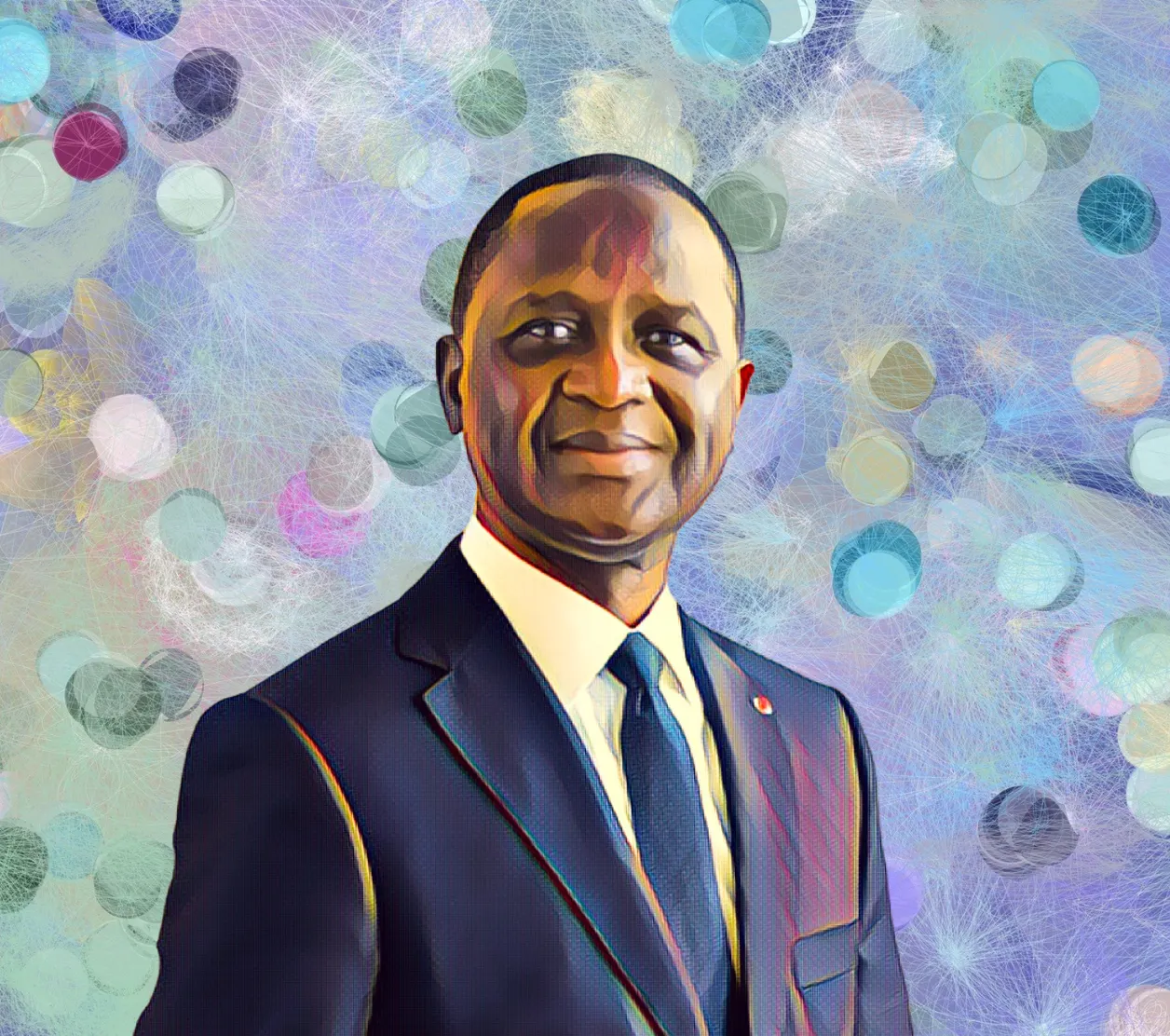
The Ivorian government has agreed to sell a $180 million block of shares in one of the country's oldest banks to the businessman who chairs it.
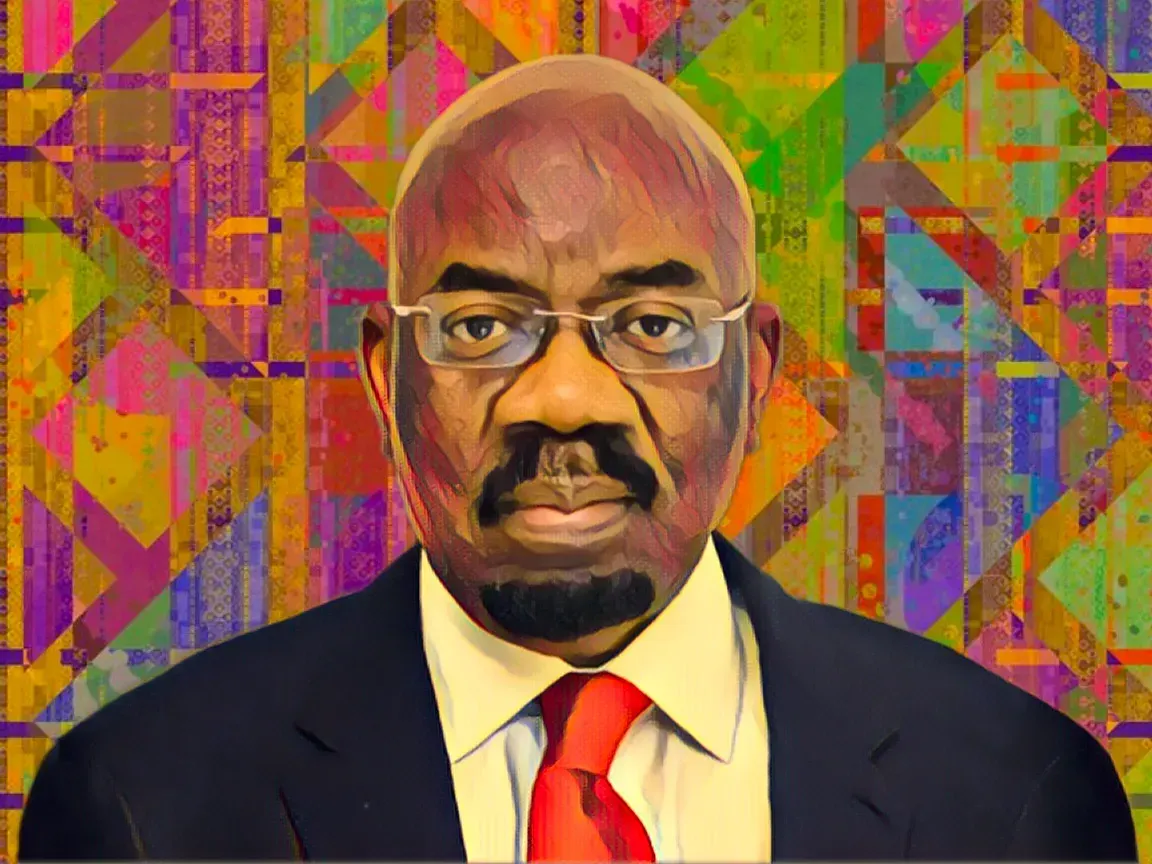
The Banque Nationale d'Investissement, the state's financing arm, signed the agreement on July 13 with Brandon & Mcain Capital, the investment company Ahmed Mamadou Cissé founded and controls. The block covers 3,514,941 shares in the Banque Internationale pour le Commerce et l'Industrie de la Côte d'Ivoire, 21.09 percent of its capital and voting rights. Cissé has chaired the bank since May 2023. Neither party disclosed the price, and the state did not put the shares out to tender.
BICICI trades on the regional exchange in Abidjan, so the market prices the block even though the parties will not. The shares closed Friday at 29,100 CFA francs, valuing the state's holding at 102.28 billion CFA francs, about $180 million, according to Billionaires.Africa calculations at the Aug. 7 rate of 567 CFA francs to the dollar.
Approval from the Banking Commission of the West African Monetary Union would lift Cissé from 19.11 percent of the bank to 40.2 percent. He would overtake IPS-CNPS, the state pension institution holding 21.54 percent, and take control of a lender the market values at roughly $855 million. His own stake would be worth about $344 million.
Cissé bought his first BICICI share three years ago.
The 2023 purchase
He entered the register in June 2023, buying the 19.11 percent that the bancassurance group SUNU had put up for sale. That transaction carried a published price. Cissé paid 6,945 CFA francs a share for a little over 3.185 million shares and handed over 22.12 billion CFA francs, roughly $39 million.
Those shares closed Friday at 29,100. His stake now carries a market value near $164 million, which hands him a paper gain of about $124 million and a return of 4.19 times in a little over three years.
The stock has run hard. BICC, as it trades in Abidjan, changed hands at 5,200 CFA francs five years ago and has climbed 443 percent since. It has gained 322 percent over three years, 71 percent over 12 months and 49.65 percent since January.
Earnings drove most of that. The bank posted a net profit of 26 billion CFA francs in 2024, a 57 percent increase. It grew first-half profit 42 percent in 2025 and closed that year at 36.5 billion CFA francs, about $64 million, up 39 percent. No other lender among the nine listed on the Bourse Régionale des Valeurs Mobilières grew faster. Mamady Diakité runs the bank day to day.
BICICI has also raised its dividend almost every year, from 401.80 CFA francs a share in 2022 to 1,157.20 for 2025. That payout alone returns 16.7 percent annually on the price Cissé paid in 2023. His current holding collected about $6.5 million from it. At 40.2 percent he would collect closer to $13.7 million.
Investors have not pushed the stock beyond local norms. At 485 billion CFA francs the bank trades on about 13.3 times last year's earnings, roughly the average across the Abidjan exchange. Very few shares change hands. Friday's session moved 148 of them.
A career on other people's payrolls
Cissé arrived at ownership late, after a career spent managing businesses that belonged to other shareholders.
He studied finance and information systems management at the City University of New York, then added an MBA in telecommunications and a governance certificate from London Business School. Citibank employed him for seven years in senior positions in the United States and in Abidjan.
He moved into telecommunications in Benin, then moved to Ouagadougou as managing director of Telecel Faso, sent in by his employers to rescue a stalled operator. Atlantique Telecom, the pan-African company that owned the networks, moved him between its subsidiaries throughout that period.
The group sent him to Abidjan in 2005 to launch a mobile brand in the largest market in francophone West Africa. He launched Moov and ran it for 12 years.
The employers' federation he now leads publishes the account of what followed. Cissé became the first Ivorian to run a mobile phone company anywhere in the eight-country monetary union. He staffed the launch with Ivorians rather than expatriates. Moov turned a profit inside 18 months, signed up more than 4.5 million subscribers within a few years and approached a valuation of $800 million. By 2020 it commanded 23 percent of the Ivorian market on revenue of 220 billion CFA francs. The same document credits his pricing with cutting the cost of a phone call in Côte d'Ivoire by roughly two thirds, a claim the regulator has never confirmed.
Atlantique Telecom handed him more mandates as it expanded. He ran Moov Burkina for three years and Moov Benin for two, sat on the board of Moov Togo for four, and chaired Moov Gabon and Moov Centrafrique. He also served as president of the Union of Telephone Operators in West Africa. He still chairs Moov Côte d'Ivoire without holding a share in it.
He led UNETEL, the telecoms employers' body, from 2008 to 2019, which placed him in the room whenever Ivorian officials drafted digital policy.
Inside Brandon & Mcain
Cissé converted that salaried career into capital through Brandon & Mcain, and outsiders cannot examine most of what the group does.
The company started in property and still shows its work only there. Its own material describes one building in unusual detail: Brandon & Mcain 2, four stories at Riviera Golf 4 in Cocody, 300 meters from the Jacques Prévert roundabout, with two underground parking levels, four lifts, a restaurant, a central patio, motorised gates, electrified wire, round-the-clock G4S guards and fibre already run in from both Moov and Orange. Tenants lease the floors as bare concrete.
The group tells the public it operates across six sectors: telecoms and information technology, real estate, mining, energy, agribusiness and hotels. It has never named a mine, a power project, a hotel or a farm. It publishes no subsidiary list, no revenue, no headcount and no accounts.
Cissé was reported in March 2023 to be forming a second vehicle in Abidjan, Oakwood Investment, to pursue telecoms, banking, real estate and media. No one has published anything about it since.
The record stays equally quiet about the man. His federation's official biography, Abidjan's business directories and the Ivorian Treasury's note on his election all omit his birth date, his age, his hometown, his family and his schooling before New York. None of them gives a founding date for Brandon & Mcain, which leaves unanswered the question of how a salaried executive reached the point of writing a 22.12 billion CFA franc cheque.
His remaining titles give him seats rather than stakes. He chairs Banque Atlantique Togo, sits on the board of Eranove, which runs water and power concessions across the region, and chairs the investment committee of the CNPS, the largest pension fund in West Africa.
Two roles at once
BNP Paribas spent 60 years in Côte d'Ivoire before it left. The French bank and its development arm Proparco announced on Sept. 30, 2022 that they would sell 67.49 percent of BICICI, and completed the handover on Feb. 15, 2023 to four Ivorian public institutions. The BNI took one of those blocks, and it is now selling that stake to Cissé.
The Confédération Générale des Entreprises de Côte d'Ivoire elected him president on Nov. 30, 2022, when he stood unopposed, and its board returned him for a second term on Nov. 20, 2025. Its members account for close to 80 percent of Ivorian private companies and about $30 billion in combined revenue. He also presides over the West African employers' federation and, since March 2022, over the alliance of French-speaking employers' bodies. The state made him Commandeur of the National Order in 2020.
Holding both jobs places Cissé where credit, business, government and labour negotiation intersect. Ivorian commentators have argued that the arrangement speeds decisions and creates conflicts in equal measure. The July agreement sharpens that argument, because a state institution sold a $180 million block in the middle of a 50 percent rally to the chairman of the bank, without a tender and without naming a price.
No one has accused Cissé of wrongdoing. Searches of Ivorian, regional and pan-African coverage in French and English produce no litigation involving him, no regulatory sanction, no investigation and no attack on his conduct. Most of the financial press has read the deal as Ivorian money taking ground that BNP Paribas, Société Générale and Standard Chartered have been giving up across West Africa.
The Banking Commission has not ruled. Until it does, the government keeps its name on the share register and Cissé chairs a bank in which he holds 19.11 percent.
The intelligence satisfies curiosity. The paid briefings satisfy strategy.
Every Monday, Elite subscribers receive an Investor Memo breaking down the deal, the structure and the positioning behind the week's most consequential African wealth story - the kind of analysis that doesn't appear anywhere else.
Twice a month, a Wealth Intelligence brief profiles a single billionaire's holdings, cash flows and expansion pipeline in detail no public source matches.
→ Executive ($25/mo): Daily newsletter + Deep-Dive Reports
→ Elite ($75/mo): Everything above + Investor Memos + Wealth Intelligence + Quarterly Analyst Briefings
Subscribe now