

Table of Contents
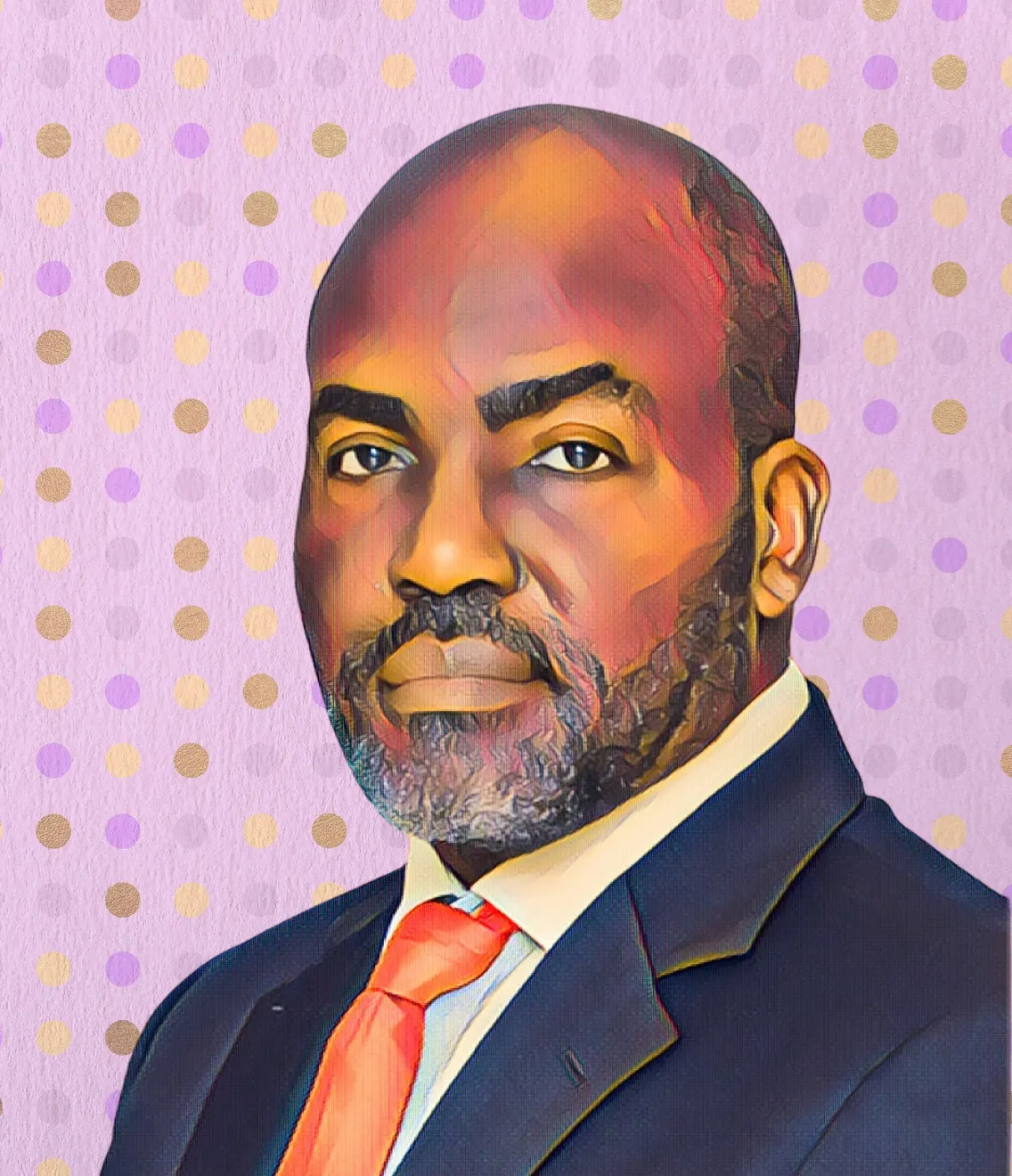
Zimbabwe has required since 2011 that petrol sold in the country be blended with locally produced ethanol. One plant supplied that ethanol under the only licence issued until 2019, and Muller Conrad Rautenbach, known as Billy, controls the companies that own it.
Green Fuel (Pvt) Ltd operates a sugarcane-fed ethanol facility at Chisumbanje in Manicaland province, near the Mozambican border. Rautenbach's Macdom Investments and Rating Investments hold it in partnership with the Agricultural and Rural Development Authority, the state agency that pledged its land leases to the venture in return for a 10 percent stake. The plant became operational in 2011, the same year the blending mandate took effect.
Rautenbach reached that position after a career that took him through Congolese state mining, a decade as a fugitive from South African prosecutors, listings on both the United States and European Union sanctions registers, and appearances in two of the largest offshore data leaks published in the past ten years. He was born in Salisbury, now Harare, on Sept. 23, 1959, and is 66.
Trucks and Hyundai
Rautenbach's father Wessels ran a trucking business in Rhodesia. His son inherited it and set about enlarging it well beyond what the founder had built.
The company traded as Sabot and later as Wheels of Africa. Rautenbach moved to Johannesburg and pushed the operation across southern Africa. The Financial Mail estimated in 1999 that the group controlled 75 percent of Zimbabwe's haulage market, and by the middle of that decade his interests reached more than a dozen African countries, a spread that earned him the nickname Napoleon of Africa in the regional press.
The group moved from moving vehicles to selling them. Wheels of Africa took on Hyundai distribution in South Africa and Botswana through Hyundai Motor Distributors, went into assembly, and lifted the Korean brand's South African market share substantially.
Mining followed from the haulage contracts. Wheels of Africa carried minerals for Gécamines, the Congolese state copper and cobalt producer, which gave Rautenbach a working knowledge of the parastatal's operations. A company of his named in reporting as Ridgepointe Overseas Development Limited, registered in the British Virgin Islands, went beyond transport and took over the management of at least three Gécamines copper and cobalt mines, raising their revenue.
He has described the technique. "We did it very selectively," he said. "We slowed down the process and picked it out in very high grade and with very little investment."
The approach produced output the state company had not been achieving on the same ground, and it brought him to the attention of the Congolese government.
Gécamines
Laurent-Désiré Kabila appointed Rautenbach chief executive of Gécamines in 1998, at a point when Zimbabwe had committed troops to the Democratic Republic of Congo to support Kabila's government during the Second Congo War. Commercial arrangements followed the military deployment, understood at the time to compensate Harare for its support.
The governor of Katanga signed contracts in September 1998 transferring 80 percent of the shares in mines and factories owned by Gécamines to a British Virgin Islands company that Africa Confidential recorded as Ridgepoint, controlled by Rautenbach. Whether that entity was the same as the Ridgepointe Overseas Development Limited named in other accounts, or a related company, has never been clarified in public filings.
Ernst & Young audited the parastatal and Rautenbach was removed. A subsequent United Nations report set out one of the reasons, recording that some of the best cobalt-producing areas held by Gécamines had been transferred into a joint venture between Rautenbach's Ridgepoint Overseas Developments Ltd and the Central Mining Group, a Congolese company controlled by Pierre-Victor Mpoyo, then a minister of state.
The Congolese government withdrew his mining concessions in 2000, reportedly after he failed to pay over the state's share of the profits.
Laurent Kabila was assassinated in January 2001. Rautenbach reached a settlement with the DRC government by April 2002 and was reallocated several concessions, including half of the Mukondo mine, a substantial cobalt asset in Katanga. He was deported from the DRC in 2006 over alleged mining corruption.
The South African case and the sanctions
South African investigators moved against him while he was still building the Congolese position.
The Investigating Directorate for Serious Economic Offences raided the Wheels of Africa group, including Hyundai Motor Distributors, in November 1999, and Rautenbach left the country. The allegations covered the theft of 1,300 cars from Hyundai, the bribery of customs officials, and the fraudulent reduction of tax liabilities across the group's subsidiaries. The Wheels of Africa group was liquidated in December 1999.
Prosecutors seized a Western Cape farm valued above 30 million rand, hunting safaris, a Falcon executive jet, a Bell 407 helicopter and a yacht. Those assets were later returned to him.
He stayed out of South Africa for a decade while an extradition battle ran. He pleaded guilty in September 2009 to 326 charges and paid a fine of 40 million rand, roughly $4.5 million at the time.
A separate admission emerged the same year. Rautenbach acknowledged in a South African court that he had given the convicted drug dealer Glenn Agliotti $100,000 to pass to Jackie Selebi, then South Africa's national police commissioner, to sort out his issues. Selebi was subsequently convicted of corruption.
Western governments acted in 2008. The United States Treasury's Office of Foreign Assets Control listed Rautenbach for allegedly providing financial and logistical support to Robert Mugabe's government. The European Union listed him the same year on comparable grounds. He denied the alleged links. The EU lifted its measures in February 2012 and the United States removed him in April 2014.
The largest realisation of his career happened while those measures were in force. Rautenbach folded his DRC mining assets into Central African Mining and Exploration Company plc, the AIM-listed vehicle known as CAMEC, in 2006, taking cash and shares in exchange. Eurasian Natural Resources Corporation acquired CAMEC in 2009, and Rautenbach is reported to have made an estimated $50 million from that sale.
He described the sequence himself in a letter that later surfaced in the Pandora Papers. The family's wealth, he wrote, came from financing and equity investments he had made over the previous 15 years in southern and central Africa, mostly in Zimbabwe. The capital behind those investments, he continued, stemmed from the original family transport and logistics business Sabot, and from the DRC mining operations sold to CAMEC in 2006 for cash and shares.
Chisumbanje
The Zimbabwean ethanol project brought Rautenbach into direct conflict with the community around it, and into an unusually close relationship with national fuel policy.
The land dispute at Chisumbanje began in 2008. Villagers in Chisumbanje, Chinyamukwakwa and Matikwa say the project encroached on communal land without adequate consultation. A parliamentary portfolio committee ordered the ARDA board chairman in 2015 to clarify the status of the disputed land. Community representatives have put the number of displaced families at around 100. A 2015 parliamentary committee report alleged that the facility had discharged toxic waste, and that heavier truck traffic had contributed to fatal road collisions. Green Fuel has denied polluting waterways, and did not respond to Bloomberg's questions about the criticisms when it examined the project in 2021.
Villagers who accepted compensation plots have complained about what they received. Farmers in Chisumbanje reported being allocated half-hectare irrigated plots and then going weeks without irrigation water, and said water they did receive damaged crops and posed risks to livestock.
The commercial position strengthened as the dispute continued. Mandatory blending arrived in 2011, Green Fuel held the sole ethanol supply licence until 2019, and the required blend reached 15 percent and has risen since. The government banned sales of unleaded fuel through Statutory Instrument 150 of 2024, a measure that a group of oil importers said was designed to protect Green Fuel's operations.
Rautenbach has been accused of paying government and ZANU-PF officials to preserve Green Fuel's dominance and to raise the blending ratio. Leaked company financial documents examined by amaBhungane indicated that the blending percentage was critical to the plant's viability. He did not respond to amaBhungane's questions on the allegation, and has previously described his most persistent accuser, the former ZANU-PF figure Temba Mliswa, as an extortionist.
Business conditions have not been uniformly favourable. Green Fuel, which employs roughly 3,000 people, retrenched a significant number of workers in July 2024 as blended fuel volumes fell. Neither Rautenbach nor the company's community relations manager responded to questions about the retrenchments.
The Chisumbanje community sued Green Fuel in August 2025 after security guards assaulted minors. The guards received 280 hours of community service, a sentence community leaders called grossly inadequate.
Africa Confidential describes Rautenbach as a close ally of President Emmerson Mnangagwa, and has reported that white Zimbabwean businessmen, Rautenbach and the late arms dealer John Bredenkamp among them, were key partners as Mnangagwa built his own fortune.
Rautenbach's political proximity has been visible at the plant itself. He appeared at Green Fuel alongside the then information minister Jonathan Moyo, the then agriculture minister Joseph Made and the Chipinge South legislator Enock Porusingazi.
The offshore record has been documented twice. Rautenbach was named in the Panama Papers in April 2016, which prompted calls in Zimbabwe for an investigation into his financial dealings that did not follow. The Pandora Papers, published in October 2021, produced a fuller account. Leaked records showed that Asiaciti Trust, a firm specialising in offshore structures, helped Rautenbach and his family build a trust arrangement while he was under sanctions, presented as a marriage settlement and placing ultimate ownership in the Cook Islands.
He donated multimillion-dollar investments in his coal and ethanol businesses to his wife Jenny in 2013, explaining in writing that the transfer was intended to compensate for the marital property regime under which they married in 1984, which he said did not adequately reflect her contribution.
Those assets consisted largely of debt extended to about five special purpose vehicles registered in the Bahamas and the British Virgin Islands, named Elloway, Jefton, Marigold, Lostworld and Bartlow. Each lent on to his Zimbabwean companies: Green Fuel, Zim-Bio Energy, Rating Investments, Clidder and Macdom Investments.
The recorded values indicate how hard the underlying assets are to price. The White Orchid Fund holds approximately $120 million of debt in Rautenbach's businesses, with the largest exposure to Green Fuel. All of those loans were in default when they were placed into the fund in 2015. Auditors assigned them a net asset value of just under $20 million in 2016, and Asiaciti recorded the figure at around $18 million by December 2018.
No credible estimate of Rautenbach's personal wealth has been published. Neither Forbes nor Bloomberg tracks him. The reported $50 million from the CAMEC sale is the only clear figure attached to any transaction across four decades, and it dates from 2009.
He remains active. Reported interests as of 2025 include cobalt, platinum and coal exploration through entities named as Ridgepoint Minerals and Clidder Minerals, alongside the Chisumbanje plant.
Zimbabwe's blending law has held through changes of president, currency and economic policy, and the plant Rautenbach built at Chisumbanje continues to supply the ethanol that goes into the country's petrol.
The intelligence satisfies curiosity. The paid briefings satisfy strategy.
Every Monday, Elite subscribers receive an Investor Memo breaking down the deal, the structure and the positioning behind the week's most consequential African wealth story - the kind of analysis that doesn't appear anywhere else.
Twice a month, a Wealth Intelligence brief profiles a single billionaire's holdings, cash flows and expansion pipeline in detail no public source matches.
→ Executive ($25/mo): Daily newsletter + Deep-Dive Reports
→ Elite ($75/mo): Everything above + Investor Memos + Wealth Intelligence + Quarterly Analyst Briefings
Subscribe now