

Table of Contents
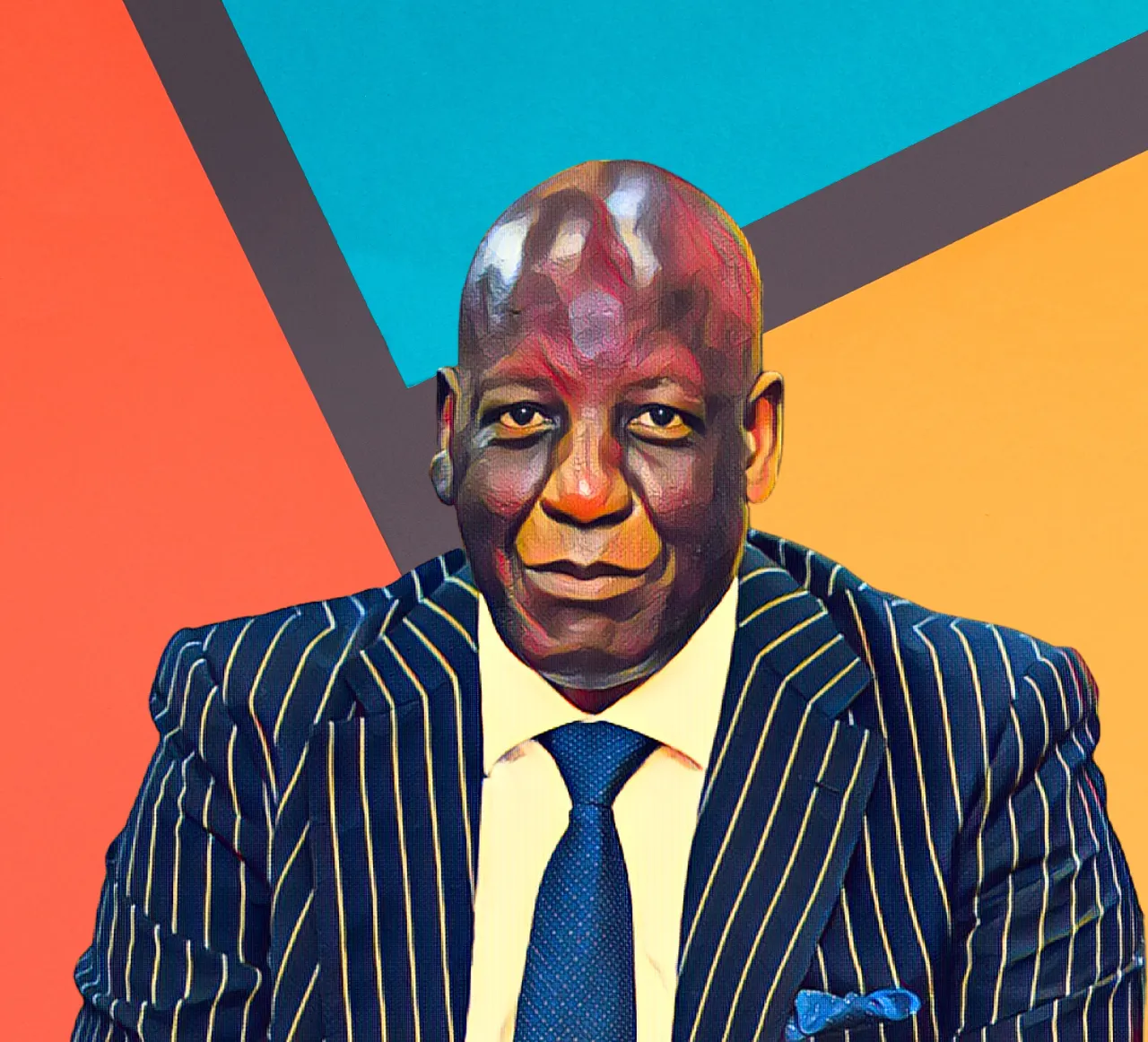
Ebomaf, the construction group founded by the Burkinabè billionaire Mahamadou Bonkoungou, says it has won more than $1.23 billion (700 billion CFA francs) of public works contracts in Gabon since the country's military transition began in August 2023.
The figure comes from the company. No Gabonese state body has published a consolidated account of what the government has committed to Ebomaf, according to reporting by Gabon Review, which asked who is keeping the books on the group's Gabonese operations.
Three years of awards have made a single foreign contractor the dominant supplier to the Gabonese state. The group's contracts now cover hundreds of kilometres of road, an international airport at Andem, and Libreville 2, the planned administrative capital intended to relieve pressure on the existing one. Almost every major infrastructure project announced by transition president Brice Clotaire Oligui Nguema carries Ebomaf's name.
Gabonese commentators have raised two concerns about that concentration.
The first is procurement. Presidential infrastructure announcements have converged on the same contractor without detailed public communication about competitive tendering in each case, according to Africtelegraph, which examined the pattern this week.
The second is accounting. The Ministry of Public Works, the Ministry of Public Accounts and the Court of Auditors have not produced a comprehensive statement of the contractual commitments binding the state to Ebomaf, leaving no unified record of what has been signed, what has been paid, and on what terms. The unanswered questions include who validates the payment certificates, which bank holds the flows, and what sovereign guarantees have been issued to secure the prefinancing.
Governance standards recommended by the International Monetary Fund and the African Development Bank call for regular publication of commitments and disbursements.
The financing model itself is what makes those questions consequential. Bonkoungou built Ebomaf's regional position on an integrated approach that combines construction with bank prefinancing, usually arranged through West African institutions. Governments under fiscal pressure can start work without immediately raising the money, and the repayment obligation moves into later budget years, where the eventual cost depends on the terms negotiated.
The structure has established the group across Burkina Faso, Côte d'Ivoire, Togo and Senegal. It has also produced recurring disputes in those markets over interest rates, cost overruns and the quality of completed works.
Gabon carries the arrangement into a period of strain. Oil revenues have declined in recent years and the country's external debt is already under scrutiny from international financial institutions, which are reviewing their exposure to Gabonese sovereign risk.
The state has ended one Ebomaf arrangement already. Gabon's National Inland and International Navigation Company announced on Aug. 20 last year that it was terminating its partnership with the group, six months after Ebomaf took control of the state shipping operator. Officials said the company had fallen short on its commitments, particularly on providing the required capital and meeting operational targets. Road and airport awards continued regardless.
The road programme is the largest part of the portfolio. Ebomaf's Gabonese contracts run to roughly 485 kilometres, including the Lébamba to Mbigou to Malinga to Molo corridor in Ngounié province, the 83-kilometre Ntoum to Cocobeach route, and two sections totalling 244 kilometres linking Ngounié to Ogooué-Maritime province.
Progress has been measured on at least one of them. Edgard Moukoumbi, the minister of public works, inspected the Lébamba to Mbigou works on June 27 and put completion at 12.50 percent, roughly 15 months into a 72-month contract period. Ismaël Bonkoungou, who runs Ebomaf BTP Gabon, flew into the province this month to inspect earthworks and has been moving heavy plant into the area.
The airport is the single largest project. Oligui Nguema broke ground on Andem International Airport in March 2024, a scheme valued at about $370 million (220 billion CFA francs) that Ebomaf is leading and which is intended to open before 2030. Libreville 2 covers 13,000 hectares and is planned to include an agricultural processing hub, rail connections and research facilities.
Mahamadou Bonkoungou was received by Oligui Nguema at the seafront presidential palace in Libreville on March 26 and inspected the Ntoum to Cocobeach site himself on June 11.
He left Dédougou in Burkina Faso's Boucle du Mouhoun region in 1988 with a baccalaureate and no capital, traded gold and cassettes across West Africa, and built Ebomaf into a group spanning construction, logistics, aviation, finance and hospitality. He acquired the Togolese Bank for Commerce and Industry, owns the machinery distributor Bonkoungou Distribution, and runs the private jet operator Liza Transport International and the airline Liz Aviation, launched in April 2023. Billionaires.Africa has valued the empire at $3 billion.
Gabonese construction companies have meanwhile struggled to move beyond subcontracting, lacking access to the large structuring contracts that would let them build capacity.
Neither Ebomaf nor the Gabonese government has published a response to the questions raised about the contracts.
The intelligence satisfies curiosity. The paid briefings satisfy strategy.
Every Monday, Elite subscribers receive an Investor Memo breaking down the deal, the structure and the positioning behind the week's most consequential African wealth story - the kind of analysis that doesn't appear anywhere else.
Twice a month, a Wealth Intelligence brief profiles a single billionaire's holdings, cash flows and expansion pipeline in detail no public source matches.
→ Executive ($25/mo): Daily newsletter + Deep-Dive Reports
→ Elite ($75/mo): Everything above + Investor Memos + Wealth Intelligence + Quarterly Analyst Briefings
Subscribe now