

Table of Contents
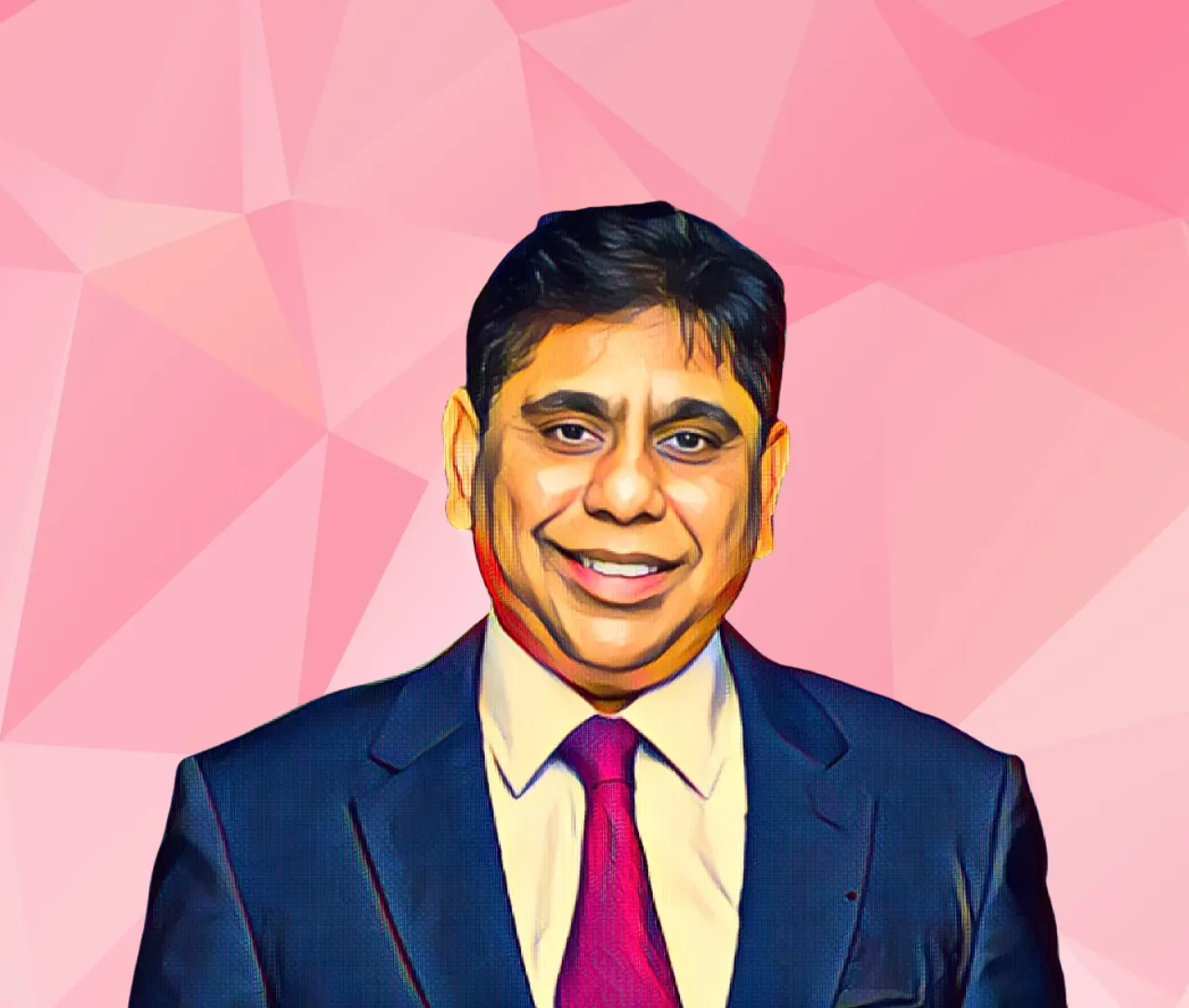
Peeyush Bhushan Garg runs one of Nigeria's largest homegrown makers of toothpaste, soap and detergent from an office on Ladipo Street in Mushin, a Lagos district better known for its sprawling auto spare parts market than for corporate headquarters.
His company, Daraju Industries, makes MYMY toothpaste, one of the most widely used oral care brands among Nigeria's low- and middle-income households, along with Xtreme toothpaste, Fressia soap and petroleum jelly, and Rana, MYMY and Soft 'N' Clean laundry detergents. It sold ₦110.94 billion worth of goods in 2025, or about $74 million at last year's average exchange rate, up 13% from the previous year.
Garg has built that business over almost four decades, first as a trading business and then, from 2008, as a manufacturer. He has rarely spoken in public and has given few interviews. What is known about him comes largely from the company's investors, its debt filings and a handful of rare comments he has made over the years.
From trader to manufacturer
Daraju dates its beginnings to 1988, when Garg started the business with what the company describes as a simple goal of giving Nigerians products of superior quality and value. The company's headquarters is still listed at 159/161 Block F, Ladipo Street, Mushin.
The name Daraju means "most beautiful" in Yoruba, according to a company profile, which says the choice reflected the founder's aim of selling good products to ordinary Nigerians at reasonable prices.
Daraju spent its first two decades as a smaller trading and distribution business. The turning point came in 2008, when Garg set up Daraju Industries as a manufacturer of household and personal care products.
Nigeria was then importing large quantities of everyday consumer goods, and Garg saw an opening to make them locally.
Branding was central to the strategy. Garg has said the company wanted its products to have their own identity and a Nigerian personality, and he has described that decision as one of the main reasons for its success. Daraju chose the name MYMY because it found that nothing made a product feel more personal than calling it "mine."
The company's factory is in an industrial estate in Ota, Ogun State, just outside Lagos. Garg added production capacity in stages. Daraju commissioned its first detergent plant in 2012 and its second in 2015. A third, with 3,000 metric tonnes of capacity, came online in December 2018 and doubled the company's detergent output.
The company also moved backward into raw materials. It added a saponification plant, which converts oils and fats into soap, to reduce its reliance on imported inputs.
Three rounds of outside money
Garg funded much of Daraju's expansion with private equity, while remaining its founder and chief executive.
The first outside investor was Investec Asset Management's private equity arm, which made a growth investment in 2013, taking new shares that gave it a significant minority stake in Ashwah Holdings, Daraju's parent company. Ashwah is registered in Ebene, Mauritius. The money paid for more production and distribution capacity, several new product lines and the consolidation of manufacturing at the Ota plant.
Investec sold its stake back to the company in 2017. Garg, then described as Daraju's founder, executive chairman and primary shareholder, presented the exit as a sign of strength. "We are proud to be in a position where we are able to buy out our partners, and to continue our profitable growth," he said at the time.
By then, Daraju was selling through distributors and wholesalers in all 36 Nigerian states, with brands including MYMY, Rana, Fressia, Farha, Liby and Green.
The second investor arrived a year later. In 2018, African Capital Alliance, one of Nigeria's oldest private equity firms, bought into Daraju through its CAPE IV fund, with the money earmarked for capital expansion. Daraju had more than 1,000 employees at the time. Garg used the announcement to set out his ambitions for the company. "Nigeria has a large population of about 190 million, and Daraju seeks to position itself to meet the needs of this population," he said.
He framed the business as more than a consumer products company. He said Daraju wanted to build local manufacturing capacity in Nigeria and train young people who could go on to start manufacturing businesses of their own.
The third investor was Germany's development finance institution, DEG, a subsidiary of KfW Group. In 2021, DEG took a minority equity stake in Ashwah alongside African Capital Alliance, and agreed to provide growth financing and advisory services to management. Later company disclosures put DEG's holding at 15%.
Paul Kokoricha, a partner at African Capital Alliance, credited Garg directly when the deal was announced. He said the management team, under Garg's "visionary and disciplined leadership," had repeatedly shown resilience and a deep understanding of the Nigerian consumer goods market.
Ashwah's current shareholders include Destrier Ltd and Emerging Opportunities, both registered in Mauritius, Consumer Partners SPV, the vehicle used by African Capital Alliance, and DEG. Daraju is wholly owned by Ashwah. The company has not disclosed how much of Ashwah Garg now owns, and he has never appeared on a published rich list.
A national distribution machine
Daraju's main advantage has been price and reach. The company sells more than 100 product lines aimed at middle- and mass-market consumers, and investors have pointed to its value-for-money pricing, strong brands, broad product range and production capacity as its main strengths.
Its distribution network runs through regional offices and warehouses in Onitsha, Kano, Ota, Abuja, Asaba and Ibadan. DEG highlighted the company's distributor model as a way of reaching underserved consumers in northern Nigeria.
The company has also pushed into product innovation in categories long dominated by multinationals. When DEG invested, one of its executives singled out Daraju's charcoal toothpaste, and described the company as a case of import substitution and vertical integration.
The competitive landscape has shifted in Daraju's favor over the past few years. Unilever Nigeria announced in 2023 that it would stop making home care and skin cleansing products in the country, pulling out of detergents and soap, two of the categories Daraju competes in. In toothpaste, Daraju faces Colgate, which Singapore-based Tolaram Group has made and distributed in Nigeria through a joint venture since around 2020.
Garg has also looked beyond Nigeria. A company profile says Daraju has offices in India, China, Ethiopia and Dubai, and has worked on plans to set up operations in Cameroon and South Korea. The company has not published figures for any operations outside Nigeria.
The 2023 currency shock
Daraju's biggest test came with Nigeria's currency reforms. In 2023, after the central bank allowed the naira to devalue sharply, Daraju lost ₦8.3 billion, mostly because of a ₦5.8 billion foreign exchange loss.
The company recovered quickly. It returned to profit in 2024, earning ₦906 million after tax, and profit rose to ₦3.29 billion in 2025 as revenue grew and operating expenses fell. Total operating expenses dropped 31% to ₦7.7 billion last year.
The recovery has come with heavy borrowing. Finance costs rose to ₦10.89 billion in 2025 from ₦8.65 billion a year earlier. Total interest-bearing debt, including loans, commercial paper, bank finance and overdrafts, increased to ₦58.4 billion from ₦49.75 billion, while total assets were broadly flat at ₦67.91 billion. That pushed debt to 86% of assets, from 74% in 2024.
The company's operating profit now covers its interest bill 1.44 times, up from 0.72 times in 2023 and 0.98 times in 2022.
A regular in the debt market
Garg has turned Daraju into one of the more active private issuers in Nigeria's short-term debt market. The company raised money for years under a ₦20 billion commercial paper program, including a Series 36 issue of up to ₦4 billion in March 2025 and a Series 37 issue of up to ₦5 billion in June 2025.
It then set up a larger ₦50 billion program. FMDQ Exchange approved the quotation of ₦4.92 billion of Series 1 paper and ₦17.76 billion of Series 2 paper under the new program, with proceeds going to working capital. In February 2026, Daraju offered a further ₦5 billion of one-year paper at an implied yield of 23%.
GCR Ratings affirmed Daraju's national-scale long-term issuer rating of BBB-(NG) and short-term rating of A3(NG) in July 2025, with a stable outlook. The ratings reflect the company's established market position, diversified products and stable operations, according to the offer documents. Nairametrics has pointed to its high leverage and tight interest coverage, and said working capital management and cash generation will be the main things for investors to watch.
Quiet influence
Garg has kept a low public profile for most of his career. In 2019, he appeared on the cover of Forbes Africa in a sponsored BrandVoice feature. In it, he presented Daraju as one of the fastest-growing makers of consumer goods in the home brand market.
In a magazine profile that same year, Garg said the company was "at the early stages" of what it sought to achieve.
Daraju's board today includes Garg as chief executive and managing director, alongside directors Jayaraman Sivaramakrishnan, Emmanuel Oscar Macaulay and Segun Adebanji.
The International Finance Corporation published a case study on Daraju in 2019, focused on gender in the workplace. It is one of the few outside assessments of the company that does not come from a fund manager or a lender.
Garg's business remains almost entirely tied to a single company. Daraju accounted for more than 90% of Ashwah Holdings' revenue and assets in 2023, the most recent year for which that breakdown is available.
What comes next
Garg's strategy rests on a bet that Nigeria's population growth will keep pushing up demand for affordable, locally made basics, even as inflation squeezes household budgets. Daraju has the scale, brands and national distribution to benefit from that demand, and it has more room to grow now that Unilever has left detergents and soap.
Its weak point is its balance sheet. With debt at 86% of assets and borrowing costs in Nigeria among the highest in Africa, the company's room for error is narrow. The next test for Garg will be whether Daraju can grow its profits fast enough to bring down that debt without slowing the expansion that has carried the business for almost four decades.
The intelligence satisfies curiosity. The paid briefings satisfy strategy.
Every Monday, Elite subscribers receive an Investor Memo breaking down the deal, the structure and the positioning behind the week's most consequential African wealth story - the kind of analysis that doesn't appear anywhere else.
Twice a month, a Wealth Intelligence brief profiles a single billionaire's holdings, cash flows and expansion pipeline in detail no public source matches.
→ Executive ($25/mo): Daily newsletter + Deep-Dive Reports
→ Elite ($75/mo): Everything above + Investor Memos + Wealth Intelligence + Quarterly Analyst Briefings
Subscribe now