

Table of Contents
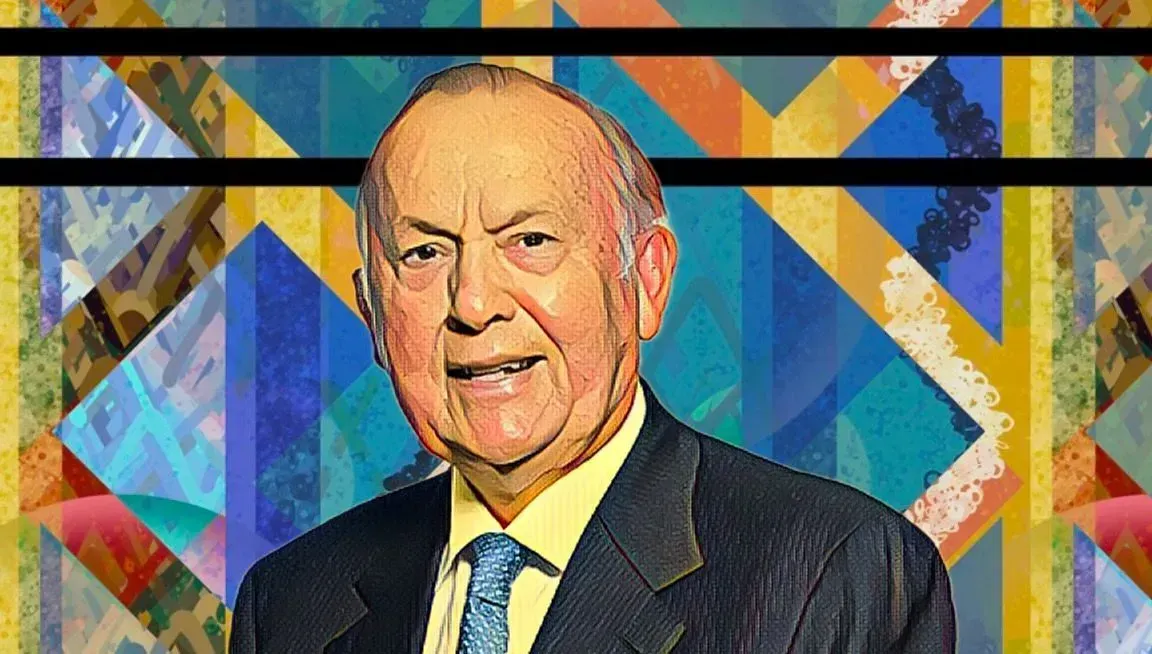
Christo Wiese has spent a decade being named as a member of the Stellenbosch Mafia. He told an audience of investors this week that the group holds no power over anything.
The South African billionaire addressed the label directly at the ninth BizNews Conference, arguing that the men accused of running South Africa's economy from a Western Cape wine town do not control a single market between them.
"What monopoly do we have individually or as a collective? I did economics at university and understood a monopoly to mean that you control the market," Wiese said.
"Where do I see that in South Africa? Nowhere. I mean, certainly not the Stellenbosch Mafia. I know most of those guys. They might be mafiosi, but they do not control anything."
The description attached itself in the 2010s to a group of ultra-wealthy, white, Afrikaans business leaders, among them Wiese, Johann Rupert, PSG founder Jannie Mouton, Naspers chairman Koos Bekker, former Shoprite chief executive Whitey Basson and the late Markus Jooste. Critics presented them as a barrier to economic reform and blamed them for the government's failure to improve living standards.
Rupert has dealt with the accusation by pointing out that he lives in Somerset West rather than Stellenbosch.
Wiese was equally dismissive of white monopoly capital, the phrase that runs alongside the mafia label and refers to historic white control of the South African economy. He said nobody has ever explained to him what it means.
"I don't know what it means. I know it is a political slogan, but what does it mean? Nobody has been able to explain it to me," he said. "Maybe I haven't asked the right people, but I have put the question out there, and anybody can come to me and explain what it means."
He offered a story about his own supposed influence over government. Wiese recalled being asked to advise President Jacob Zuma before one of his State of the Nation Addresses. The advice went nowhere. Other men associated with the group have described similar experiences, with government periodically seeking their counsel and then disregarding it.
The frustration has since become public. Members have grown increasingly vocal about South Africa's economic decline, and the same conference heard the businessman Rob Hersov argue that the country risks normalising crisis.
Stellenbosch acquired its reputation for reasons that predate any of them. The town hosts Stellenbosch University and gave rise to the Ruperts' Remgro, and it has long carried an outsized role in Afrikaner cultural and economic life. The assumption that this influence carried into democratic South Africa hardened into the mafia framing, which gained force when the term was deployed to attack the role of big business in politics.
The collapse of Steinhoff in December 2017 gave the label fresh weight, because it implicated two men on the list. Jooste ran the company and Wiese chaired it and was its largest shareholder. The share price fell more than 90 percent within days after the group disclosed accounting irregularities, wiping more than R200 billion off the Johannesburg Stock Exchange and cutting Wiese's fortune by more than half.
That episode also exposed what critics identified as the real problem with the town's business culture, which is insularity rather than conspiracy. Boards drawn from the same social circle offer weaker independent scrutiny than boards drawn from outside it.
Pieter du Toit reached much the same conclusion in his 2019 investigation, "The Stellenbosch Mafia: Inside the Billionaire's Club." He found no formal cartel bending policy toward its members' businesses or working to preserve Afrikaner control of the economy. What he found was a social network built on shared university years, mutual friendships and overlapping interests across a small group of listed companies. Several of them also fund the same causes, with Wiese and Rupert both closely involved in the Khaya Lam land reform project.
Wiese, 84, has rebuilt much of what Steinhoff cost him. His net worth fell from an estimated $5.6 billion in March 2017 to $1.1 billion on the 2018 Forbes list of Africa's billionaires, then off the ranking entirely. A settlement with Steinhoff in 2022 returned R3 billion in cash and a stake in Pepkor worth more than R4 billion, and Forbes now ranks him 16th among Africa's wealthiest people at $1.9 billion.
He holds about 11.5 percent of Shoprite, roughly 68 million shares, and stepped down as chairman in November 2020 after 29 years while remaining a non-executive director. He also holds positions in Brait, Invicta Holdings and Collins Property Group.
He studied law at Stellenbosch University, graduating in 1967, and shared the Wilgenhof residence with Basson.
The intelligence satisfies curiosity. The paid briefings satisfy strategy.
Every Monday, Elite subscribers receive an Investor Memo breaking down the deal, the structure and the positioning behind the week's most consequential African wealth story - the kind of analysis that doesn't appear anywhere else.
Twice a month, a Wealth Intelligence brief profiles a single billionaire's holdings, cash flows and expansion pipeline in detail no public source matches.
→ Executive ($25/mo): Daily newsletter + Deep-Dive Reports
→ Elite ($75/mo): Everything above + Investor Memos + Wealth Intelligence + Quarterly Analyst Briefings
Subscribe now