

Table of Contents
Optasia arrived on the Johannesburg Stock Exchange in November as the biggest new listing South Africa had seen in years. Nine months later it trades roughly 40 percent below its peak, and the fund managers who bought it at the offer have been getting out.
The fintech listed on Nov. 4 at R19 a share, the top of its guided range, raising R6.5 billion, about $400 million, and valuing the business at R23.5 billion, some $1.45 billion at R16.25 to the dollar. The offer was several times oversubscribed. The stock closed its first day at R19.38.
It reached R23.60 on Feb. 2 and has not been near that since. It bottomed at R13.37 on June 25, a fall of 43 percent from the high, and has recovered only modestly.
Three things went wrong.
Nigeria pulled the plug
The first was regulatory, and it hit the business rather than the sentiment.
Optasia told shareholders on April 15, and again on June 1, that airtime credit services in Nigeria had been temporarily suspended. Services resumed across all operators on June 24, with the underlying regulations themselves suspended pending the outcome of legal proceedings.
Nigeria is a core market for a company whose airtime credit solutions let subscribers borrow small amounts of talk time and data against their next top-up. A suspension in that market is not a headline risk. It stops revenue.
The founder took money off the table
The second was Bassim Haidar's exit, and its speed.
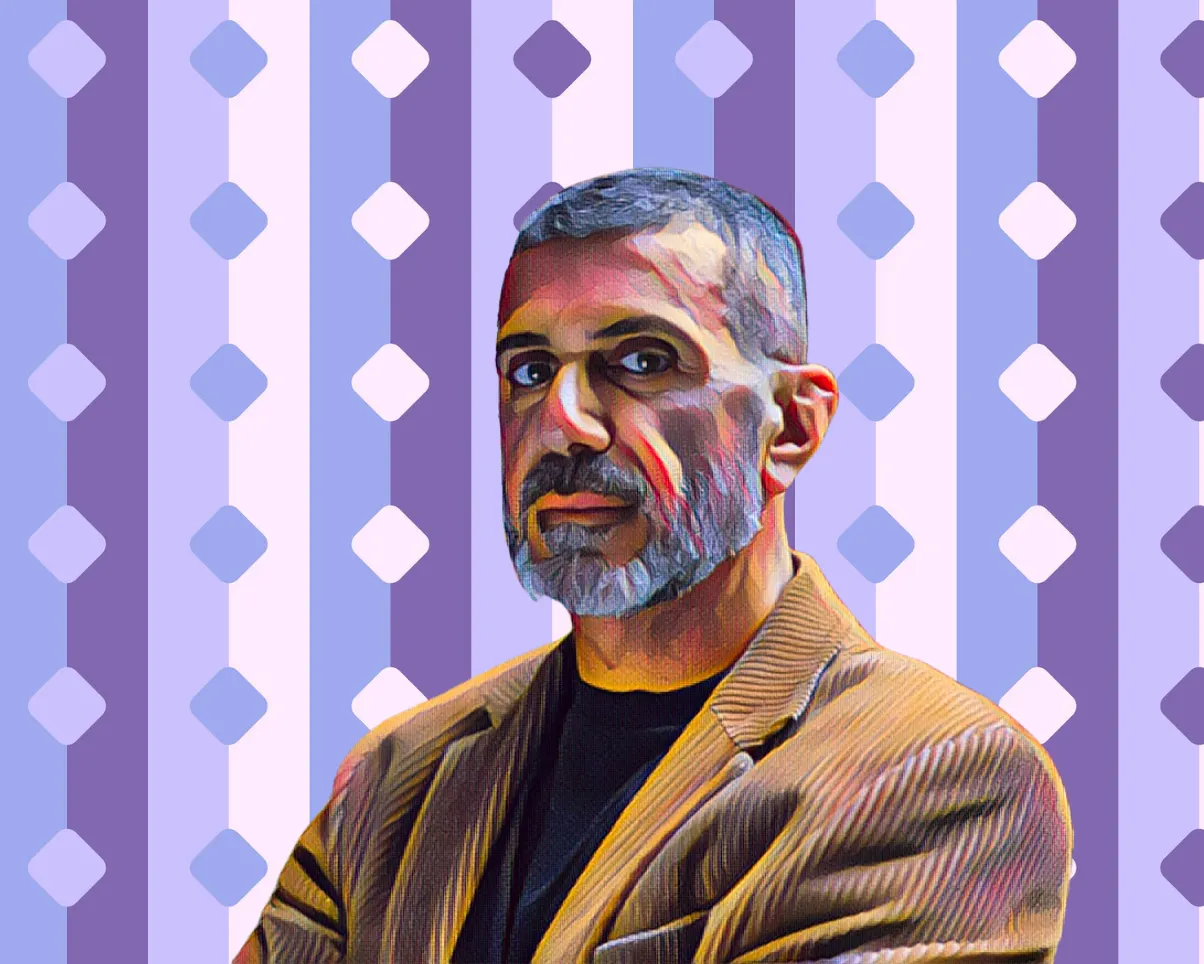
Haidar founded the company in 2012 as Channel VAS and held 19.3 percent going into the listing, split between a small direct holding and a larger indirect stake through Zoey Enterprises. On March 26, Zoey sold 74,103,711 shares, 6 percent of the company, to FirstRand at R20 apiece for R1.482 billion, then about $86.4 million. The joint bookrunners waived the lock-up to let the trade proceed, which made it a deliberate block placement rather than routine dealing.
FirstRand went the other way, lifting its holding from 20.1 percent to 26.1 percent. It had taken the initial 20.1 percent stake, worth about R4.7 billion, ahead of the listing.
The two moves said different things about the same company. One institution doubled down. The founder converted paper into cash.
Haidar remains a non-executive director, and Optasia said he would continue to support the company's strategic direction.
Investors stopped paying for the AI story
The third factor was the market's changing appetite for what Optasia was selling.
The company listed branded as an AI-led lender at the point when investors began demanding that AI narratives produce measurable numbers. Sentiment toward speculative technology stocks weakened globally over the same period.
South African fund managers were among the first out. Unit trusts sold a net 16.6 million Optasia shares between the end of December and the end of March, while the stock still traded between R18 and R20, according to ProfileData. The Ninety One Equity Fund disposed of its entire holding of about 3.5 million shares. Funds managed by 36ONE Asset Management, Bateleur Capital and Investec also sold millions, with several exiting their positions completely.
The bankers who ran the listing collected up to R416 million in fees.
What the company actually is
None of this is evidence that the business is failing.
Optasia reported revenue up 76 percent to $265.4 million for the year to December, exceeding the guidance it gave at the IPO. It operates in 38 countries and processes more than 34 million transactions a day, running a business-to-business-to-consumer platform that supplies credit decisioning and risk management to mobile operators, digital wallets and banks, which then extend microloans and airtime advances to their own customers across Africa, the Middle East and Asia.
The model is asset-light and scales well, which is what supported the valuation. It also means Optasia's revenue depends on partners and regulators it does not control, in markets where the rules on consumer credit and mobile money are still being written. Nigeria demonstrated exactly that.
The Financial Mail has drawn comparisons with Blue Financial Services, the pan-African lender that collapsed on the JSE, and with Tiger Brands' acquisition of Dangote Flour Mills, which ended in a writedown and a sale back at a fraction of the price. Neither is a close analogue. Both reflect an institutional memory of South African companies expanding into African consumer credit and finding the regulatory ground shifting under them.
Haidar, 54, was born in Nigeria to Lebanese parents and started his first company at 20. He co-founded Intercomm in 1991 and GMT in 1995, founded Channel IT in 2003 to service Nigerian telecoms, and launched Channel VAS in 2012. The company rebranded as Optasia in September 2022, taking the name of its artificial intelligence platform. Salvador Anglada runs it as chief executive from Dubai.
The listing has become a reference point regardless of what happens next. Any African fintech considering a public offering now has a live, continuously traded benchmark for what the market will pay, and it sits well below where Optasia started.
The intelligence satisfies curiosity. The paid briefings satisfy strategy.
Every Monday, Elite subscribers receive an Investor Memo breaking down the deal, the structure and the positioning behind the week's most consequential African wealth story - the kind of analysis that doesn't appear anywhere else.
Twice a month, a Wealth Intelligence brief profiles a single billionaire's holdings, cash flows and expansion pipeline in detail no public source matches.
→ Executive ($25/mo): Daily newsletter + Deep-Dive Reports
→ Elite ($75/mo): Everything above + Investor Memos + Wealth Intelligence + Quarterly Analyst Briefings
Subscribe now