

Table of Contents
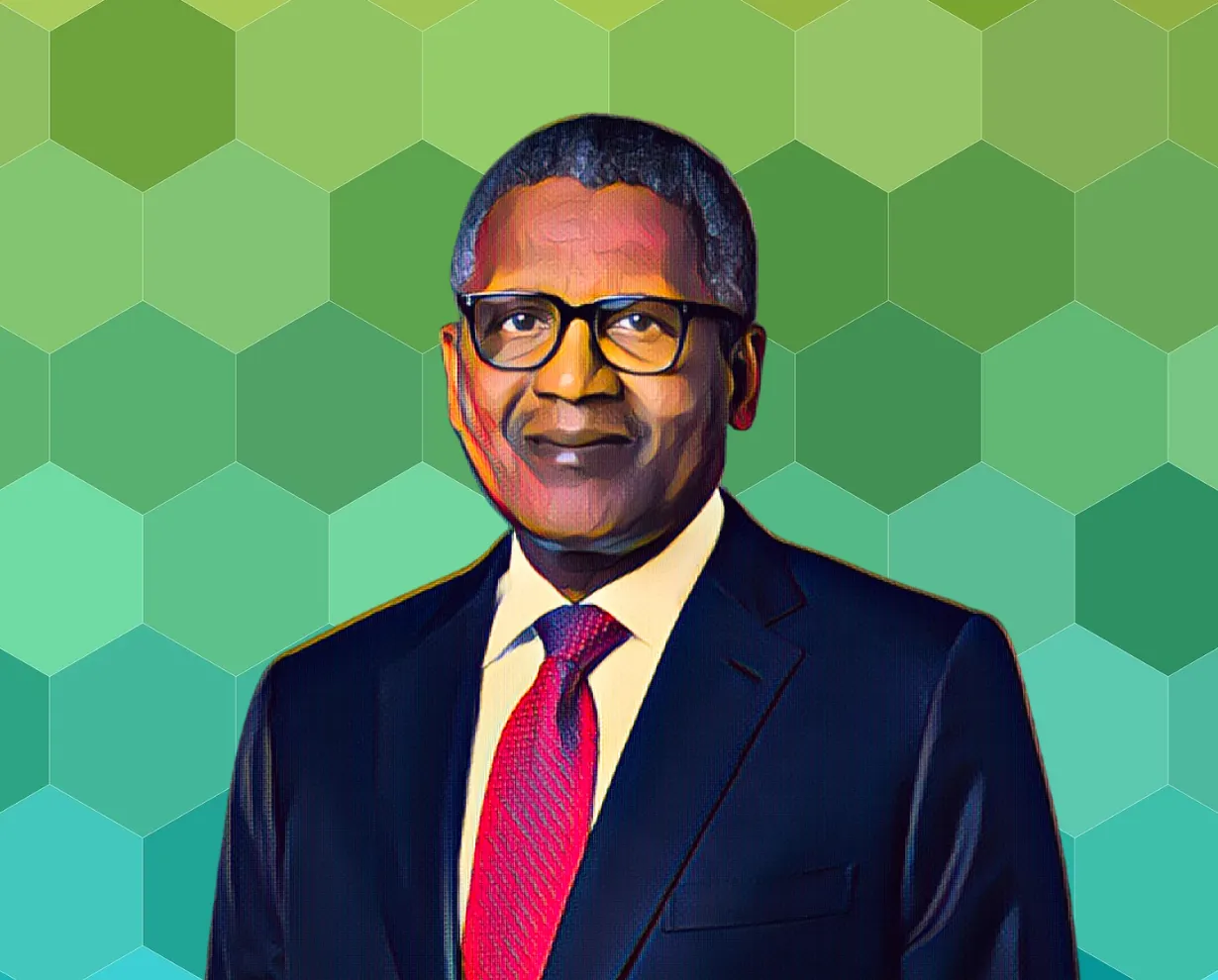
Aliko Dangote is more than $5 billion richer than he was in February, and the war in Iran is a large part of the reason.
His $20 billion refinery in Lagos reached full operating capacity weeks before the United States and Israel launched their attack on Feb. 28. Demand for its output has surged since, according to a New York Times report published Wednesday.
The refinery shipped jet fuel to the United States for the first time this year. Daniel Evans, a vice president at S&P Global Energy, said it was the world's single largest exporter of jet fuel during April and May. Devakumar Edwin, a vice president at Dangote Industries, said it was Europe's largest supplier of jet fuel and diesel last month.
"When the war broke out, traders and governments from all around the world, especially in Africa, started calling us for supplies," Edwin said. "The crude oil prices have gone up, but the product prices have increased a lot more."
The disruption that created that demand has been severe for everyone else. Iran's closure of the Strait of Hormuz cut off a route that normally carries up to a fifth of global oil supply, while Ukrainian strikes on Russian refineries and tankers choked the flow of Russian products into Africa. Prices for food, fertiliser and fuel have climbed across the continent, deepening poverty among its most vulnerable populations.
Africa was exposed because it exports crude and imports fuel. Nearly two dozen African countries produce oil, and the vast majority of the continent's roughly nine million barrels a day leaves for refining elsewhere. Most domestic refineries, the majority state-owned, sit dormant. Nigeria has spent several billion dollars in recent years rehabilitating its three state-run plants and none is currently operating.
East Africa took more than 65 percent of its refined products from the Middle East last year. By April, close to a third of Kenya's petrol stations had run dry, according to Matthew Tracey-Cook, a senior analyst at Platts.
"When the Iran war broke out, the Dangote Refinery was a lifeline to buyers who previously depended on the Persian Gulf for oil products," Tracey-Cook said.
The refinery began exporting to Mediterranean and European markets once Iran choked off European jet fuel supply, he said, and has become a key supplier of diesel and jet fuel to South Africa, a country with close ties to Iran that has historically depended on the Middle East.
Togo has benefited alongside Nigeria. Tankers loading at Lagos sail along the West African coast to the Port of Lomé, the region's only deepwater port, where cargo transfers to smaller vessels for delivery across the continent. The Mediterranean Shipping Company put hundreds of millions of dollars into building the facility a few years ago.
"The Lomé port is one of the biggest winners from the impact of the disruptions at the Strait of Hormuz," said the analyst Cham Etienne Bama, who described flying into Lomé recently and seeing the anchorage crowded with vessels.
At home the picture is different. Nigerians expected the refinery to end their dependence on imported fuel and bring prices down. Prices have risen.
Deji Adeyanju, a human rights lawyer who describes himself as one of the few Nigerians willing to criticise Dangote publicly, said the businessman holds undue influence over government and benefits from favourable treatment. Dangote has long been accused at home of operating as a monopolist, and the criticism has sharpened since the refinery opened fully.
Dangote has made accusations of his own, saying the government has restricted the flow of crude oil to keep regulators in control of Nigeria's oil business. Regulators deny it.
The money is going back into expansion. Dangote Refinery said on Tuesday it had secured $1 billion from a Dubai-based investment group to support a listing on the Nigerian Exchange, which would be the largest public offering in African history. Edwin said the company is seeking to double refining capacity.
President William Ruto confirmed an agreement this month for a $17 billion refinery in Kenya, and Edwin said the company plans a pipeline crossing 11 African countries.
"We will supply Africa," he said.
Dangote, 69, built his fortune manufacturing salt, sugar and cement in Nigeria. The refinery is now the engine of it.
The intelligence satisfies curiosity. The paid briefings satisfy strategy.
Every Monday, Elite subscribers receive an Investor Memo breaking down the deal, the structure and the positioning behind the week's most consequential African wealth story - the kind of analysis that doesn't appear anywhere else.
Twice a month, a Wealth Intelligence brief profiles a single billionaire's holdings, cash flows and expansion pipeline in detail no public source matches.
→ Executive ($25/mo): Daily newsletter + Deep-Dive Reports
→ Elite ($75/mo): Everything above + Investor Memos + Wealth Intelligence + Quarterly Analyst Briefings
Subscribe now