


Table of Contents
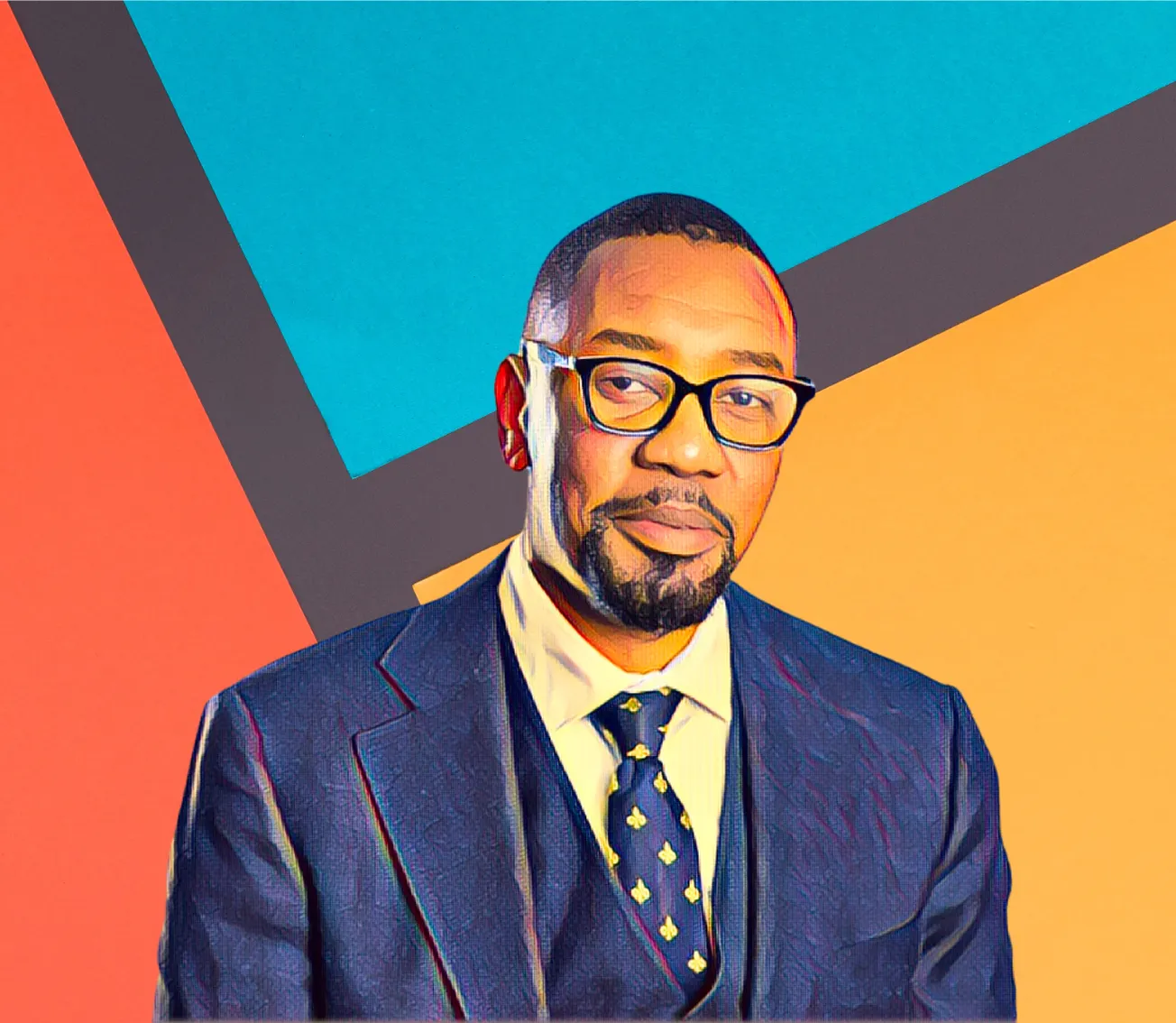
Three weeks into his articles at a Windhoek law firm in the early 1990s, Quinton van Rooyen looked at the piles of red case files stacked on his desk and made a decision. He had just completed a B Juris in 1989 and an LLB in 1992 and arrived at the law firm with every credential the profession required. What he could not tolerate was the work itself. "Piles and piles of red case files every morning, I just couldn't take it," he later told Leader magazine. His saving grace arrived in the form of a small property development company called Trustco, which happened to be negotiating with him to buy a piece of land he owned. Rather than sell the land, he bought the entire equity of the company for N$100, loaded himself and his ambitions into a Nissan 1400 bakkie, and drove away from the law files toward a commercial career that would make him one of the most watched, most contested and most combative businessmen in Namibian history.
The N$100 purchase price is the most cited detail in the Quinton van Rooyen biographical record, and it earns its prominence because everything that followed from it, the triple listing, the insurance and banking subsidiaries, the diamond mining venture in Sierra Leone, the $50 million US fund investment, the regulatory wars, the JSE censures, the hostile takeover attempt, the $281 million Veldbridge offer, demonstrates that the ability to see what a small, overlooked company could become and the willingness to stake your entire professional life on that vision is not a skill that law school teaches. Van Rooyen was born in KwaZulu-Natal in 1965 and grew up in Namibia in a working-class household. His father Jack was first a clerk in the railways and later a karate instructor. His mother Marie was a clerk of the High Court in Windhoek and later a fitness instructor. The household was disciplined, practical and not wealthy. What it produced was a man who describes his biggest ambition as the urge to improve the lives of Namibians through business, and who has pursued that ambition with a ferocity that has made him as many institutional enemies as personal admirers.
He holds an honorary Doctorate in Business Leadership and Entrepreneurship from the International University of Management, awarded in 2012, and was inducted into the Namibian Business Hall of Fame in 2014. He is a father of two and has described himself as a lion who does not lose sleep over the opinions of sheep, a self-assessment that has been tested more thoroughly than most business leaders ever face.
The N$100 company that became a triple-listed group
Trustco Group Holdings was founded in 1992 when Van Rooyen purchased the entire equity of a small property development company for N$100. The commercial logic he applied from the beginning was the same logic he would apply across every subsequent expansion: find the gap between what Namibia's population needed and what the existing financial services market was supplying, build the product to close that gap, and price it for the market that actually exists rather than the market that institutional providers preferred to serve. In Namibia of the early 1990s, that market was the majority of the country's population, recently independent, largely unbanked, and entirely underserved by the financial products available to them.
Trustco's model, as it evolved across the 1990s and 2000s, combined insurance, finance, banking, real estate and education into a single integrated offering specifically designed for low and middle income Namibians, a market that South African financial institutions present in Namibia had not prioritized and that the post-independence Namibian state had not yet found the private sector partners to serve. The insurance products were accessible at price points the market could afford. The real estate division developed land and sold properties through financing structures that made homeownership available to buyers who would not have qualified for conventional mortgage products. The education division through the Institute for Open Learning extended access to tertiary education to working adults across Namibia's dispersed population.
Trustco listed on the Johannesburg Stock Exchange in 2009, making it one of the very few Namibian companies to achieve a South African primary listing and the first significant Namibian financial services group to access JSE capital. Van Rooyen holds a 63.94 percent stake in the company, totaling 1,004,000,060 ordinary shares, making the family the dominant controlling shareholder across all three exchanges where the stock has traded: the JSE, the Namibia Stock Exchange and the OTCQX market in the United States. At its peak, Trustco's share price on the JSE reached R16 in January 2019, implying a market capitalization that would have placed Van Rooyen's stake at a substantial multiple of its current value.
The regulatory wars and the bank that was never allowed to grow
The most bruising chapter of the Trustco story is the extended conflict with the Bank of Namibia over Trustco Bank Namibia, a battle that Van Rooyen has described as the single most consequential obstacle to the group's development and that the central bank has characterised as legitimate regulatory enforcement.
In September 2022, Trustco Group and its subsidiary Trustco Bank Namibia petitioned the Windhoek High Court for a review of key Bank of Namibia directives, questioning their constitutionality. The group alleged that the central bank had applied its regulatory authority in ways that prevented Trustco Bank from operating competitively, limiting its ability to grow its deposit base and extend credit to the market segments it had been built to serve. Van Rooyen argued publicly that the Bank of Namibia's actions represented a denial of approximately NAD1 billion ($54.5 million) in investment into Namibian banking, effectively keeping a Namibian-founded bank from competing on equal terms with the South African-owned institutions that dominated the country's banking sector. The High Court case was ultimately unsuccessful, and Trustco Bank's ambitions were further constrained by the Bank of Namibia's ongoing supervisory posture. In March 2025, the final transfer of 20 percent of remaining unclaimed deposits of Trustco Bank to the Guardian Fund was completed, marking the effective wind-down of the banking ambition that had been one of the group's most contested strategic priorities.
In October 2025, Trustco was censured by the JSE, its third formal censure by the exchange, this time related to the sale of a chunk of its shareholding in Sierra Leone-based diamond venture Meya Mining without shareholder consent, an action the JSE described as unacceptable conduct. Trustco responded by characterizing the JSE's posture as prioritizing regulatory obstruction over shareholder interests. The group has failed to produce audited financial statements since February 2024, with its shares suspended on the JSE pending the publication of overdue annual accounts. The combination of the banking setback, the JSE censures, the suspended shares and the unproduced accounts represents the most challenging institutional position in the group's 33-year history.
The Riskowitz battle and the $281 million offer
The most dramatic recent development in the Trustco story is a fight for control of the group that pits Van Rooyen against the American hedge fund that arrived as a strategic partner and has since moved to remove his board.
In April 2024, Trustco secured an investment partnership with Riskowitz Value Fund LP, a US fund managed by Riskowitz Capital Management, for up to $100 million in investment capital. The initial tranche, a $50 million equity investment in exchange for new shares, was presented as a landmark strategic partnership that would fund Trustco's US listing ambitions and provide the capital for growth across its financial services and resources divisions. The new shares were allocated to Riskowitz Value Fund in January 2025, marking the first tranche of the acquisition. By mid-2025, Riskowitz had accumulated approximately 45 percent of Trustco's shares and had proposed a clean-out of the board, triggering a governance conflict that Van Rooyen and the founding family have resisted at every turn.
In December 2025, Trustco declared Riskowitz Value Fund's hostile takeover attempt dead on arrival. In August 2025, simultaneously with the Riskowitz conflict, Trustco's founding family received a private takeover offer from VeldBridge Holdings, a Cayman Islands investment firm, targeting the entire stake held by Van Rooyen as well as family-held debt claims totaling NAD5.05 billion ($281 million) against various Trustco entities, with up to $250 million in fresh debt financing offered at interest rates capped at 6.5 percent per year. The VeldBridge proposal required Trustco to withdraw its NASDAQ application, paving the way for VeldBridge to pursue its own US listing. Van Rooyen's deputy CEO, Quinton Z van Rooyen, described the offer as an exciting opportunity. No deal has been confirmed as of the most recent available reporting.
In March 2025, Trustco's founding family acquired NAD297 million ($16 million) of the group's long-term foreign debt, a move designed to consolidate the family's position as the dominant creditor of the group alongside their controlling equity stake, reducing the leverage available to external parties seeking to force a change of control. A Namibian court separately upheld a NAD305.5 million ($16.7 million) tax recovery against Trustco, adding to the financial pressures the group is simultaneously managing.
The vision that has never changed
The institutional pressures of 2024 and 2025, the JSE censures, the suspended shares, the hostile takeover attempt, the overdue accounts, sit in stark contrast to the commercial vision that Van Rooyen articulated when he bought Trustco for N$100 in 1992. That vision, building financial services infrastructure for the majority of Namibia's population rather than for the minority that existing institutions preferred to serve, has never been publicly abandoned even as the instruments through which he pursued it have attracted escalating regulatory and investor scrutiny.
Van Rooyen's net worth as tracked against his listed stake has fluctuated significantly with Trustco's share price, reaching a confirmed value of NAD548 million ($30.3 million) at one recent measurement point, though the current value of his stake reflects the suspended share price and the group's unresolved financial reporting position rather than a current market clearing price. The $281 million Veldbridge offer, if accepted and completed, would represent by far the largest liquidity event of his career and would crystallize the value of 33 years of building from the N$100 starting point. He has not accepted it. Van Rooyen's stated ambition remains a NASDAQ listing for Trustco, a milestone that would take the company founded in Windhoek on a hundred Namibian dollars to the largest equity market in the world. Whether the institutional conflicts currently surrounding the group will allow that journey to complete is the question that defines his current moment.
He described his philosophy once in terms that have turned out to be a reasonable prediction of his own career. Lions don't lose sleep over the opinions of sheep. The sheep have been numerous. The lion is still awake.
The intelligence satisfies curiosity. The paid briefings satisfy strategy.
Every Monday, Elite subscribers receive an Investor Memo breaking down the deal, the structure and the positioning behind the week's most consequential African wealth story - the kind of analysis that doesn't appear anywhere else.
Twice a month, a Wealth Intelligence brief profiles a single billionaire's holdings, cash flows and expansion pipeline in detail no public source matches.
→ Executive ($25/mo): Daily newsletter + Deep-Dive Reports
→ Elite ($75/mo): Everything above + Investor Memos + Wealth Intelligence + Quarterly Analyst Briefings
Subscribe now