

Table of Contents
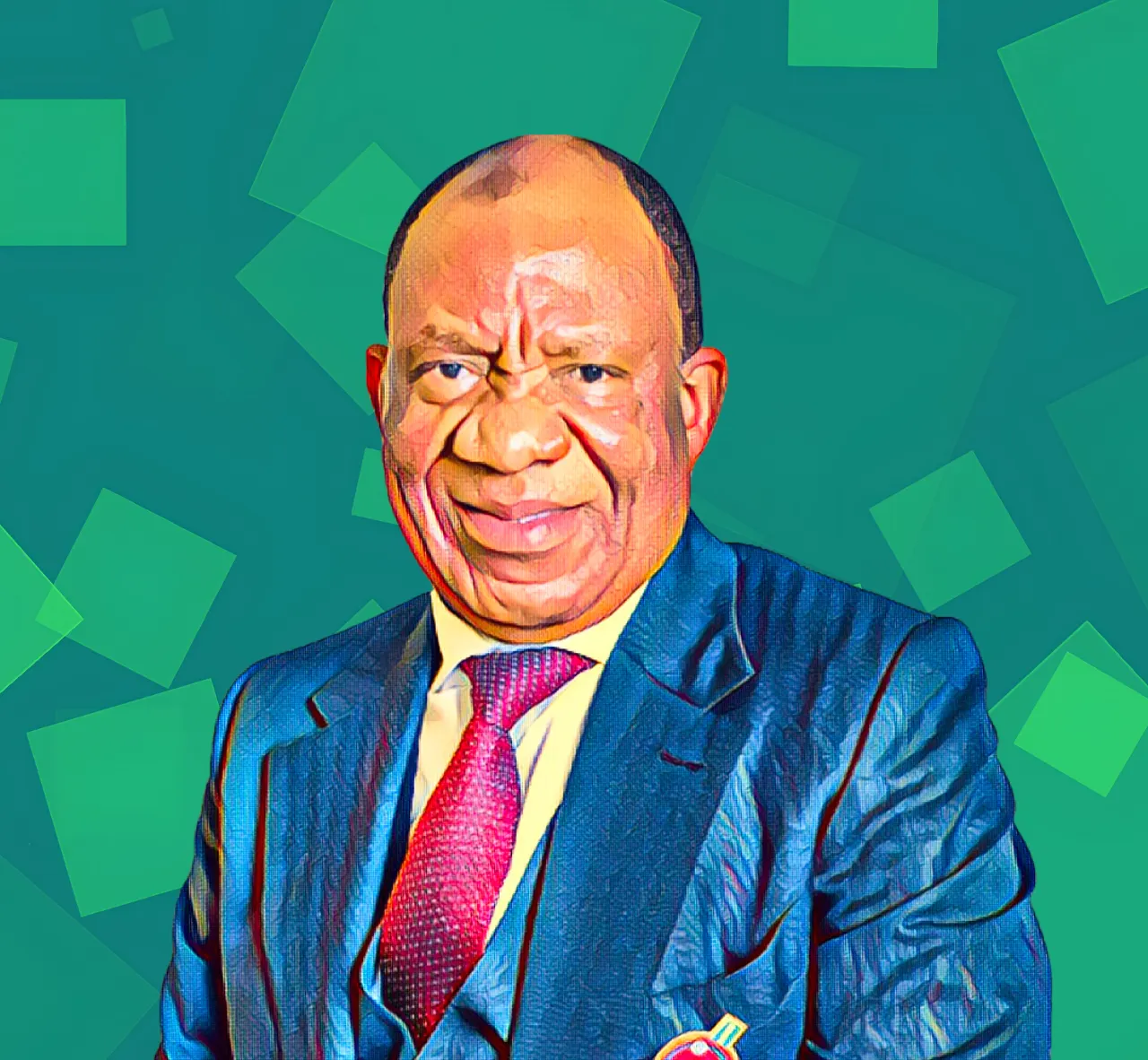
George Onafowokan runs the largest cable manufacturer in West Africa and has spent more than $20 million building his own power stations because Nigeria's grid cannot supply his factories. He now expects the central bank to start cutting interest rates within its next two meetings.
Onafowokan is managing director and chief executive of Coleman Technical Industries, the company his father founded in 1975. He said the Central Bank of Nigeria was right to hold its Monetary Policy Rate at 26.5%, calling it an appropriate balance between controlling inflation and preserving stability, but that the rate is unlikely to stay there much longer. Any easing would come gradually, he said, in cuts of a quarter or half a percentage point at a time, and depends on foreign exchange and liquidity conditions continuing to stabilise.
The prediction carries weight because of what the current rate costs a manufacturer of Coleman's size.
Onafowokan singled out the Bank of Industry, the state-owned development finance institution, for raising its lending rates. Development banks should provide patient long-term capital rather than pricing like commercial lenders, he argued, suggesting facilities of seven to eight years would give manufacturers room to expand production and hire.
Energy is the other constraint, and Coleman has solved it privately at considerable expense. The company has invested more than $20 million in gas-powered electricity generation to keep its plants running. Onafowokan wants industrial gas priced at about $3.50 per thousand standard cubic feet, well below what manufacturers currently pay, arguing that cheaper gas would cut production costs and improve Nigeria's export competitiveness.
He also called for stronger fiscal policy alongside monetary measures, more support for manufacturing, agriculture and trade, and greater attention to domestic direct investment rather than foreign and portfolio flows. Domestic investment, he said, demonstrates that Nigerian businesses are expanding.
The company he is describing has expanded a great deal.
Coleman started in a 200-square-metre factory in Idimu, Lagos, which was later extended to 2,000 square metres before further growth became impossible. It moved to Arepo in 2009 into a 20,000-square-metre plant, doubled that to 40,000, and commissioned its first Sagamu factory in 2014. The Sagamu site now covers more than 350,000 square metres, and the two locations together provide over 400,000 square metres of manufacturing space.
What it makes has widened with the footprint. Coleman produces low, medium and high voltage cables, fibre optics for broadband, aluminium conductors for power transmission and armoured cables for oil, gas and industrial use. Its Sagamu complex houses a smelting operation capable of processing 3,000 tonnes of aluminium and 10,000 tonnes of copper a month, which reduces its dependence on imported inputs and its exposure to currency swings.
The largest recent investment is in fibre. Coleman commissioned a fibre optic cable factory at Sagamu in late 2025, which it describes as the largest of its kind in Africa and the continent's first fibre-reinforced plastic production plant. President Bola Tinubu commissioned it. Sagamu and Arepo together now carry combined fibre capacity of 12 million kilometres a year, which Onafowokan has said is enough to serve the entire sub-Saharan African market.
The next commitment is a $100 million fibre optic cable drawing tower. Coleman also wants the Sagamu site designated a free trade zone, a status that would bring tax and customs concessions, and projects that it could generate over 1 trillion naira in export revenue while creating more than 20,000 direct and 200,000 indirect jobs, with at least 30% female participation.
Onafowokan has been explicit that the capacity is barely being used. He told reporters last year that Coleman was running one shift and using roughly 10% of its installed capacity, and that with the right support the company could supply half the countries in Africa within a few years, taking direct employment above 6,000 and indirect employment beyond 80,000.
His argument on local content is the same one he makes about rates. Cable accounts for 10% to 15% of the cost of any infrastructure project, he has said, and Nigeria should not be importing it.
Coleman raised debt earlier this year to fund the expansion, targeting up to 50 billion naira, about $37 million, months after the fibre plant opened.
His father, Asiwaju Solomon Kayode Onafowokan, remains chairman of the company he started fifty years ago.
The intelligence satisfies curiosity. The paid briefings satisfy strategy.
Every Monday, Elite subscribers receive an Investor Memo breaking down the deal, the structure and the positioning behind the week's most consequential African wealth story — the kind of analysis that doesn't appear anywhere else.
Twice a month, a Wealth Intelligence brief profiles a single billionaire's holdings, cash flows and expansion pipeline in detail no public source matches.
→ Executive ($25/mo): Daily newsletter + Deep-Dive Reports
→ Elite ($75/mo): Everything above + Investor Memos + Wealth Intelligence + Quarterly Analyst Briefings
Subscribe now