

Table of Contents
Shoprite sold more groceries by charging less for them. The retailer built by Christo Wiese added 18.1 billion rand to its sales in the year to June 28, about $1.12 billion at 16.13 rand to the dollar, while running outright price deflation at its two cheapest chains.
Group merchandise sales from continuing operations rose 7.2% to 270.8 billion rand, around $16.8 billion. Diluted headline earnings per share climbed 12.2% to 1,527.4 cents, and the full-year dividend rose 11.8% to 873 cents.
The pricing is what makes the result unusual. Internal selling price inflation across Shoprite's South African supermarkets ran at 0.8%, well below the 3.9% official rate for food and non-alcoholic beverages recorded by Statistics South Africa. At Shoprite and Usave, the group's two price-fighting brands aimed at lower-income shoppers, prices actually fell, by 0.1% and 0.6% respectively.
Chief executive Pieter Engelbrecht opened his statement by saying that execution is a team sport, requiring alignment, accountability and commitment across the business, and thanked the group's more than 174,000 employees.
The two halves of the business behaved differently. Shoprite and Usave grew sales 4.3% while cutting prices. Checkers and Checkers Hyper, which serve wealthier customers, grew 10.0% with price inflation of 2.0% and 1.2%. The supermarkets division as a whole added 15.2 billion rand and now accounts for 84.5% of group sales.
Sixty60, the on-demand delivery service Shoprite launched in 2019, added a record 6.6 billion rand in revenue, growing 34.5% to 25.5 billion rand, about $1.58 billion.
The group opened a net 232 stores and created 5,491 direct new jobs.
Petshop Science, the pet retail chain Shoprite started in 2021, opened a net 41 stores to reach 185 and grew sales 74.5% after being added to the Sixty60 platform.
Two acquisitions signal where the company is heading, and Engelbrecht framed both as a shift away from building everything in-house toward buying capability where speed or expertise justifies it.
The first is R&A Cellular, a South African technology and payments company whose device network lets informal and semi-formal micro-retailers act as financial services access points in their communities. Shoprite took an initial majority shareholding in August, after the year end. The plan is to expand the installed device base nationally across informal retailers and embed Shoprite's own financial products in the network, taking the group into a part of the economy formal retail has never reached.
The second is Vida e Caffè, the coffee chain with 25 years of trading and roughly 400 corporate and franchise stores across high street, forecourt, drive-thru, office and retail locations. Shoprite signed the share purchase agreement in August. Completion depends on conditions including regulatory approval and is expected during the 2027 financial year.
Neither transaction was large enough to require categorisation under the Johannesburg exchange's listing rules.
Outside South Africa, sales grew 11.0%, or 7.1% in constant currency, which strips out exchange rate movement. Profitability improved substantially, helped by a sharp fall in the diesel Shoprite burns generating its own electricity in Zambia. The group now operates in seven African countries, all relatively close to South Africa.
Nigeria is no longer among them. Shoprite's remaining Nigerian operations are classified as discontinued, which forced a restatement of the prior year and is why the 2025 comparison figures have changed.
Employees share in the result. The 11.8% dividend increase applies equally to the distribution paid to qualifying staff through the group's Shoprite Employee Trust and to its African operations. Customers received 18.3 billion rand in Xtra Savings cash back at the till during the year, about $1.13 billion.
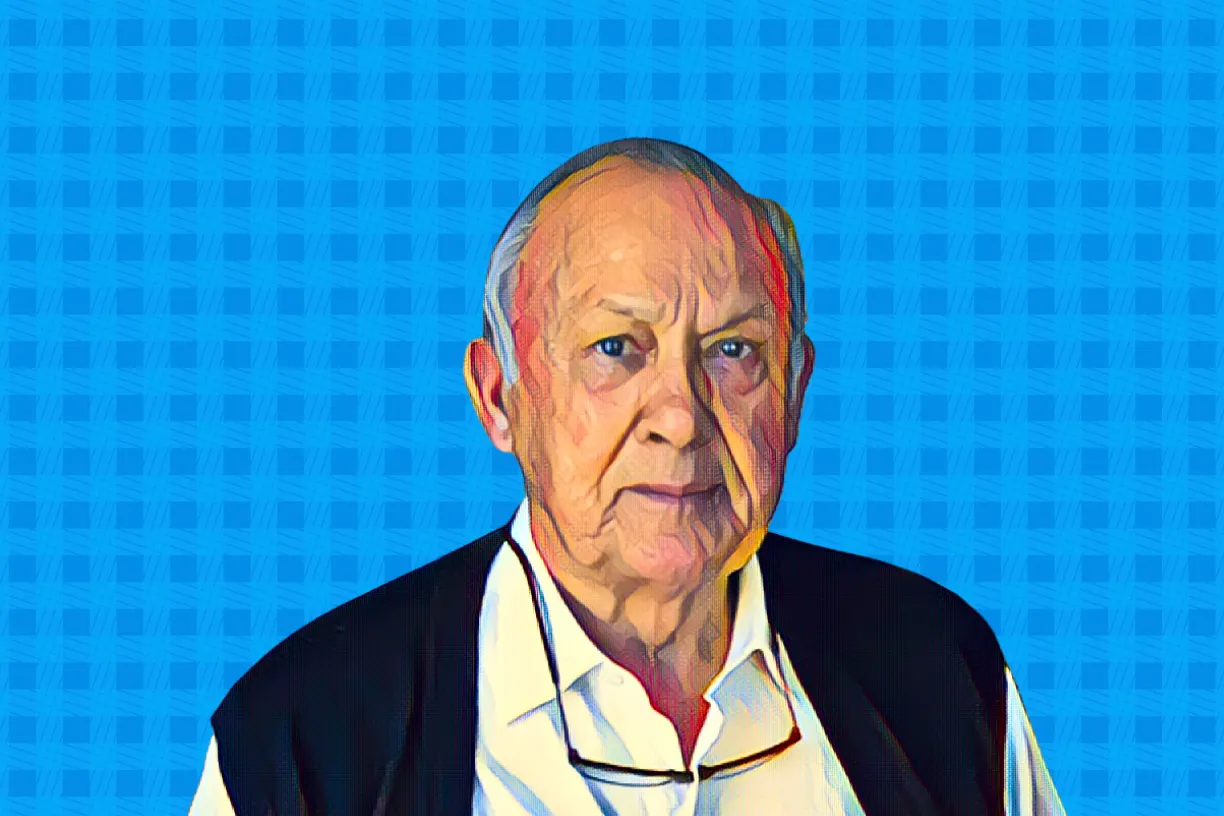
Wiese built the business from a small chain his family invested in during the 1960s. Pep Stores bought Shoprite in 1979 for a modest sum, and Wiese, with Whitey Basson running operations, turned it into the largest supermarket group on the continent. He remains its best-known shareholder.
The intelligence satisfies curiosity. The paid briefings satisfy strategy.
Every Monday, Elite subscribers receive an Investor Memo breaking down the deal, the structure and the positioning behind the week's most consequential African wealth story - the kind of analysis that doesn't appear anywhere else.
Twice a month, a Wealth Intelligence brief profiles a single billionaire's holdings, cash flows and expansion pipeline in detail no public source matches.
→ Executive ($25/mo): Daily newsletter + Deep-Dive Reports
→ Elite ($75/mo): Everything above + Investor Memos + Wealth Intelligence + Quarterly Analyst Briefings
Subscribe now