


Table of Contents
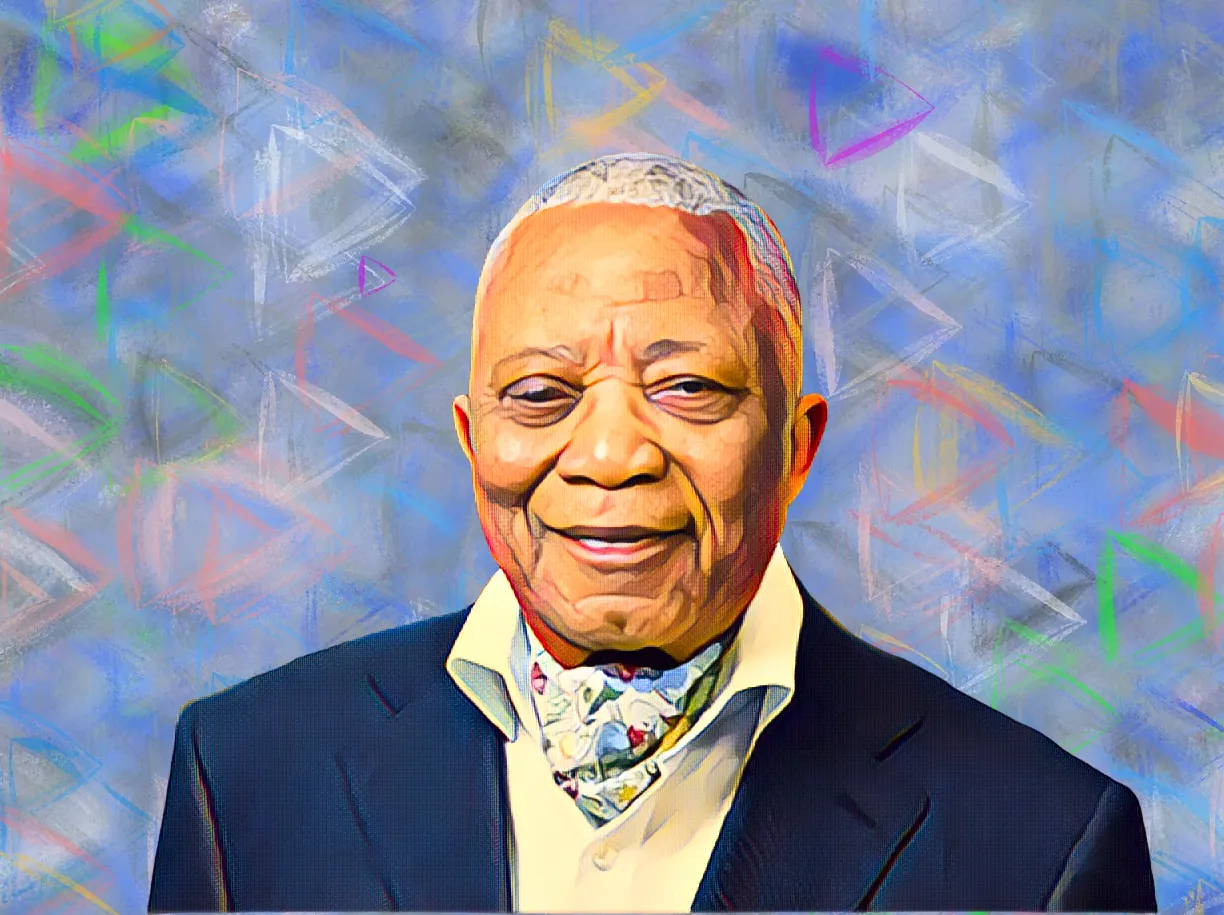
A Gambian media company is publishing a children's book about Muhammed Jah, the businessman who built the country's largest private conglomerate, and intends to distribute 10,000 copies to children across all seven of The Gambia's administrative regions.
The book is titled The Story of Muhammed Jah: From Little Ideas, Big Things Grow. It is an illustrated narrative aimed at young readers, covering his early experiences and his route into business, and it deals with perseverance, creativity, innovation, leadership, ambition and self-belief.
Fye Network is producing it in partnership with Q Group, the company Jah founded. FyeN is a women-led creative media business started by the sisters YaAdam and Anna Fye, which produces books, animation and educational media for children and families. Its studio arm develops original intellectual property about African culture and history, including the animated series Bakary on Safari.
The distribution runs under something called the Q Read Initiative, and the two companies are asking businesses, foundations, schools and individuals to sponsor copies for schools, libraries and communities.
What the book covers is a business that started with a loan from an uncle.
Jah has told the story often. In the late 1990s a friend mentioned he was going to the airport to collect a European consultant flying in to teach his department how to use WordPerfect, a word processing programme. Jah's reaction was that a consultant should not need to travel from Europe to show Gambians how to type a letter, and he decided to start teaching computing himself.
He had studied Islamic studies at undergraduate level in Saudi Arabia before taking a postgraduate qualification in electronics and communications engineering at the University of Sierra Leone. He started the training centre with about $16,000, put together from money saved on his student stipend in Saudi Arabia and a loan from an uncle. He sometimes taught for free, on the calculation that those students would bring paying ones.
He was the first person in his family to go into business. He has said that when he told his father about the plan, his father talked to him about values, honesty, discipline and hard work rather than about profit or strategy.
QuantumNET followed in 1998, with four employees. It was The Gambia's first private internet service provider and it competed directly with GAMTEL, the state-owned incumbent. The company grew to more than 300 IT staff and became the distributor in the country for Dell, IBM, HP and Nokia, while the training centre became the QuantumNET Institute of Technology in 2006, offering courses up to a diploma in computing science and business management delivered with the University of The Gambia and Saint Mary's University in Halifax, Canada.
Jah told the BBC in 2012 that he valued the group at around $156 million.
The move that changed its scale came in 2009. QCell launched as The Gambia's first 3G mobile operator, in a market Jah has described as being dominated almost entirely by foreign-owned companies at the time. He has called it the group's quantum leap, and said the company did not ask for space but created it.
The businesses multiplied from there. Q Group now spans QCell and QuantumNet in telecommunications, QTV and QRadio in broadcasting, QMoney in mobile payments, AGIB Bank in Islamic finance, Espace Motors in vehicle distribution, and QCity in property, alongside Samsung Gambia and the cosmetics business Naturelle. Its interests cover construction, logistics, real estate and consumer electronics, and it has expanded into West Africa, Britain and the United States. It is among the largest private employers in the country.
President Adama Barrow inaugurated QGroup House in May and unveiled what the group describes as The Gambia's first data centre.
The Chamber of Commerce has named Jah business person of the year three times, more than anyone else in the country.
Not everyone reads the story the same way the book does. A critical assessment published this year argued that Jah's rise follows a pattern common in frontier economies, in which a businessman enters a strategic sector with high barriers to entry and heavy regulatory dependence, secures first-mover advantage, and compounds it. QCell's acquisition of the first 3G licence in 2009 gave it spectrum priority and long-term customer entrenchment in a market where infrastructure scale builds on itself.
The same piece described him as a figure whose admirers see a patriotic entrepreneur risen from humble beginnings, and whose critics see a politically connected class that has prospered through proximity to successive governments, from Yahya Jammeh's to Barrow's.
Jah is married to Neneh Secka and they have three children. His brother is the doctor Abubacarr Jah.
The intelligence satisfies curiosity. The paid briefings satisfy strategy.
Every Monday, Elite subscribers receive an Investor Memo breaking down the deal, the structure and the positioning behind the week's most consequential African wealth story — the kind of analysis that doesn't appear anywhere else.
Twice a month, a Wealth Intelligence brief profiles a single billionaire's holdings, cash flows and expansion pipeline in detail no public source matches.
→ Executive ($25/mo): Daily newsletter + Deep-Dive Reports
→ Elite ($75/mo): Everything above + Investor Memos + Wealth Intelligence + Quarterly Analyst Briefings
Subscribe now