


Table of Contents
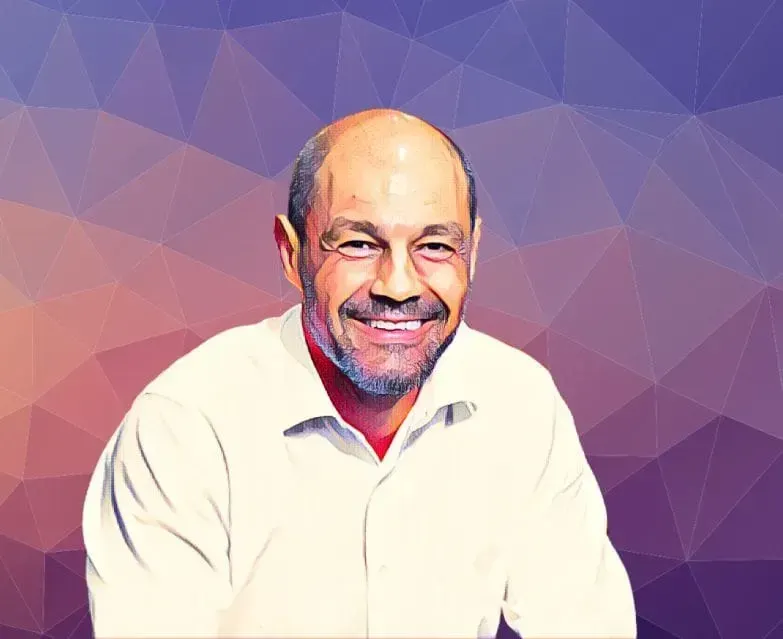
Michiel le Roux has given the Democratic Alliance more than R208 million ($13 million) over the past five years, more than any other individual donor to any South African political party.
The Capitec founder's donations appear in the Electoral Commission's Political Party Funding reports, which the commission publishes every quarter. The money moved through three vehicles he controls. Fynbos Ekwiteit gave R110.1 million, Fynbos Kapitaal R98 million and Fynbos Trust R271,000, according to figures compiled by The Outlier, the data journalism publication founded by Alastair Otter and Laura Grant.
The total comes to about $13.03 million at 15.97 rand to the dollar, according to Billionaires.Africa calculations.
It represents a substantial share of what the DA has declared. South African parties have disclosed at least R1.14 billion, some $71.4 million, in donations since 2021, of which the DA accounts for R523 million, or $32.7 million, making it the most active party in declaring what it receives. Le Roux alone has supplied close to two-fifths of that.
Otter was careful about what the numbers show.
"The 'at least' is there because those are the donations declared to the Electoral Commission of South Africa," he said. "What we don't know is how many other donations have been made and not declared to the Electoral Commission of South Africa."
The disclosures exist because of legislation that took effect on April 1, 2021. The Political Party Funding Act requires parties, independent candidates and independent representatives to declare every private donation above R200,000 in a financial year, counted cumulatively, so that several smaller payments from the same source that together cross the threshold must also be reported. Donors are separately obliged to report their own contributions within 30 days.
The Act caps a single donor at R30 million, about $1.88 million, to any one party in a financial year. It bans donations from foreign governments, foreign state agencies and foreign persons or entities, and from South African government departments, municipalities and state companies including Eskom and Transnet.
Le Roux made the money that funds this in banking, and started late. He was 51 when he founded Capitec in March 2001, having joined the PSG founders Jannie Mouton and Chris Otto in the late nineties to convert an existing microloans business into a bank. He served as chief executive from 2001 to 2004 and later as chairman.
He has said he did not expect what followed. He told shareholders at the outset that the bank would be either a big success or a small failure.
"But not in my wildest dreams did I think that the success would be as big as it actually turned out to be," he said.
Capitec has since become the largest South African bank by customer numbers, and Le Roux's shareholding made him one of the small number of South African dollar billionaires. His giving runs beyond politics into education, democracy-building and political reform.
Chris Otto, who helped him build it, has recently put family money into telecommunications. Wimsey Capital, the Otto family's investment vehicle, backed Comsol's new wholesale 5G network alongside the Dimension Data co-founder Richard Came in a multi-billion-rand round disclosed last month.
The scale of Le Roux's political funding places him in a small group of individuals whose money shapes what South African parties can spend. Political donations of this size are unusual in a country where most parties rely on state funding allocated according to representation in the legislature, and the DA's disclosure record means his contributions are visible where others may not be.
The intelligence satisfies curiosity. The paid briefings satisfy strategy.
Every Monday, Elite subscribers receive an Investor Memo breaking down the deal, the structure and the positioning behind the week's most consequential African wealth story — the kind of analysis that doesn't appear anywhere else.
Twice a month, a Wealth Intelligence brief profiles a single billionaire's holdings, cash flows and expansion pipeline in detail no public source matches.
→ Executive ($25/mo): Daily newsletter + Deep-Dive Reports
→ Elite ($75/mo): Everything above + Investor Memos + Wealth Intelligence + Quarterly Analyst Briefings
Subscribe now