

Table of Contents
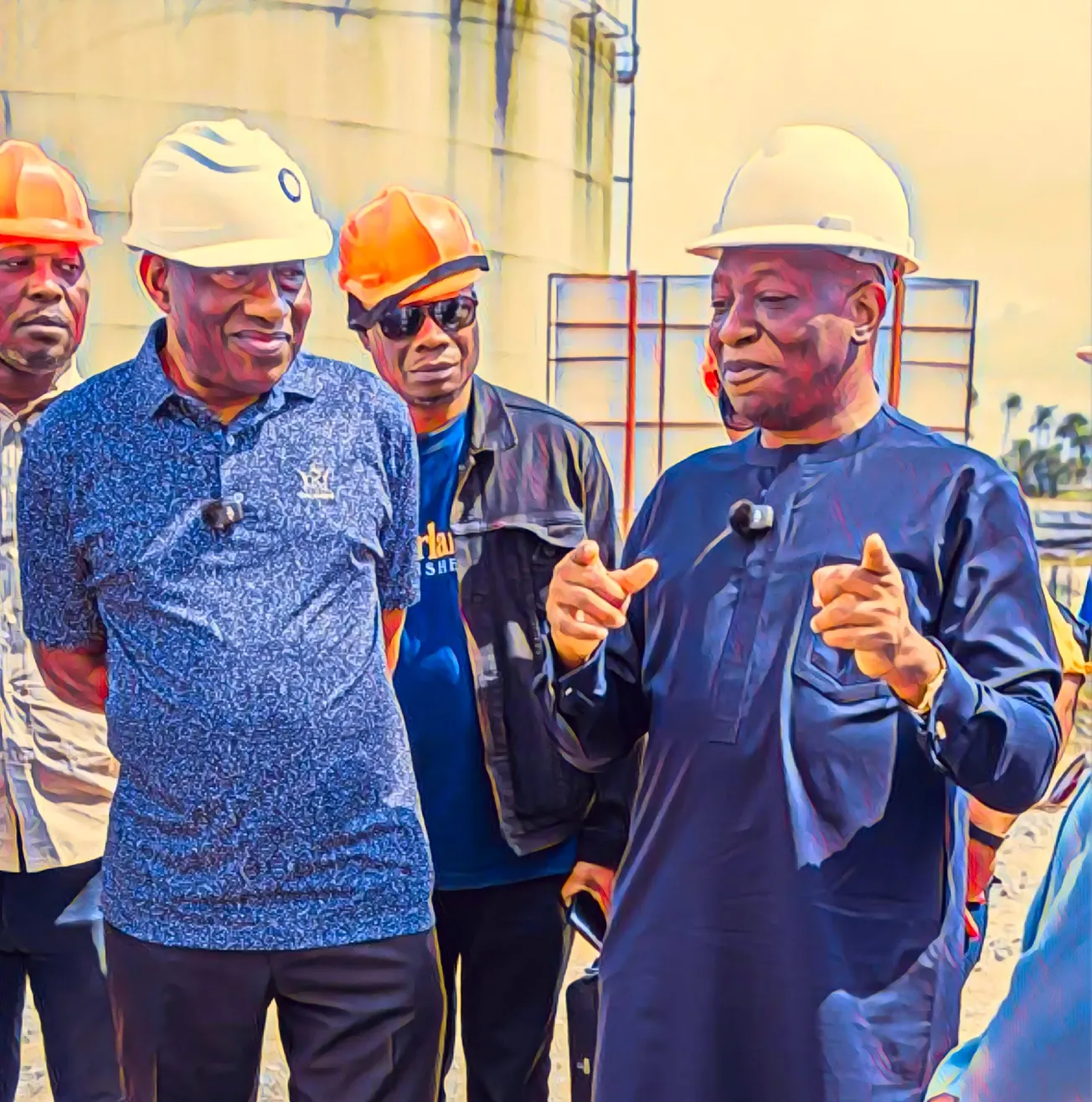
Former Nigerian President Goodluck Jonathan has described the Azikel Refinery in Yenagoa, Bayelsa State, as the center of a new wave of industrialization in the Niger Delta, after touring the privately owned plant on Tuesday.
"I was pleased to visit the Azikel Refinery in Yenagoa, Bayelsa State, and to see first-hand the progress being made on this important project," Jonathan said. He praised the "scale, vision and strategic importance" of the project and called it "a hub of the new industrialization of the Niger Delta and the South-South region of Nigeria."
The refinery is being built by Azikel Petroleum, part of the Azikel Group founded by businessman Azibapu Eruani. It was first licensed in 2015 and has since been redesigned to process 25,000 barrels a day, with total investment now valued at about $1 billion. Azikel plans to expand capacity to 125,000 barrels a day in the future.
Jonathan, who is from Bayelsa and led Nigeria from 2010 to 2015, said projects like Azikel and the Dangote refinery in Lagos were "important steps towards greater local content, self-reliance and energy security for Nigeria." He said investments on this scale showed that the Niger Delta could grow beyond its traditional role as a source of crude oil.
"Investments of this magnitude demonstrate the enormous potential of the Niger Delta to evolve beyond its traditional role as a source of crude oil into a major centre for value addition, refining, manufacturing, employment creation and industrial development," he said.
He also praised Eruani for his "vision, resilience and substantial investment" in the project.
Backing from Afreximbank and AFC
Jonathan singled out the project's two main development-finance backers, the African Export-Import Bank and the Africa Finance Corporation. He thanked Afreximbank President George Elombi, AFC President Samaila Zubairu and the boards of both institutions for their financial and institutional support.
Afreximbank was the first to commit. In November 2023, the Cairo-based lender approved up to $130 million of a $168 million senior secured term loan to Azikel Petroleum to build the refinery, which at the time was planned as a 12,000-barrel-a-day plant costing $259 million. Eruani signed the agreement at the bank's Intra-African Trade Fair in Cairo with Helen Brume, Afreximbank's director of project and asset-based finance. The presidents of Egypt, Zimbabwe and Malawi attended the signing, as did Afreximbank's then-president, Benedict Oramah, and former Nigerian President Olusegun Obasanjo.
The AFC, a Lagos-based multilateral lender set up by African governments to finance infrastructure, provided $60 million for the refinery. That financing was named Best Energy Infrastructure Deal at the EMEA Project Finance Awards in 2024, according to the corporation.
Azikel is one of several Nigerian refineries in Afreximbank's portfolio. At Africa Energy Week in Cape Town in November 2024, Oramah said the bank was supporting more than 1 million barrels a day of refining capacity in Nigeria, with an aggregate investment of about $4 billion. That total includes the Dangote refinery, the redevelopment of the state-owned Port Harcourt refinery, BUA's planned refinery and Azikel's modular plant.
When Afreximbank launched a $3 billion program to finance fuel trade between African countries in April 2025, it again listed Azikel among the refineries it had recently approved financing for. Oramah said at the time that the program "would galvanise efforts towards making the Gulf of Guinea a key refining hub."
Elombi, who succeeded Oramah in October 2025, has defended the bank's heavy exposure to Nigerian refining. He said this year that Afreximbank's financing of the Dangote refinery had paid off, despite early fears that the $20 billion project "could break Afreximbank."
Zubairu has made similar arguments about refinery lending elsewhere on the continent. When the AFC and Afreximbank helped finance the Cabinda refinery in Angola in 2023, he said such projects create jobs and "spin-off industries that rely on the output of the refinery."
A full-range refinery
Most of Nigeria's licensed modular refineries are topping plants that produce mainly diesel. Azikel is designed as a hydro-skimming refinery that can turn crude or condensate into petrol, diesel, aviation fuel, kerosene and liquefied petroleum gas to the Euro V standard. Eruani has described it as the only refinery in Africa designed to process condensate into a full range of products.
Eruani, a medical doctor by training, founded the Azikel Group in 2008. Its businesses include Azikel Dredging, Azikel Air, Azikel Power and Azikel Petroleum.
Azikel expects the refinery to employ more than 3,000 people once it is running and says the project has already created more than 80,000 indirect jobs. Eruani has said the long construction period reflected deliberate engineering choices, including the redesign that more than doubled the plant's planned capacity.
The company has not announced when the refinery will start production.
The intelligence satisfies curiosity. The paid briefings satisfy strategy.
Every Monday, Elite subscribers receive an Investor Memo breaking down the deal, the structure and the positioning behind the week's most consequential African wealth story - the kind of analysis that doesn't appear anywhere else.
Twice a month, a Wealth Intelligence brief profiles a single billionaire's holdings, cash flows and expansion pipeline in detail no public source matches.
→ Executive ($25/mo): Daily newsletter + Deep-Dive Reports
→ Elite ($75/mo): Everything above + Investor Memos + Wealth Intelligence + Quarterly Analyst Briefings
Subscribe now