


Table of Contents
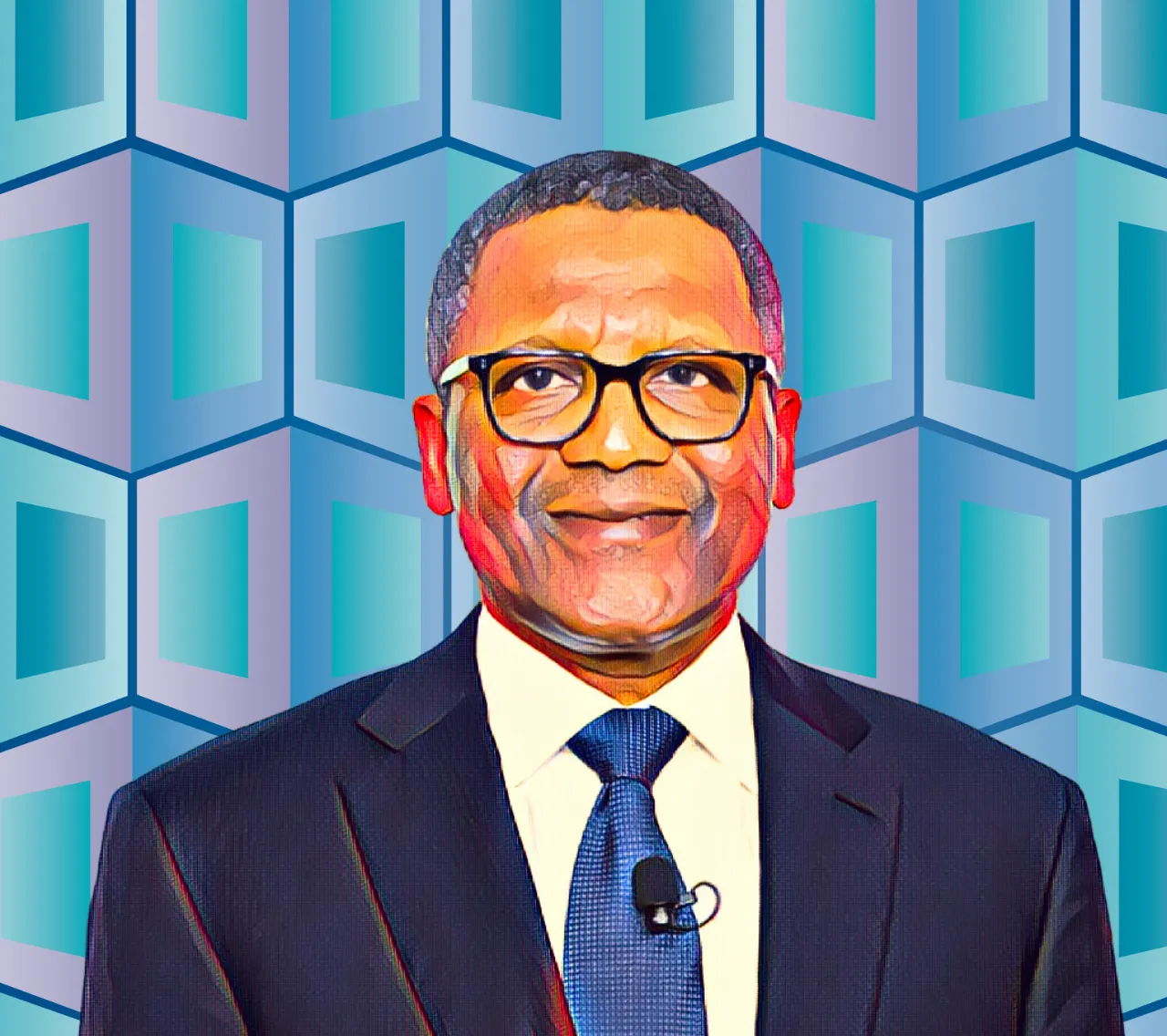
Olatunde Badmus, a former police cadet and radio journalist who built Tuns Farms into one of Nigeria's largest chicken producers, turned 80 on May 9 at a celebration in Osogbo, the capital of Osun State. Aliko Dangote, Africa's richest man, drove four hours from Lagos to attend and launched a book on Badmus's life with ₦100 million ($73,260).
"I was a young businessman when I met Baba," Dangote told the gathering, describing Badmus as "a very religious person and also an astute businessman." He added: "I drove for four hours, and I am driving four hours back."
Badmus is the founder and chairman of Tuns Group, the Osogbo agribusiness whose main company, Tuns Farms Nigeria Ltd., has spent four decades breeding, raising and slaughtering chickens at a site on Km 9 Ikirun Road, on the northern edge of the city. Its processing plant can kill and dress about 70,000 birds a day, Badmus has said. Tuns sells chicken to fast-food chains and supermarkets, including KFC, Shoprite and Chicken Republic, whose owner, Food Concepts Ltd., named Tuns its supplier of the year in 2008. It has been described in Osun as the state's largest private employer.
Badmus came to poultry late, after careers as a police officer, a broadcast journalist and an importer of television equipment. Along the way he led the national poultry farmers' association, became the federal government's chosen anchor for a national egg program, ran the poultry end of one of Nigeria's best-known state school feeding schemes and fell out with the Osun government over it. He also became one of the most prominent Muslim leaders in southwest Nigeria.
From police cadet to broadcaster
Khamis Olatunde Badmus was born on May 9, 1946. His father, Alabi Adekilekun Badmus, was an Islamic scholar and trader from the Ayogun compound in Isale-Osun, Osogbo, who did much of his business in Ghana. A profile published for Badmus's 80th birthday gives his birthplace as Akim Oda, in Ghana. He grew up between Ikare, in today's Ondo State, and Osogbo, attended Laro Primary School in Isale-Osun and finished secondary school at Okebadan High School in Ibadan in 1966.
In 1967, the year Nigeria's civil war began, he joined the Nigeria Police Force as a cadet inspector. He left two years later for journalism, trained at the Daily Times training school in Lagos and worked as a reporter for Western Nigeria Television and its sister radio service, first in Osogbo and then covering crime in Lagos. After Oyo State was created in 1976, he moved to the state's radio service, Radio Oyo, and rose to editor and head of its news department in Lagos. He left in 1981.
That year he set up Tuns International, which imported broadcasting equipment, mostly from Britain, and installed it at Nigerian Television Authority and state television stations in Lagos, Ogun, Oyo, Ondo, Kwara and the old Bendel State. Within a year he was hiring salesmen, engineers and accountants. He knew the stations from his years as a reporter, and state governments were spending oil money on new television services at the time.
Building Tuns Farms
In 1985, as Nigeria's economy slid into recession and imports became harder to finance, Badmus moved into farming. He incorporated Tuns International Investment Co. (Nigeria) Ltd. and later added the manufacture of ballpoint pens and PVC pipes. Poultry became the core of the business. By the early 2010s the group, headquartered in Osogbo, listed subsidiaries including Tuns Farms Nigeria, Tuns Hatcheries Nigeria, Tuns Mills Nigeria, Tuns Industries Nigeria and Tuns Properties Nigeria, covering chicks, feed, processing, manufacturing and real estate, and employed about 600 people, about a fifth of them veterinarians, animal scientists, engineers and other specialists.
Today the operating companies sit under Tuns International Holdings Nigeria Ltd., where Badmus is executive chairman. Tuns Farms Nigeria Ltd. handles the chain from day-old chicks to processed meat, and Tuns Foods and Agro-Allied Ltd. runs the food side, which has included bottled water, biscuits and confectionery. The group also runs an outgrower program and a consultancy that advises farmers and governments on poultry projects, and a Tuns Water project that supplies free water to the surrounding community. Outside Nigeria, the Biographical Legacy and Research Foundation, a Nigerian biographical archive, links him to Rapid Market Ltd., a company in the United Kingdom.
By the late 1990s Badmus had become a national figure in the industry. He chaired the poultry group of the Manufacturers Association of Nigeria, and in 2002 he was elected national president of the Poultry Association of Nigeria, the trade body for chicken and egg farmers. He served until 2006. Under his leadership, the association pressed the federal government to ban imports of poultry products, pushed for foreign grandparent stock breeders to set up in Nigeria and began talks on poultry exports to West African neighbors. His term ended as the industry faced its worst crisis: in February 2006, the H5N1 strain of bird flu was confirmed on a farm in Kaduna State, the first outbreak in Africa, and it spread to other states.
He later served as deputy national president of the All Farmers Association of Nigeria, sat on the board of Nigerian Machine Tools Ltd., the state-backed engineering company in Osogbo, and was appointed to a presidential committee on the Multi-Commodity Development and Marketing Corporations, a federal plan to buy, store and sell farm produce.
Tuns grew mainly on broilers, the fast-growing chickens raised for meat. By the mid-2010s it was regularly described in the state press as one of the three largest producers of broiler meat in Nigeria. Badmus has said Osun is the country's third-largest producer of broiler meat, behind Oyo and Ogun, the two states that sit between Osun and Lagos.
The model that made Tuns a large business was the outgrower scheme. Instead of raising every bird on its own farms, the company supplies day-old chicks, and often feed and veterinary drugs, to independent farmers, then buys the grown birds back after six to eight weeks and processes them in its own plant. The system lets a processor expand without building every poultry house itself, and gives small farmers a guaranteed buyer.
In December 2011, Governor Rauf Aregbesola's administration made Tuns the private partner in the Osun Broiler Outgrowers Production Scheme, known as OBOPS. The state, through its agriculture and finance ministries, provided funding for feed. The Osun chapter of the Poultry Association of Nigeria found the farmers and supplied drugs and vaccines. Tuns supplied the chicks, bought back the birds and sold the meat.
Much of that chicken went into O'Meals, the Aregbesola government's free lunch program for primary school pupils in grades one to three, which began in about 250 schools. The federal government later used the Osun model for its national school feeding program.
Badmus has said Tuns accounted for "about 80 per cent" of the arrangement. In December 2016, he said the scheme had produced more than 100 millionaires among the state's farmers. "Over 100 millionaires have been made so far since the state introduced Osun Broiler Outgrowers Production Scheme," he said.
In a later interview, he put a figure on it. "We were able to pay about N680 million as profit to farmers in the chicken production scheme," he said, over roughly four years. That is about $498,000 at today's exchange rate.
He also gave a rare indication of the group's size. "We had assets of about N4.5 billion, including a slaughter house of about 70,000 birds daily capacity," he said. At today's exchange rate that is about $3.3 million, though the naira was worth several times more when he said it.
In March 2020, Claire Pierangelo, then the U.S. consul general in Lagos, toured the plant to check its compliance with international standards. "We are happy with the facility here and we are satisfied with the products," she said. Badmus thanked the U.S. government for training his farmers. "We are grateful to the US government for the trainings for our farmers here," he said.
The farm is run day to day by his son Taofeek Badmus, the general manager. Another son, Lekan Badmus, served as Osun's commissioner for special duties under Governor Gboyega Oyetola.
Government deals and a falling-out
The Osun scheme led to Badmus's largest national mandate. In 2016, Tuns signed a memorandum of understanding with the Federal Ministry of Agriculture and Rural Development to develop the National Egg Production Scheme, known as NEGPRO, and was named its national anchor. Local media in Osun described the agreement as a ₦25 billion ($18.3 million) pact.
"We were appointed for this job because of the achievements we recorded in Osun," Badmus said at the time.
The scheme was meant to run for five years and, at full operation in all 36 states and the capital, produce about 50 million table eggs a day for school meals, export and processing into egg powder for bakeries and drug makers. The ministry said it could create at least 1 million jobs. Farmers were to get loans from the Central Bank of Nigeria, with the Bank of Agriculture, the poultry association and the Nigerian Agricultural Insurance Corp. also involved.
As the lead consultant, Tuns sent teams to state capitals to sign up governments. In Bauchi, in November 2016, Badmus told Governor Mohammed Abubakar that the federal government would give each participating poultry farmer credit of at least ₦17 million ($12,450) for feed, drugs, vaccines and chicks. "The Federal Government has made plans to ensure that there is a ready market for farmers," he said, referring to plans to link the eggs to school feeding. The governor offered to pay the interest on farmers' loans.
The program never reached its targets. A pilot was planned in six states, one in each of Nigeria's geopolitical zones, and Agriculture Minister Audu Ogbeh announced in January 2018 that it would start in Ondo State. Funding stalled over problems between the central bank and the Bank of Agriculture, Badmus said later, and he acknowledged that the egg program had not been effective. He said the central bank "has returned funds we invested in some states for the project." A planned egg powder plant, first estimated at ₦12 billion ($8.8 million), was cut to about ₦2 billion, and only about ₦100 million had been released, he said.
The Osun partnership ended badly. After the first phase of OBOPS, the state government brought in Amo Byng Ltd., one of Nigeria's largest poultry companies, as anchor for a second phase launched in 2017, on revised terms. A person at Tuns, speaking anonymously to a local news site in August 2017, called the scheme "a total scam" and said Tuns had pulled out over "shady deals," adding that Tuns still had more than 350 farmers. Kolawole Oginni, the program's facilitator, said Amo Byng was "big, organized, professional" and had "the integrity and capacity" for the job. Badmus later said only that the second cycle ended when the government changed the program and brought in new players and conditions.
Tuns kept supplying broilers for school feeding in Osun and has processing facilities in Ondo State. Badmus said the company would not take on projects in places where it did not control the facilities, because it could not guarantee its standards there.
The plant was attacked in October 2020. On Oct. 24, during the unrest that followed the #EndSARS protests against police brutality, a crowd broke into the Tuns plant in Osogbo looking for COVID-19 relief food. They carried off raw materials, finished products, machinery and equipment and damaged buildings. A staff member, Abdul-Rasheed Olawale, was shot and killed, and others were beaten. Taofeek Badmus said the company had more than ₦150 million ($110,000) of finished goods and raw materials in stock and that the full loss had not been counted. Rauf Aregbesola, by then the federal interior minister, sent his sympathies to Badmus.
Two months later, Tuns funded the first cycle of a 3,000-bird demonstration broiler farm at Alex Ekwueme Federal University in Ndufu-Alike, in Ebonyi State. The university gave Badmus an honorary doctorate in business administration at the same convocation.
Where Tuns stands now
Tuns is private and does not publish accounts, so the size of the business today is not public. Badmus is not on the Forbes or Bloomberg billionaire lists, and no outside estimate of his net worth has been published. In 2019, a local news site ranked him the fourth most influential person in Osun State.
His standing has long reached beyond business. In April 1992 he was turbaned Asiwaju Musulumi of Yorubaland, a senior lay position among Muslims in Nigeria's southwest, and made Otunba Akayejo of Osogboland by the town's traditional ruler. He has run a scholarship program for students since 1985, sponsors pilgrims to Mecca each year and helped the Muslim group NASFAT secure land for Fountain University in Osogbo, where he sits on the board of trustees. He says he keeps about 80 head of cattle.
Dangote was one of several prominent guests at the May 9 celebration. Governor Ademola Adeleke read a message from former President Olusegun Obasanjo, who welcomed him to "this club" of octogenarians. The Ooni of Ife, Oba Adeyeye Ogunwusi, and the Ataoja of Osogbo, Oba Jimoh Oyetunji, attended. The Sultan of Sokoto, Sa'ad Abubakar, commissioned a mosque Badmus built as part of the celebrations. Oyetola, the former governor and now minister of marine and blue economy, praised his "leadership" and "discipline."
Tuns Farms remains a family business, with Badmus as chairman and his son running operations at the Osogbo plant.
Figures were converted at ₦1,365 to the dollar.
The intelligence satisfies curiosity. The paid briefings satisfy strategy.
Every Monday, Elite subscribers receive an Investor Memo breaking down the deal, the structure and the positioning behind the week's most consequential African wealth story — the kind of analysis that doesn't appear anywhere else.
Twice a month, a Wealth Intelligence brief profiles a single billionaire's holdings, cash flows and expansion pipeline in detail no public source matches.
→ Executive ($25/mo): Daily newsletter + Deep-Dive Reports
→ Elite ($75/mo): Everything above + Investor Memos + Wealth Intelligence + Quarterly Analyst Briefings
Subscribe now