

Table of Contents
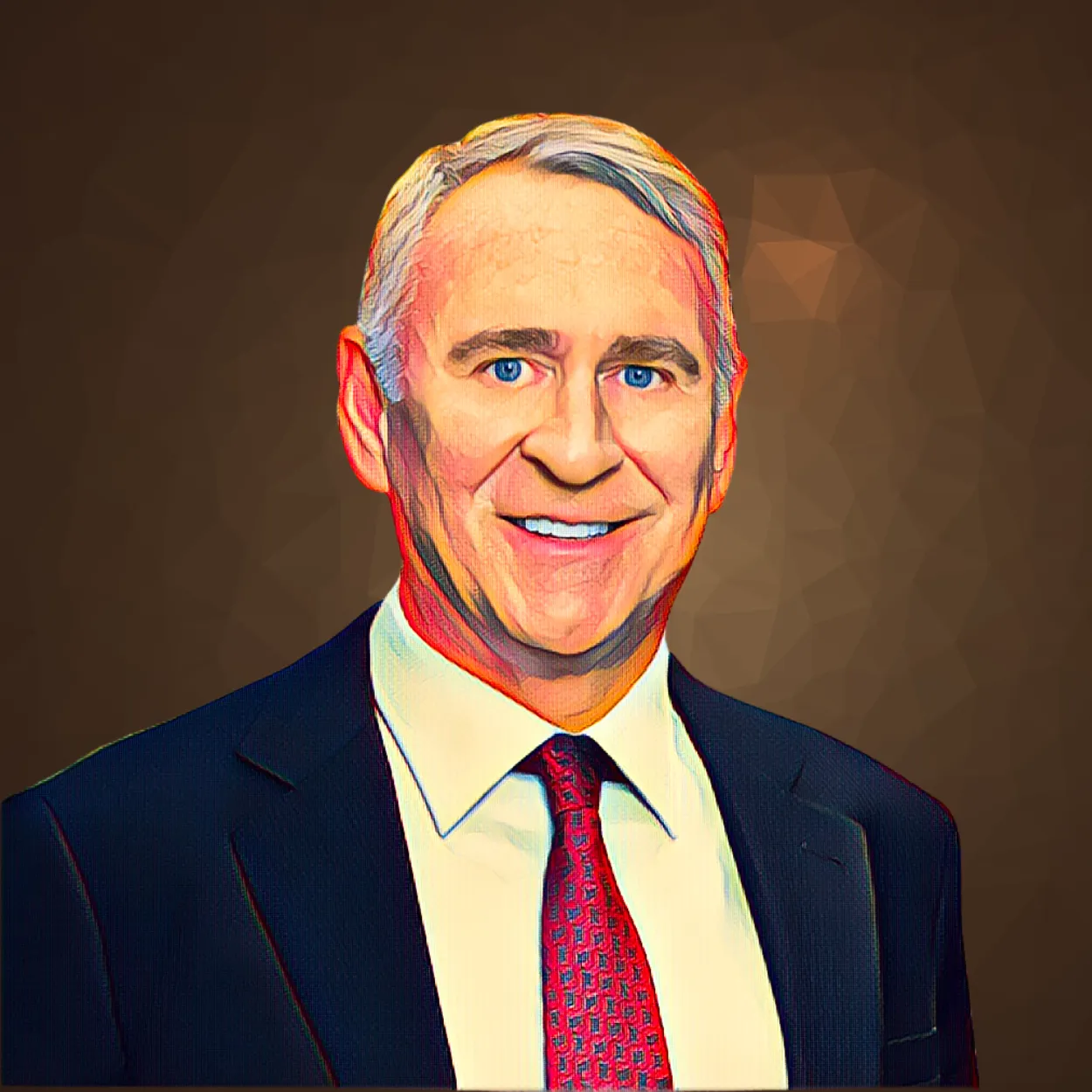
Billionaire Ken Griffin, the founder of Citadel, is giving Carnegie Mellon University $3 billion, the largest gift ever made by an individual to a university, with most of the money going toward a new campus in Miami.
Griffin will give $2 billion to build Carnegie Mellon University Miami and $1 billion to the university's main campus in Pittsburgh, Carnegie Mellon and Griffin said in a joint statement on Wednesday. The gift tops the $1.8 billion Michael Bloomberg gave Johns Hopkins University in 2018, the previous record for a single donor in higher education.
The Pittsburgh money will be split evenly. Half will give the university flexible funding for its top priorities. The other $500 million will go to the School of Computer Science, which will be renamed the Kenneth C. Griffin School of Computer Science. The school is ranked No. 1 in the country for undergraduate computer science. The Pittsburgh funds will also go toward hiring leading academics and making the university more affordable for students, according to Reuters.
The Miami campus will cover more than 35 acres in Wynwood, a neighborhood just north of downtown known for its art scene. Construction is set to begin in 2027, and the university plans to enroll its first students in 2028, pending regulatory approvals. Once complete, the campus is expected to hold more than 3,500 undergraduate, master's and doctoral students, nearly 300 faculty members and more than 600 staff.
Carnegie Mellon says the Miami campus will be organized around major problems facing society rather than traditional academic majors. At launch, it will focus on human health and biological discovery, national security, energy and climate resilience, and advanced manufacturing. The plans also include space for industry research labs and venture studios.
University President Farnam Jahanian tied the expansion to the rise of artificial intelligence. He said AI is one of the defining developments of the era and requires universities to rethink how they teach students, carry out research and work with partners.
Griffin, who will join Carnegie Mellon's board of trustees, said the new campus puts Miami "at the heart of humanistic and scientific advancement." He said he expects it to draw students and researchers from around the world and to help launch new companies in the city.
The gift is the largest of Griffin's career and the latest step in a yearslong bet on South Florida. Griffin attended high school in the region and moved the headquarters of Citadel and his market-making firm, Citadel Securities, to Miami from Chicago in 2022. Since then, he has committed roughly $2.4 billion to causes in South Florida, including a charter school network, the University of Miami, Miami Dade College, public schools and math tutoring. Including the Carnegie Mellon donation, his total giving has reached $5.7 billion.
Miami already has a crowded higher education market. The University of Miami, Florida International University and Miami Dade College together enroll about 135,000 students. Griffin, a major donor to Republican candidates, saw room for another institution focused on research and technology.
His earlier gifts have gone largely to education, medical research and cultural institutions. He has given $500 million to Harvard University, his alma mater, as well as major sums to the University of Chicago, Ann & Robert Lurie Children's Hospital and the American Museum of Natural History.
Griffin's fortune comes from Citadel, the hedge fund he started in 1990 while still in his early twenties, and Citadel Securities, which he founded with partners in 2002 and which now ranks among the world's largest market makers. Bloomberg estimates his net worth at $57.5 billion, while Forbes puts it at $60.5 billion.
Griffin will join a board that already includes another hedge fund billionaire, David Tepper, a Carnegie Mellon graduate and major donor to the school.
Carnegie Mellon was founded in 1900 and already runs campuses outside the United States, including in Qatar and Rwanda. The Miami campus will be its largest expansion, and the university says it will be built as a full campus with the same academic standards as Pittsburgh, rather than as a satellite for a few programs.
The intelligence satisfies curiosity. The paid briefings satisfy strategy.
Every Monday, Elite subscribers receive an Investor Memo breaking down the deal, the structure and the positioning behind the week's most consequential African wealth story - the kind of analysis that doesn't appear anywhere else.
Twice a month, a Wealth Intelligence brief profiles a single billionaire's holdings, cash flows and expansion pipeline in detail no public source matches.
→ Executive ($25/mo): Daily newsletter + Deep-Dive Reports
→ Elite ($75/mo): Everything above + Investor Memos + Wealth Intelligence + Quarterly Analyst Briefings
Subscribe now