

Table of Contents
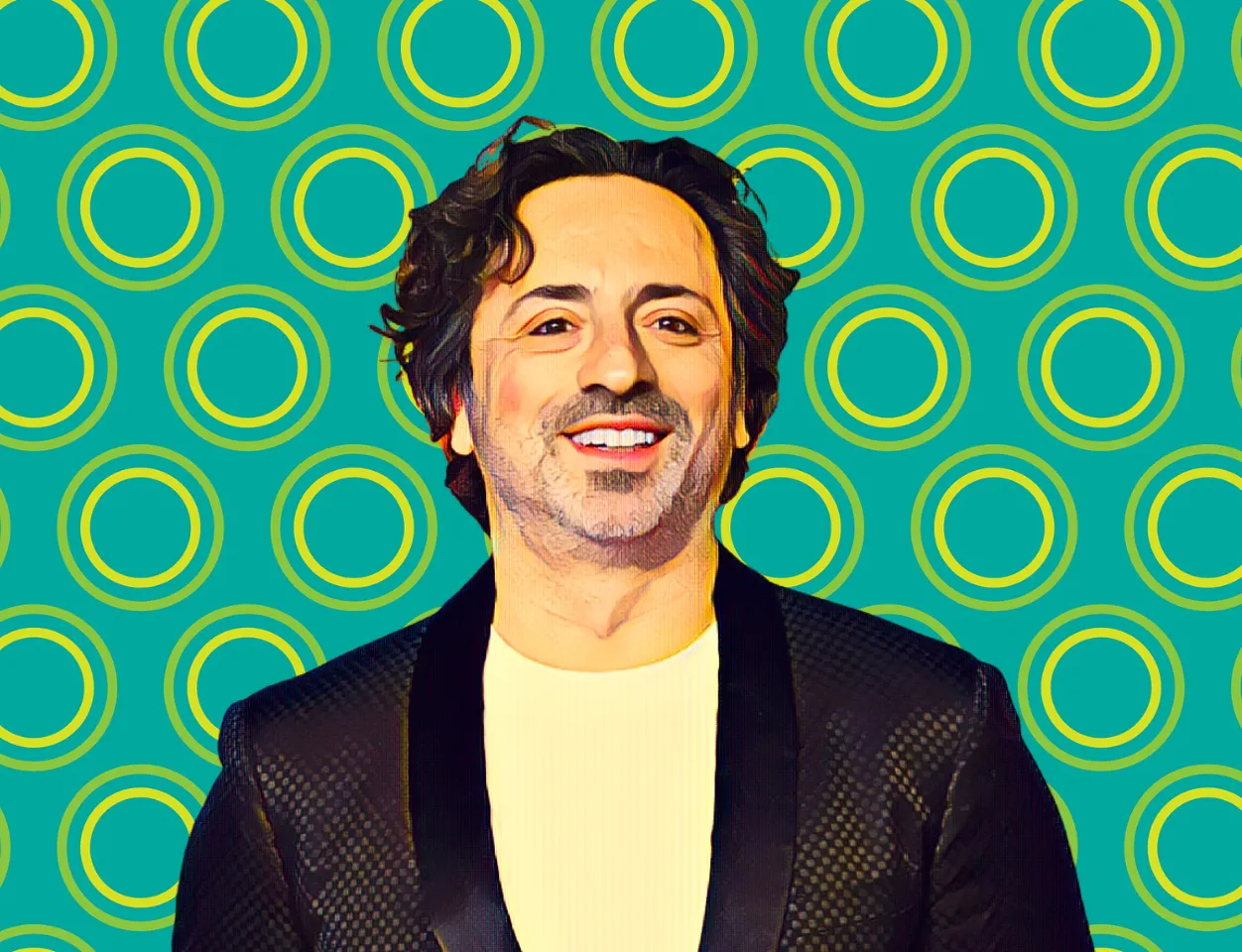
Sergey Brin, the Google co-founder and one of the richest people on the planet, has now spent $102 million trying to stop California from taxing its billionaires, making him the biggest financial force in one of the most expensive ballot fights in the country.
All of that money has gone to Building a Better California, the political action committee at the center of the campaign against Proposition 40. The measure would impose a one-time 5% tax on the net worth of California's billionaires, and voters will decide it on Nov. 3. Brin's latest check, for $20 million, was disclosed in a state filing in August and pushed his total past nine figures.
His reason for spending so heavily is plain enough in the numbers. Forbes ranks Brin as the world's fifth-richest person, with $225.4 billion in assets. A 5% levy on a fortune that size would come to more than $11 billion, roughly a hundred times what he has spent so far to defeat it.
The tax would apply to anyone with a net worth of at least $1 billion who lived in California on Jan. 1, 2026. Ninety percent of the money raised would go to health care, and the remaining 10% would fund education and food assistance. The measure is sponsored by the Service Employees International Union-United Healthcare Workers West, which says the state needs the revenue to cover federal cuts to Medicaid that are squeezing hospitals and clinics.
Brin has already moved his official home out of the state. He bought a $42 million mansion on the Nevada side of Lake Tahoe and now lists Nevada as his residence in state records. The Jan. 1 residency date in the measure was written with departures like his in mind. Emmanuel Saez, a University of California, Berkeley economist and one of the tax's main architects, said it was "too late to leave now."
Brin, who was born in Moscow and came to the US as a child, has framed his opposition around his family's history. He told the New York Times in April that his family fled socialism in the 1970s and that he did not want "California to end up in the same place."
His money has turned Building a Better California into the opposition's war chest. The committee has raised $228.8 million since it was formed and has already passed $200.5 million of it to the campaigns fighting the tax. Its donor list reads like a roll call of Silicon Valley. Kleiner Perkins chairman John Doerr has matched Brin's latest $20 million gift since July 1. Ripple co-founder Chris Larsen has given $12 million, and former Google Chief Executive Officer Eric Schmidt has chipped in $3 million.
Much of that money is not being spent on a simple "no" campaign. The committee is also bankrolling Propositions 41 and 42, two rival measures that would limit the scope of new state taxes. If either one draws more yes votes than Proposition 40 in November, the billionaire tax would be voided. Supporters of the wealth tax say the two measures exist to "trick voters" into killing it.
The spending gap between the two sides is wide. As of August, the union-led campaign backing the tax had raised just over $30 million, a fraction of what Brin alone has put in. The union has made him the face of the fight, with SEIU-UHW Vice President Debru Carthan accusing him of funding an opposition campaign rather than paying his fair share to protect Californians' health care.
The battle has scrambled the usual political alliances in a state run by Democrats. The California Democratic Party, the California Federation of Labor Unions and the California Nurses Association have endorsed Proposition 40. Governor Gavin Newsom, a Democrat, opposes it, as do the California Chamber of Commerce and the California Teachers Association. Newsom has instead proposed a national billionaire tax.
Opponents argue that taxing wealth rather than income would push founders, investors and their companies out of California, eroding a tax base that already leans heavily on its highest earners. The burden would fall mostly on the technology industry. Because the tax targets assets, nearly three-quarters of it would land on tech founders, executives and venture capitalists, many of whom have grown far richer on the artificial intelligence boom.
Supporters are pressing their case in the final weeks. US Senator Bernie Sanders is heading back to California to rally for the measure with Representative Ro Khanna and state Assemblymember Aisha Wahab.
The race remains close despite the money flowing against the tax. A recent Public Policy Institute of California poll showed Proposition 40 narrowly ahead, 52% to 46%.
The intelligence satisfies curiosity. The paid briefings satisfy strategy.
Every Monday, Elite subscribers receive an Investor Memo breaking down the deal, the structure and the positioning behind the week's most consequential African wealth story - the kind of analysis that doesn't appear anywhere else.
Twice a month, a Wealth Intelligence brief profiles a single billionaire's holdings, cash flows and expansion pipeline in detail no public source matches.
→ Executive ($25/mo): Daily newsletter + Deep-Dive Reports
→ Elite ($75/mo): Everything above + Investor Memos + Wealth Intelligence + Quarterly Analyst Briefings
Subscribe now