


Table of Contents
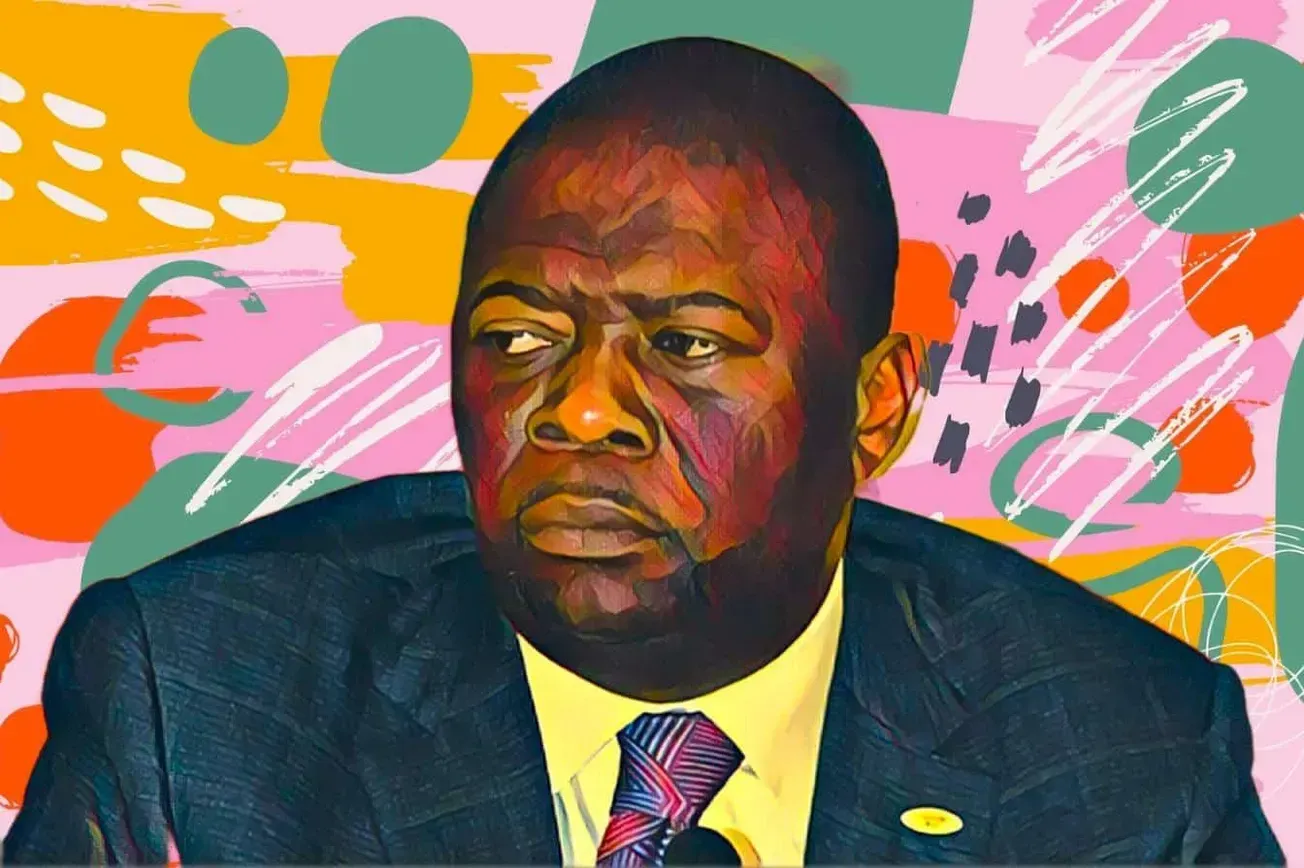
Manoj Lakhiani was 17 when he quit school and borrowed $25,000 from his father to buy a second-hand plastic extrusion machine in Accra, according to an account of his life released by his company.
Three decades later, the Ghana-born industrialist is chairman of the Blow Group of Companies, one of the largest privately owned manufacturers in Ghana. Its factories in Tema, the port city east of Accra, make plastic bags and packaging, PET bottle preforms, Bel Aqua bottled water, Bel Cola and a range of soft drinks, a low-alcohol cider and Belpak tissue paper. The group says it employs about 4,000 people.
His record includes a noodle factory he built and sold to the maker of Indomie, a market-leading water brand born out of a lost customer, a 2024 product recall by Ghana's food regulator and a long-running land dispute in the High Court in Accra.
Lakhiani, 51, is one of the least public of Ghana's big industrialists. Blow Group is privately held and publishes no accounts. He has never appeared on a published list of Africa's richest people, and no credible estimate of his fortune exists.
The toaster in the dormitory
Lakhiani was born in Ghana on Jan. 22, 1975, according to a profile released by Blow Group in 2017, when he was named Industrialist of the Year at the Ghana Manufacturing Awards.
He was sent to boarding school in England as a boy, at Clifton College in Bristol, according to his online professional profile. At 14, the profile said, he spent £30 of his pocket money on a toaster and began selling toasted sandwiches to his classmates. At 16 he left school and flew home to Ghana without telling his parents or his teachers. A year later he dropped out for good to go into business, buying the used extrusion machine with the money from his father.
He has said he still works Monday to Saturday from 6 a.m. and designs the layouts of the group's factories himself.
"My biggest motivation is innovation and not money," he said in the 2017 profile. "Failure is not in my dictionary if I am involved in something."
A gallon factory in Accra
Blow Group dates its founding to 1993. His online professional profile says he has been chairman since December of that year.
Its own history says the business took shape in 1994, when Jagdish Lakhiani, an Accra import merchant, bought a struggling maker of plastic gallons in the city's North Industrial Area. That company became Blow Plast Industries. Jagdish Lakhiani, described by the Daily Graphic as president of the group, received a lifetime achievement award at the Ghana Manufacturing Awards in 2019.
The business grew on cheap, everyday plastics: carrier bags, the thin film used to package sachet water, household items and later heavy industrial sacks. It moved its production into five plants in the Tema industrial enclave and started recycling its plastic waste in 2005.
In a 2017 profile, the company claimed Blow Plast made about 90% of Ghana's plastic products and ran 500 machines across seven factories. Those figures could not be independently verified, and the group's website now cites five manufacturing businesses.
In an interview with Oxford Business Group in 2013, Lakhiani described the economics of Ghana's free zone regime, under which companies that export 70% of their output get an eight-year tax break. He complained about informal payments at border crossings, congestion at the ports, high interest rates and the falling value of the cedi. He said at the time that the group was fielding export inquiries from Nigeria and Burkina Faso.
The customer who walked away
The group's biggest move came out of a setback.
In 2010, Blow Plast began making PET preforms, the small plastic tubes that are blown into drinks bottles. One of Ghana's four largest beverage companies contracted it to supply all of its preforms, and the group doubled its capacity to meet the order, according to Blow Group's history. Then the customer changed its management and dropped Blow Plast. The company has not named the client.
Left with spare capacity, Lakhiani went into drinks himself. The group set up Blow Chem Industries Ltd. to make food and beverages, and on Oct. 1, 2011, it launched Bel Aqua bottled water.
Bel Aqua became the anchor of the business. The company says it was the market leader within five years. It won the water category at the Ghana Manufacturing Awards eight years in a row before being inducted into the awards' hall of fame in 2024. In August 2026, consumer research firm Sagaci Research ranked it the most-scanned bottled water brand in Ghana.
It also pushed further inland. In October 2017, the group opened a depot at Daaban in Kumasi, Ghana's second-largest city, to distribute Bel Aqua and its new noodles across the Ashanti region, and said it was building a carbonated soft drink plant in Tema worth several million euros.
The group kept spending on capacity. In August 2024, Blow Chem bought an 80,000-bottle-per-hour still water line from German equipment maker Krones to roughly double Bel Aqua's output. It had already bought three 40,000-bottle-per-hour soft drink lines and a 60,000-bottle-per-hour line from the same supplier. The value of the orders was not disclosed.
Bel Aqua marked its 15th anniversary this month with a one-day promotion selling packs of 500-milliliter bottles for 15 cedis.
Noodles, and an exit to Indomie
Lakhiani's most ambitious diversification was food. Around the start of 2017, the group opened the Yum-mie instant noodle factory in Tema, billed as Ghana's first locally made noodles. It said it had invested several million euros in a plant that could produce about 6,000 boxes of 40 packets every 24 hours, and expected to employ about 500 people.
The product went up against Indomie, the brand made by Dufil Prima Foods, part of Singapore's Tolaram Group, which dominates instant noodles in West Africa.
In October 2020, Blow Group sold the business to Dufil. The deal covered the Yum-mie brand and the factory assets. Neither side disclosed the price.
Cola, cider and tissue
The group launched Bel Beverages about seven years after Bel Aqua. It says it built a portfolio of 18 brands within three years, including Bel Cola, Appela, Tamarinda, Breeze, Pukka, Big Boss, Bel Malt and the Squeeze juice range, with capacity of 130,000 packs a day. In 2024, Bel Cola was named soft drink of the year at the Ghana Beverage Awards, and Bel 7Star energy drink became the headline sponsor of Ghana's professional boxing league.
It has also moved into alcohol. Bel Ice, a low-alcohol cider the group launched around the start of 2023, was named alcoholic beverage of the year at the Ghana Manufacturing Awards in 2024. Blow Group says its drinks are sold in Togo, Benin and Côte d'Ivoire, though Billionaires.Africa could not independently confirm the scale of those exports.
Its newest business is paper. Belpak, a fully automated tissue mill in the Tema Free Zones enclave, was formally launched on May 1, 2023, with actress Nana Ama McBrown as its brand ambassador. The plant has capacity of 25,000 metric tons a year and employs 500 people.
Recalls, rumours and a land fight
Bel Aqua's success has brought scrutiny.
In March 2024, Ghana's Food and Drugs Authority recalled one batch of Bel Aqua mineral water, produced on Feb. 1, 2024, after finding that its pH did not meet the national standard or the value printed on the label. Billionaires.Africa found no public response from the company.
In January 2019, a video circulated online claiming to show algae in a bottle of Bel Aqua. The company said the problem came from sun exposure and poor storage after the water left its factory. A few months earlier, in August 2018, the company said people posing as radio journalists had demanded money and threatened to release doctored footage of its plant. It refused to pay, reported the matter to police and took reporters on a tour of the factory.
The group has also had setbacks in court. In 2017 the High Court in Accra ruled against Blow Plast in a suit by a trader who said she had paid for 323 packs of goods that were never delivered. Blow Plast has also spent years fighting over a plot on Graphic Road in Accra that it bought at auction in April 2007. A trespass suit it brought over the land was decided against it in December 2021, and a related case against Letap Pharmaceuticals was ruled on by the High Court in February 2026.
Who runs Blow Group
Blow Group remains a family-run company. Dhiraj Lakhiani is a co-director and has been named chief executive of the year at Ghana's Made in Ghana Awards in 2019 and the Ghana Manufacturing Awards in 2022. The day-to-day business is run by a team that includes general manager Shahid Coudary and group finance head Hiren Rughani. Lakhiani himself is a member of the Young Presidents' Organization, the global network of chief executives.
The group has turned to philanthropy through its Bel Aqua Foundation. In 2017 it paid 120,000 cedis, then about $27,000, for free cleft lip and palate surgeries in Ho by Operation Smile. During the Covid-19 pandemic it donated sanitizer, gloves and drinks to hospitals, the police and the military. Last month it opened a workplace mental health clinic at the Ghana Free Zones Authority.
The company has announced no new factory since the 2024 Krones order, and it has not said who will eventually succeed Lakhiani at the head of the group.
The intelligence satisfies curiosity. The paid briefings satisfy strategy.
Every Monday, Elite subscribers receive an Investor Memo breaking down the deal, the structure and the positioning behind the week's most consequential African wealth story - the kind of analysis that doesn't appear anywhere else.
Twice a month, a Wealth Intelligence brief profiles a single billionaire's holdings, cash flows and expansion pipeline in detail no public source matches.
→ Executive ($25/mo): Daily newsletter + Deep-Dive Reports
→ Elite ($75/mo): Everything above + Investor Memos + Wealth Intelligence + Quarterly Analyst Briefings
Subscribe now