


Table of Contents
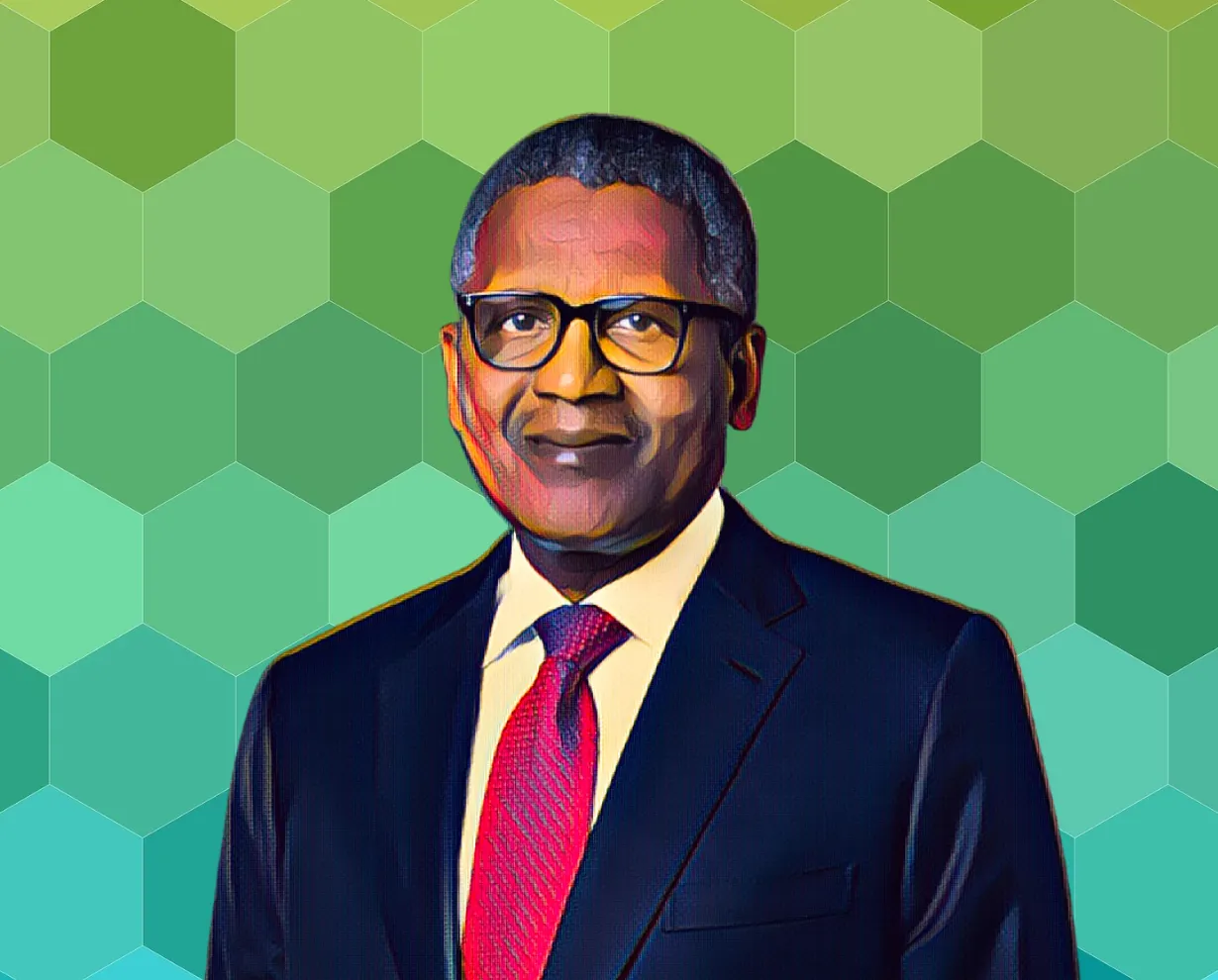
Nigerian oil tycoon Wale Tinubu, the founder and group chief executive of Oando Plc, doubled his company's stake in its main Niger Delta oil fields with a 2024 deal for Eni's Nigerian unit, and he now has to raise fresh capital to relieve a balance sheet carrying about $2 billion of debt.
The Africa Report, the pan-African business and politics magazine, made that case in an analysis published on Wednesday under the headline "Wale Tinubu has the oil. Now Oando needs the cash." The company's own filings and recent analyst research show why the question has moved to the center of Oando's story.
Tinubu, a lawyer by training, co-founded the oil trading and shipping firm Ocean and Oil in 1994. In 2000, Ocean and Oil, led by Tinubu and his longtime business partner Omamofe Boyo, bought a controlling stake in Unipetrol, a state-owned fuel marketer. Unipetrol later merged with Agip Nigeria and was renamed Oando in 2003. Tinubu still controls the company through Ocean and Oil Development Partners, a holding company he owns with Boyo, Oando's deputy group chief executive. Oando's shares trade in Lagos and Johannesburg.
The Eni deal and the debt that came with it
Tinubu's biggest bet closed in August 2024, when Oando completed its $783 million purchase of Nigerian Agip Oil Co. from Italian energy group Eni. The deal doubled Oando's interest in oil mining leases 60, 61, 62 and 63 in the Niger Delta to 40% from 20% and made the company operator of the joint venture. It also brought 40 discovered oil and gas fields, about 1,490 kilometers of pipelines, three gas processing plants and the Brass River oil export terminal, according to Oando's completion announcement at the time. Tinubu called the deal "the culmination of ten years of toil, resilience, and an unwavering belief."
The assets have lifted output. Oando produced an average of 42,789 barrels of oil equivalent per day in the first half of 2026, up 16% from a year earlier, and it has kept its full-year guidance of 40,000 to 50,000 barrels a day. It reported proved and probable reserves of 928 million barrels of oil equivalent at the end of 2025.
The cost of carrying Oando's debt now shows up clearly in its income statement. Oando's total borrowings stood at about ₦2.70 trillion ($2.03 billion) at the end of June, broadly unchanged from December, Nairametrics reported from the company's half-year accounts. Net finance costs reached ₦161.3 billion ($121.1 million) in the six months, more than the ₦127.84 billion ($96 million) operating profit. Oando posted a pre-tax loss of ₦32.84 billion ($24.7 million) for the half, narrower than a year earlier, before a tax credit turned it into a ₦68.56 billion ($51.5 million) net profit. Revenue rose 20% to ₦2.06 trillion ($1.55 billion), most of it from low-margin crude and fuel trading.
The balance sheet is weaker still. Total liabilities of ₦8.42 trillion ($6.32 billion) exceeded total assets of ₦7.89 trillion ($5.92 billion), leaving shareholders' equity at negative ₦530.45 billion ($398.3 million), slightly better than at the end of 2025.
London-based research firm Edison Group said in an August note that interest payments "absorbed 55% of operating cash flow" in the half. It said a restructuring of Oando's corporate facility and medium-term loan, which Oando says are now in good standing, "primarily represents an extension of tenor rather than a reduction in gross leverage."
Tinubu's fundraising plan
Tinubu has said the next step is raising money. "We shall execute an intensive fundraising and balance sheet restructuring programme to optimise our capital structure," he said when Oando released its half-year results in August.
The first piece is a rights issue of about 4.42 billion new shares at ₦50 each, which would raise about ₦220.8 billion ($165.8 million). Oando applied to the Nigerian Exchange for approval in February, and the offer still needs clearance from Nigeria's Securities and Exchange Commission and South African authorities. The company is also preparing a $1.5 billion multi-instrument issuance programme, which Edison said is being updated for resubmission to regulators.
A Renaissance Capital report summarized by Nigeria's ThisDay newspaper in September said management plans a ₦500 billion ($375.5 million) capital raise that includes the rights issue, alongside a plan to convert $300 million of reserve-based lending into equity. Renaissance estimated that full execution would restore positive shareholders' equity. Its report also cited a "material uncertainty relating to going concern" linked to Oando's working capital and financing pressures.
Oando's shares closed at ₦35 on Sept. 30, according to market data from StockAnalysis, down from a May 25 peak of ₦54.90 reported by Nairametrics. Edison said Oando trades at about $2.10 per barrel of proved and probable reserves, a 60% discount to Seplat Energy and 74% to Aradel Holdings, two other Nigerian producers.
Oando shareholders voted at the company's annual meeting on Sept. 17 to allow the board to list the shares on other stock exchanges, subject to regulatory approval.
Tinubu has also faced regulatory scrutiny before. In 2019, Nigeria's Securities and Exchange Commission suspended him and Boyo and moved to bar them from serving as directors of public companies for five years after an investigation into governance at Oando. The two executives challenged the sanctions in court. The dispute ended in a 2021 settlement under which Oando agreed to pay penalties and improve its governance. Oando said at the time that "the settlement reached by the parties seeks to prevent further market disruption and harm to Oando Plc's shareholders."
Tinubu has set a medium-term goal of about 100,000 barrels of oil equivalent a day, more than twice current output, backed by 62 identified development wells. Oando has budgeted $90 million to $100 million of capital spending for 2026.
The intelligence satisfies curiosity. The paid briefings satisfy strategy.
Every Monday, Elite subscribers receive an Investor Memo breaking down the deal, the structure and the positioning behind the week's most consequential African wealth story - the kind of analysis that doesn't appear anywhere else.
Twice a month, a Wealth Intelligence brief profiles a single billionaire's holdings, cash flows and expansion pipeline in detail no public source matches.
→ Executive ($25/mo): Daily newsletter + Deep-Dive Reports
→ Elite ($75/mo): Everything above + Investor Memos + Wealth Intelligence + Quarterly Analyst Briefings
Subscribe now