

Table of Contents
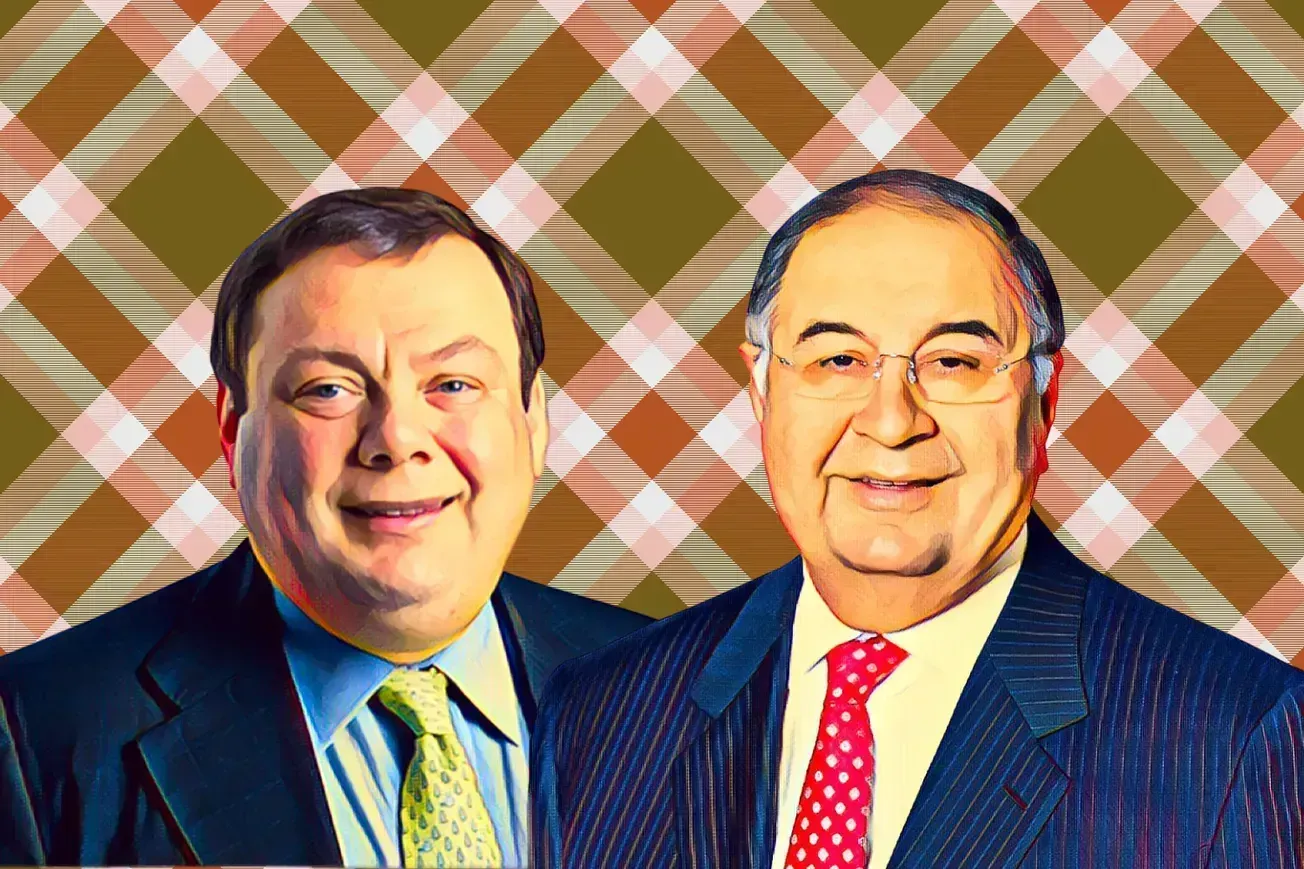
Lithuania’s government on Wednesday approved national asset freezes against Russian billionaires Alisher Usmanov and Mikhail Fridman, three weeks after the European Union removed the two men from its sanctions list, Lithuanian public broadcaster LRT reported, citing the BNS news agency.
The restrictions were proposed by Lithuania’s Foreign Ministry and will remain in force until the end of 2027, LRT said. Once the EU lifted its sanctions, the bloc-wide freeze on the men’s assets stopped applying in Lithuania, leaving the Baltic country to act under its own laws. LRT did not say whether either man holds assets in Lithuania.
“Lithuania consistently opposes any removals from the EU sanctions list on political grounds,” the Foreign Ministry said, according to LRT. The ministry said Latvia and Estonia had adopted similar measures.
Lithuanian Foreign Minister Kęstutis Budrys announced the freeze on X. He said the removal of the two men from the EU list sent the wrong signal while Russia’s war against Ukraine continues and that Lithuania would not look the other way, according to Ukrainian news site Censor.net, which reported his post.
Why the EU let them go
The EU Council removed Usmanov and Fridman from its Russia sanctions list on Sept. 22. Their delisting was part of a package under which member states agreed to renew sanctions on nearly 3,000 other people and entities for three years, replacing the six-month renewals that had allowed any single government to block the list.
France and Slovakia pushed for Usmanov’s removal, Reuters reported at the time. French officials cited national security without giving details. Three European diplomats told Reuters that France acted after pressure from Azerbaijan, which has detained at least two French nationals. Azerbaijan denied this, and France has not publicly confirmed that it sought the delisting. The Financial Times reported that the move may be linked to a deal to free French citizens held in Azerbaijan.
Luxembourg demanded Fridman’s removal. He is seeking about $16 billion from Luxembourg in arbitration over the freezing of his assets there, and Luxembourg argued that its defense would be weakened if Usmanov were released and Fridman kept on the list, according to Reuters. Bloomberg reported that the decision surprised Fridman, who had all but given up hope of removal despite several court wins, and described him as an “almost incidental beneficiary” of Usmanov’s campaign. Fridman declined to comment to Bloomberg.
Ukraine called the EU’s decision “shameful and unjustifiable.”
Baltic states go their own way
Lithuania was among the governments that opposed the delisting. In late September, it added both men to its list of undesirable persons, barring them from entering the country for five years. The asset freeze approved on Wednesday goes further and restores, inside Lithuania, the financial restrictions the EU dropped.
Britain, which left the EU in 2020, will keep its own sanctions on Usmanov and Fridman, Bloomberg reported in September, citing people familiar with the matter.
Usmanov, 73, was born in Uzbekistan and made his fortune in metals and mining. He holds a 49% stake in USM, which controls the iron ore producer Metalloinvest, and has an interest in the Russian mobile operator MegaFon. When the EU sanctioned him in 2022, it described him as having “particularly close ties” to Russian President Vladimir Putin. He has an estimated net worth of $14 billion, according to Forbes.
Fridman, 62, co-founded Alfa Group, the conglomerate behind Russia’s Alfa-Bank, and the London-based investment firm LetterOne. He moved to London in 2013 after selling his stake in the oil company TNK-BP to Rosneft. Forbes puts his net worth at $16.8 billion.
The intelligence satisfies curiosity. The paid briefings satisfy strategy.
Every Monday, Elite subscribers receive an Investor Memo breaking down the deal, the structure and the positioning behind the week's most consequential African wealth story - the kind of analysis that doesn't appear anywhere else.
Twice a month, a Wealth Intelligence brief profiles a single billionaire's holdings, cash flows and expansion pipeline in detail no public source matches.
→ Executive ($25/mo): Daily newsletter + Deep-Dive Reports
→ Elite ($75/mo): Everything above + Investor Memos + Wealth Intelligence + Quarterly Analyst Briefings
Subscribe now